
This is a guest article by Curtis Allen…
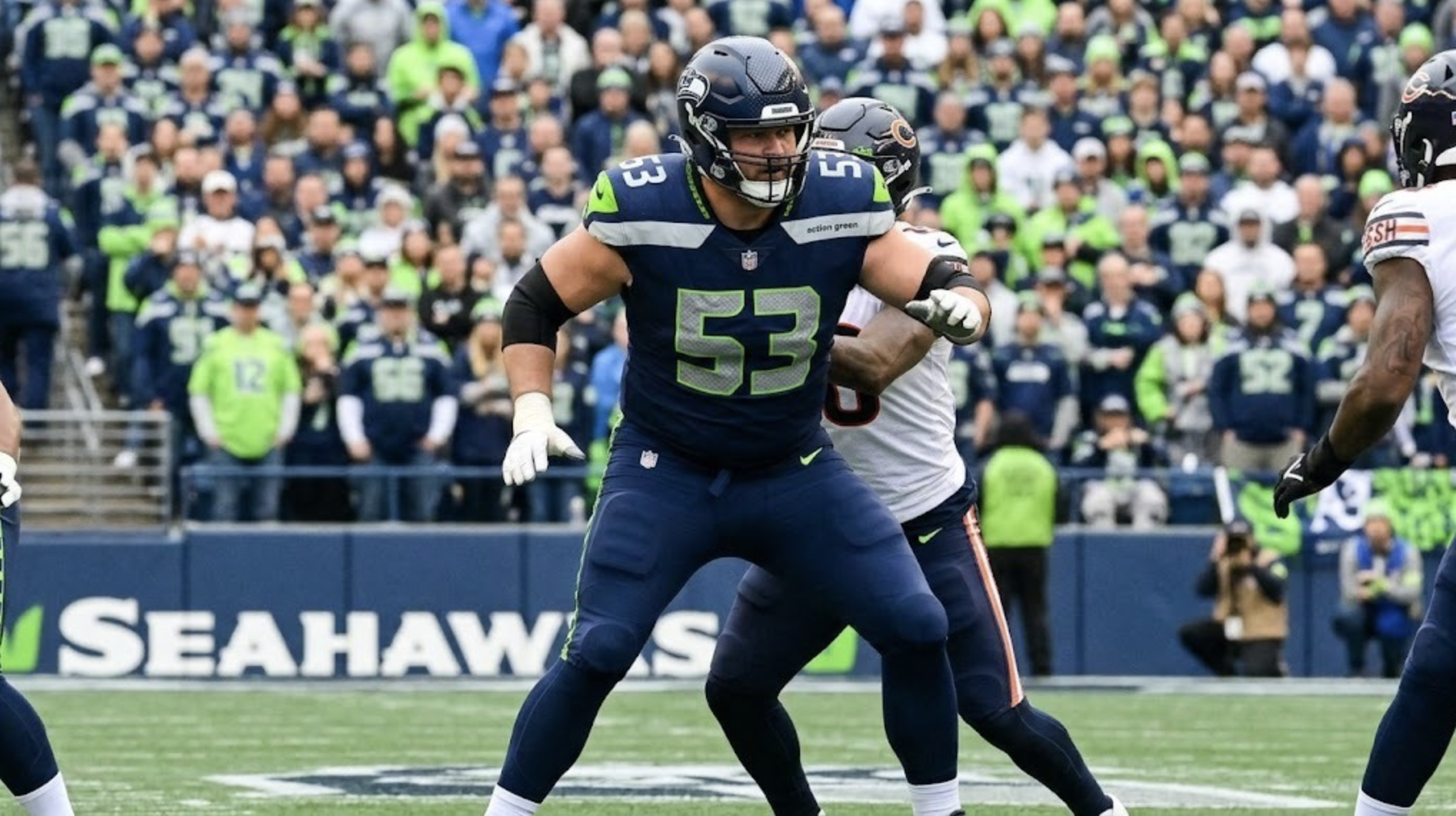
Leonard Williams. Ernest Jones. Rashid Shaheed. And now Quenton Nelson.
A pattern is developing here.
Death. Taxes. A trade deadline move from the Seahawks that moves the needle.
All things that are inevitable.
John Schneider has been feasting on these trades, managing to bring in very talented players that fit the identity he and Mike Macdonald have crafted.
It is not an accident. Schneider has deliberately built the Seahawks to be able to strike at this time of year to fill needs and add balance to the roster.
Let’s explore why the team can make moves at this time of year and why they seemingly always manage to pay far below market price.
It Is All Part of the Plan
We know the basic formula the Seahawks and other successful teams employ: Draft well, find undervalued young talent in the Undrafted Free Agent and Street Free Agent markets, extend your key players and only dip into the March Free Agent frenzy when you absolutely must. And only when there is alignment with availability and cost.
It is all based on a core principle of business: You absolutely must get more than what you pay for to be successful.
The results are obvious: The Seahawks have key contributors making just over $1 million in players such as Jalen Sundell, Ty Okada, Nehemiah Pritchett and A.J. Barner. And then you have Jaxon Smith-Njigba, who is putting together a season for the ages with a cap hit of only $10 million.
And on the other end of the spectrum, you have teams like the Tennessee Titans. They have been among the NFL’s Top 10 in Free Agent spending the last three seasons. Some of their big spends include Wide Receiver Calvin Ridley ($23million AAV), Left Tackle Dan Moore Jr ($20.5m) and Cornerback Alontae Taylor ($19.3m).
Let’s be honest. None of those players were considered tops at their position. Yet, due to Free Agency, they appeared on several “best available” lists and the Titans overpaid to bring them in.
How has Tennessee fared following three straight years of splurging?
Not well. They have had back-to-back 3-14 seasons and are well on their way to another with a 1-6 record currently.
And yet, when the league year begins in March and the “legal tampering” window opens, even the smartest fans can be swayed by their lizard brains that their team must get into the game and hand out some big checks to fill their roster.
The Seahawks typically save their powder and prefer to extend their own players and put away some cash and cap space to pounce when the market is far more favorable – during the season at the trade deadline.
But why is the market more favorable? And why can it be so much more beneficial to acquire key pieces in the fall rather than in the spring?
Patience Rewarded
The difference in the market for players in the spring and the fall is staggering.
To put it simply: In the spring it is a seller’s market. In the fall? A buyer’s market.
In March, everyone has cash, cap space and draft picks to spend in the market. Granted, some much more than others. But the pool of buyers is high. It truly does feel like a feeding frenzy when the window opens. You can dry your eyes out, hitting refresh every 10 seconds to get the latest reports that come flying in.
Once the best available talent is signed, teams turn their eyes toward the draft and the trade market. There is usually a good burst of activity leading up to – and including – draft day.
Knowing that, it is obvious a large swath of teams spend most of their resources in the spring. This automatically narrows the pool of potential buyers in the fall. Some teams enter the season with barely enough cap and cash resources to pay their Practice Squad players and do not have the capital to take on a healthy veteran salary. Many have also made their trades and do not wish to dip into next year’s draft stock.
Then the season starts. Injuries happen. Players and teams do not live up to their potential. The best laid plans of mice and men go awry.
By the time the trade deadline approaches, about a third of the teams in the league are realistically out of the playoff race, a third are contending and a third are somewhere in between.
Those out of the race oftentimes have quality players in the last year of their contract. For whatever reason, they do not or cannot extend them.
Faced with the possibility of potentially getting a compensatory pick in eighteen months for losing them in Free Agency or getting a pick in six months – along with getting some cap and cash off their books now – teams choose the latter.
The pool of available buyers in the market is therefore cut down to 10-12 teams at most. Of those teams, some have conditions that take them out of the running: they might not have a need at the position, they might not have the capital to match up in a trade, or they may be a division rival the seller has no interest in helping become more successful.
The seller is in a position where he really wants to sell. The buyer is in a position without significant competition.
This is where John Schneider eats his lunch.
Because he has drafted well, because not maxed out the credit card in March and because he has not spent his budget on retaining replaceable players – lining the team up for compensatory picks – he has capital available to negotiate with.
He also has had about 7-9 weeks to assess his roster. What is working? What is not? Who is hurt and unavailable? Who has emerged as a solid contributor from the crucible of a couple of months of play?
Putting all those factors together, the Seahawks can add quality players at a price far discounted compared to the market in the spring.
It is a very effective way to run your team.
If that is the case, why aren’t more teams operating this way, balancing the spring and fall markets out a little bit and nullifying the Seahawks’ advantage in this area?
Answer: Very few teams have the unique advantage that Seattle has.
Organizational Stability is the Secret Sauce
By effectively building a roster that is perpetually successful, Schneider and the Seahawks have acquired one of the rarest assets: trust and patience from the ownership to the players.
Incoming regimes need to get to work building their roster as early as possible. They feel the need and the pressure from ownership and the fanbase. Patience has not been earned. Making big, splashy signings in March and drafting in the top 5 in April gives the regime visibility and a sense of legitimacy.
The Seahawks do not need to make big splashes early in the league year. They have a solid roster and make moves in the draft that keep that momentum going. Come September, the team’s prospects are very good. They have earned the right to be among the contenders inquiring about quality players at the deadline.
Many teams do not have that right. The Titans for instance. In that three-year span I mentioned, they have gone through two General Managers and two Head Coaches. The three years before that? Three General Managers and that era ended with them firing Mike Vrabel.
Incoming leadership want “their guys” and are itching to prove themselves and therefore jump into the pool with both feet, unable to see all the way to October or November.
They are trapped in a cycle and cannot escape it.
That is an extreme example, but many teams are in a similar mode. They cannot get alignment with a General Manager and Head Coach. They cannot get a top 15 Quarterback, a top 15 pass rusher and a top 10 offensive weapon onto the roster at the same time. Ownership meddles or otherwise demands success without having to wait.
Having a revolving door of leadership and the roster destabilizes the organization and does not incentivize players to want to stay.
Their cornerstone star players do not resign when their contracts are entering their last year (Williams, Nelson) or they are talented misfit toys the team has no use for (Jones, Shaheed).
Enter the Seahawks. Their processes and culture are so sound, they can acquire players on expiring contracts and make their case that they should resign when they could easily get more on the market.
Williams. Jones. Shaheed. A spotless record so far.
There is no reason to think they will not be able to at least have very solid conversations with Nelson when the time comes.
Good drafting. Good coaching. Good roster. A culture worth nurturing.
The Seahawks have these things in spades.
And it is the reason they can plunder other teams in the fall, maintain their roster and ensure consistent success.