Category: Scouting Report (Page 30 of 38)

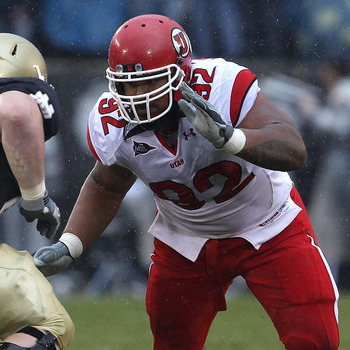
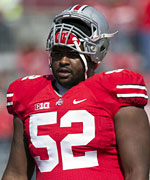
Meet Florida defensive lineman Sharrif Floyd

You’ll probably hear a lot about Sharrif Floyd over the next few months. He’s got the kind of back-story the media loves to wax lyrical over. You’ll probably feel like you know the guy personally by April. He’s a former 5-star recruit and top rated defensive tackle, who had to fight for everything he’s achieved. Floyd had a difficult upbringing, as noted by the AP:

Floyd grew up poor and has recounted the time when he wore the same clothes to elementary school every day for months at a time. His biological father died when he was 3 years old, and the man he thought was his father over the next 12 years “didn’t treat me right growing up,” he said. Floyd left home at 15, moved in with grandmother and then bounced around from coaches to friends to other relatives. Muschamp said Floyd still sends his grandmother part of his monthly Pell Grant money.

This is a player who grew up without parents, had to deal with severe financial difficulties and lived with whoever would take him in. As the AP states, he was living with his grandmother for a time – but he also lived with his guidance councillor and his high school coach. Anywhere that provided shelter. And in a few months time, he could be a first or second round NFL draft pick.

The mark of the man is summed up in the following story. Before he began his career with the Gators, he was invited to attend the annual U.S. Army All-American Combine for talented high school students. One problem – he couldn’t afford the trip to San Antonio Texas where the game was taking place (he was brought up in Philadelphia). To raise the cash he cooked brownies with the help of special-education students and sold them for several weeks at his school. He raised enough cash, made it to San Antonio and earned first-team all-combine honours when he got there. By the time he was ready to think about college, he was getting offers from all the big schools – Ohio State, North Carolina, Miami, USC, Florida and Penn State to name a few.

It’s safe to assume Pete Carroll knows about Floyd. He left USC to move to Seattle days before Floyd committed to Florida. We know Carroll likes to go back in for ‘the one who got away’ (Bruce Irvin turned down the chance to join USC in favour of West Virginia). So he’s one to monitor during the post-season.

Unfortunately the story doesn’t end with hardship merely leading into college. He was forced to sit out two games in 2011 after receiving what the NCAA describes as ‘impermissible benefits’. Having caught almost no breaks in his life previously, Floyd was finally helped out by a wealthy Philadelphia businessman named Kevin Lahn. Here’s the issue as the NCAA reported:

Receiving $2,500 cash over several months from an individual not associated with the university. Floyd used the money for living expenses, transportation and other expenses. In addition, he received impermissible benefits prior to enrollment, including transportation and lodging related to unofficial visits to several institutions.

This may sound familiar to the Michael Oher story, made famous by a (in my opinion) lousy film from which Sandra Bullock somehow won an Oscar. The difference here is – Oher’s adopted parents had ties to Ole Miss and the NCAA rightly investigated to see if his adoption and care had any significant impact on his decision to attend the school. They had to check to see if he’d basically been recruited by two Ole Miss boosters willing to sacrifice a bedroom for a left tackle. As far as I’m aware, Kevin Lahn has no connection to the Gators. Reports suggest he was a former booster at South Carolina, but apparently they disassociated themselves from Lahn after the NCAA ruling. For more information on the case, read this piece from the Orlando Sentinel.

The whole thing, to me, looks like a kid who finally got a break – and was then punished for getting that break. He’s since been adopted by the Lahn’s and will go on to become a pro-football player. It’ll be hard earned when he gets to the NFL.

So what about his play? He features both inside at tackle and also plays the edge too. He’s quite effective lining up as a five-technique and that might prove to be his best position going forward. He’s improved as a pass rusher this year, finding ways to get into the backfield and flashing a little more burst. Last season he looked a bit slow off the mark and if he’s going to play three-technique in the NFL, he needs to work on exploding off the snap and getting that leverage early. This year there’s some improvement – but for such a talented athlete it’s an area he could be better.

He gets too high when initiating contact and he gets pushed back because of poor technique. Look at the video above at the 2:03 mark. He tries to move left and dip inside to confuse the offensive line. However – the right guard notices this quickly and gets under his pad level quickly with a jolt and just stones Floyd on the spot. He can’t disengage. If he bends his knees and gets the hands in low, he maybe gets the lineman off balance or at least pushes him back. Instead, he’s out of the play. When you dip inside you better have an impact. It basically leaves one undersized defensive end against a guard and left tackle on the right hand side of the line. Not surprising, the DE is on the turf pretty quickly and E.J. Manuel breaks contain and exploits the space to his left.

Sometimes it doesn’t matter that he goes high. At 5:30 he’s playing the edge and just flat out beats the left tackle with an initial punch and then a burst round the edge to get to Manuel. Again, the technique isn’t great here. But he’s just too good. He’s too strong and too fast for the FSU left tackle. It’s a great play and flashes why he could make a better five technique than a three. If he can be this disruptive at the five, it’s going to make life very easy for some of the better 3-4 OLB’s in the league.

That’s not to say that he couldn’t play inside. Clearly he’s an athletic player for his size (approximately 300lbs) and there are times when he throws a little sidestep move to avoid a block and he looks the part of a pro-inside penetrator.

Against the run he’s OK. Again the technique is an issue because he consistently goes too high, but he also lacks a lot of the pure power at the point of attack you see with Star Lotulelei and Sylvester Williams. It’s worth noting that he’s quite a bit lighter than both of those players and could still add muscle to become a better run stopper. The thing he has got in his favour is a good motor. He doesn’t appear to take any snaps off and even though he doesn’t always finish when given the opportunity, he keeps working to make plays. Sheldon Richardson has that same attitude, but the big difference between the two is Richardson is nasty. He’ll take a hit and come back harder on the next play. He gets in your face, he has attitude. Floyd will score much higher than Richardson for character, but it’d be nice to see a bit more of a mean streak at times on the field.

Before people ask, I can’t imagine the Seahawks using him in the Red Bryant role which is essentially a 5-technique. Bryant is much bigger than Floyd. When asked who would replace him if he can’t make the Bears game on Sunday, Pete Carroll said Alan Branch would play DE with 284lbs Greg Scruggs taking over at the three technique. Carroll wants size in the Bryant position, not an orthodox 3-4 defensive end. In fact, he’s probably more likely to draft massive Georgia nose tackle Jonathan Jenkins to play the Bryant role than a guy like Floyd. And whatever people think of Bryant’s play this year – he remains a focal point of the defense. He’s also the highest paid defensive player on the team and a big emotional leader.

Is he likely to be on Seattle’s radar? Possibly given USC and Carroll’s reported interest in him before he chose Florida. However, I think he’s more likely to interest 3-4 teams and the Seahawks might be looking for a more orthodox three technique in the draft, such as the aforementioned Richardson out of Missouri.


Updated mock draft: 28th November

San Diego State tight end Gavin Escobar could be an option for Seattle

Time for an updated mock draft…

– Luke Joeckel is the #1 pick to Kansas City. We have to consider the prospect of a non-quarterback going first overall given the form of Matt Barkley, Geno Smith and Tyler Wilson. Branden Albert is a free agent in 2013 and with a franchise tag worth between $9-10m for offensive lineman next year, Joeckel could be a much cheaper, longer term option. I’ve given the Chiefs Aaron Murray at the top of round two and they already have enough weapons on offense to make this scenario work.

– Jarvis Jones drops late into the first round. Why? Purely down to the spinal stenosis issue. Some teams will cross him off their boards altogether. Others will weigh up the possibility he might only play 4-5 years in the league if things don’t work out. Incredible talent, but you can’t ignore the manner of his departure from USC.

– The first quarterback off the board is Tyler Wilson. You could pretty much draw lots on who goes first this year, but if Buffalo has their pick of the group – Wilson seems like the kind of player Chan Gailey would go for.

– Matt Barkley drops into the late first. He’s good enough – in my opinion – to warrant consideration as a top pick. Yet Barkley’s form has dipped as USC has imploded under Lane Kiffin – who must take a lot of responsibility for the mess in Southern Cal. We’ve seen fourth year quarterbacks drop when their senior campaigns go wrong, it could happen again. I suspect someone would move up into the 20’s to get Barkley if he lasts that long. In this projection, I wouldn’t be shocked if the Chiefs moved up after taking Joeckel with the #1 pick. The Eagles are another option – Nick Foles isn’t the future for that team.

– The Seahawks go defensive tackle and tight end this week. I think between now and April we’ll hear about the front office being smitten with Stanford tight end Zach Ertz. Seattle’s coaches showed a lot of interest in Coby Fleener last year, and Ertz is a superior player. In this mock, he’s a top-15 pick. If he drifts a little or if the Seahawks miss the post-season, then he comes into play as a legit option. He’s a tremendous run blocker which would allow the offense to make even more use of their 2TE sets. He can also be used as a third down target with experience working outside and in the slot. Despite the investment in Zach Miller for 2013 (I expect his contract will be negotiated down), Ertz has value that transcends that of a normal tight end. He could prove to be Seattle’s ideal pick. In this projection the Seahawks take a pure pass-catching tight end in round two in San Diego State’s Gavin Escobar. He’d be used differently to Ertz, but he has explosive potential as a field-stretching playmaker.

– There are several noticeable absentees. Sam Montgomery’s reputation at LSU goes before him and I think he’ll fall further than people expect. Cornellius Carradine suffered a bad knee injury against Florida on Saturday and this will severely impact his draft stock. I think Landry Jones and Tyler Bray will struggle to crack the first two rounds. I wanted to include Rutgers running back Jawan Jamison but he just missed out. Also just missing out: Baccari Rambo (S, Georgia), Chase Thomas (LB, Stanford) and Terrance Williams (WR, Baylor).

I’ve included a first and second round projection this week.

First round

#1 Luke Joeckel (T, Texas A&M)
They need a quarterback but may decide that’s for later. Current starting left tackle Branden Albert is a free agent in 2013 and is flexible enough to switch positions if he stays in KC.
#2 Dion Jordan (DE, Oregon)
He’ll shoot up the boards with a strong combine. The owner has a lot of sway in Jacksonville and seems to like flashy moves.
#3 Manti Te’o (LB, Notre Dame)
The Eagles could do with rebuilding their offensive line, but may see Te’o as a cornerstone on defense.
#4 Star Lotulelei (DT, Utah)
Big upside with major value in run defense. The Raiders need to boost that defensive line.
#5 Damontre Moore (DE, Texas A&M)
Moore is among the NCAA leaders for sacks this year with 12.5. The Browns need more pass rush.
#6 Brandon Coleman (WR, Rutgers)
Coleman has insane potential and would easily be the first receiver off the board in 2013 if he declares. 6-6, 225lbs – big play receiver.
#7 Jake Matthews (T, Texas A&M)
Features at right tackle due to Luke Joeckel’s impressive form on the blind side. He could translate to the left side in the NFL.
#8 Tyler Wilson (QB, Arkansas)
Chan Gailey likes mobile quarterbacks who can sling the ball. Wilson will be hoping to turn a few heads at the Senior Bowl.
#9 Dee Milliner (CB, Alabama)
The complete cornerback prospect. Whoever gets Dee Milliner is getting superb value, wherever he’s taken.
#10 Bjoern Werner (DE, Florida State)
If he re-gains lost weight he could be another J.J. Watt. That’s his ceiling.
#11 Geno Smith (QB, West Virginia)
With the top tackles off the board this makes life easy for Arizona – get a quarterback.
#12 Chance Warmack (G, Alabama)
If the current regime survives in New York, Warmack is the type of player Rex Ryan needs to play smash-mouth football.
#13 Zach Ertz (TE, Stanford)
With Miami also a possible suitor for Ertz, the Rams don’t take any chances with this pick. He’s worth this type of grade.
#14 Jonathan Cooper (G, North Carolina)
Cooper and Chance Warmack are too good to stick around late into the teens.
#15 Sheldon Richardson (DT, Missouri)
High-motor player with a relentless approach to the game. Just what New Orleans needs to set the tone on defense.
#16 Eric Fisher (T, Central Michigan)
He could follow in the footsteps of Joe Staley and make it into round one to fill a need in the NFC West.
#17 Barkevious Mingo (DE, LSU)
He’s not quite as good as some people want you to believe. Even so, he’ll look great lined up opposite DeMarcus Ware.
#18 Alec Ogeltree (LB, Georgia)
Superb value here. Ogletree is one of the most talented players eligible for 2013.
#19 Bradley Roby (CB, Ohio State)
He’s gradually overtaken Jonathan Banks as the #2 ranked corner in this class.
#20 Ezekiel Ansah (DE, BYU)
His best football will come in the NFL. Great blend of size and speed.
#21 Matt Elam (S, Florida)
Top-15 talent who lasts this long only due to a lack of need earlier. Elam’s a true playmaker in the secondary.
#22 Sylvester Williams (DT, North Carolina)
The Seahawks need a three technique with the size to plug the run, but also a prospect who can offer more of a pass rush threat.
#23 Jonathan Jenkins (DT, Georgia)
Massive nose tackle and just what Indy needs to build a 3-4 defense.
#24 Jesse Williams (DT, Alabama)
He just seems like a Green Bay type of player. They could use him at 3-4 end, which might be his best position in the NFL.
#25 Taylor Lewan (T, Michigan)
Another team that could use some investment at tackle. Lewan isn’t flashy, but he’s a right tackle at worst in the NFL.
#26 Matt Barkley (QB, USC)
He could be the #1 overall pick. Or he could fall a bit. I don’t think the Pats take him, but they love to trade down. This is the worst case scenario for Barkley.
#27 C.J. Mosley (LB, Alabama)
Every week he makes plays. The Broncos could do worse than adding another compliment to their defense.
#28 Dallas Thomas (G, Tennessee)
He’s playing at guard this year, but has the athleticism to move back to tackle.
#29 John Simon (DE, Ohio State)
Blue collar player who would fit right into San Francisco’s defense.
#30 Jarvis Jones (DE, Georgia)
Baltimore is one of the few teams good enough to see past Jones’ spinal stenosis to get 4-5 years of pass rushing quality.
#31 Johnathan Hankins (DT, Ohio State)
He could be better than he is, the effort is so inconsistent. Even so, he has major potential.
#32 Tavon Austin (WR, West Virginia)
When you have a roster like Atlanta’s, why not go for an X-factor playmaker?

Second round

#33 Kansas City – Aaron Murray (QB, Georgia)
#34 Jacksonville – Robert Woods (WR, USC)
#35 Philadelphia – Brennan Williams (T, North Carolina)
#36 Carolina – Sharrif Floyd (DT, Florida)
#37 Cincinnati – Jonathan Banks (CB, Mississippi State)
#38 San Diego – Markus Wheaton (WR, Oregon State)
#39 New York Jets – DeAndre Hopkins (WR, Clemson)
#40 Tennessee – Kawann Short (DT, Purdue)
#41 Arizona – Justin Pugh (T, Syracuse)
#42 Detroit – Xavier Rhodes (CB, Florida State)
#43 Buffalo – Arthur Brown (LB, Kansas State)
#44 St. Louis – Kenny Vaccaro (S, Texas)
#45 Washington – Cordarrelle Patterson (WR, Tennessee)
#46 Dallas – Oday Aboushi (T, Virginia)
#47 Miami – Justin Hunter (WR, Tennessee)
#48 Tampa Bay – Tyler Eifert (TE, Notre Dame)
#49 Minnesota – Bennie Logan (DT, LSU)
#50 Cincinnati – Shawn Williams (S, Georgia)
#51 Seattle – Gavin Escobar (TE, San Diego State)
#52 Pittsburgh – Le’veon Bell (RB, Michigan State)
#53 New York Giants – Levine Toilolo (TE, Stanford)
#54 Miami – Corey Lemonier (DE, Auburn)
#55 Green Bay – Montee Ball (RB, Wisconsin)
#56 Chicago – Barrett Jones (C, Alabama)
#57 New England – Alex Okafor (DE, Texas)
#58 Denver – Giovani Bernard (RB, North Carolina)
#59 San Francisco – Jordan Poyer (CB, Oregon State)
#60 Baltimore – Khaseem Greene (LB, Rutgers)
#61 Houston – Keenan Allen (WR, California)
#62 Atlanta – Ed Lacy (RB, Alabama)

Seattle’s #1 need is defensive tackle

The Seahawks could use a Star

There’s still a lot of football to be played, but yesterday’s 24-21 defeat to Miami made something pretty clear – this team must upgrade at defensive tackle. #1 need, straight up.

I previously wondered if the bigger need was a more athletic WILL that can cover. That comes a close second, particularly after all the busted coverages involving Leroy Hill against the Dolphins. Adding another receiver also looked like a realistic option, but nobody can say that position has been an issue in recent weeks. The clear #1 need is at defensive tackle. Here’s why…

Seattle’s base defense uses a front four consisting of Chris Clemons, Alan Branch, Brandon Mebane and Red Bryant. Of that quartet, only Clemons offers any pass rushing threat. With the Seahawks opting to use a four man rush more often than not, they’re relying on Clemons too much to create pressure. This has been the case ever since Pete Carroll arrived in Seattle in 2010. It’s a pretty unique situation where your starting defensive end (Bryant) and your starting three technique (Branch) have almost no pass rushing responsibilities. I see it as the Seahawks trying to create a lot of 2nd/3rd and long situations so that the specialists (Bruce Irvin, Jason Jones) can have an impact. Play stout against the run early with three +300lbs lineman, rely on the second level guys not to give up the 7-8 yard pass and force the offense into an obvious throwing situation. I suspect this was of doing things is to try and create turnovers – a key mantra in Carroll’s philosophy. Put a team in 3rd and ten, use speed rushers, put an extra defensive back on the field. You can understand the thinking here even if you don’t agree with it.

Here’s the problem though – too many times this season, particularly on the road, the run defense has been poor on those key early downs. Miami had +6YPA on Saturday. If the base defense isn’t getting the job done, it’s harder to maximise the qualities of Irvin, Jones and anyone else you want to use in nickel or bandit formations. For this system to work, you need to be effective in base.

It’d also be nice to have a starter to take some of the pass rushing responsibility away from Clemons. After all, what better way to make the most of Irvin/Jones than to put a team in 2nd/3rd and 17 because of a sack on first down?

Finding an interior upgrade that maintains the size up front while also offering a superior pass rush option is key and will help this defense take the next step.

There are solutions in the draft and it’s a rich year for defensive tackles. Star Lotulelei has the size and freakish athletic talent to become one of the best defensive tackles in the NFL. He’s extremely streaky and dips in and out of games, but his upside is off the charts. He’s mostly a terrific run blocker, which would be key for the Seahawks. When he sets his feet and gets leverage, he’s proven almost impossible to move. He has tremendous upper body power and the size to plug holes. Unfortunately, he’s not a great pass rusher. Yet.

At the moment he’s too one dimensional, relying exclusively on the bull rush. Guards and center’s are able to adjust and predict what he’s going to do, and there have been times where he’s started a game on fire and then disappeared in the second half(see: USC vs Utah below). Once an offensive lineman sees the same move time and time again, they suss him out. He also plays too high at times and it’s led to some pretty ugly looking blocks over the last two years. Even so, you’d like to think he’d improve with pro-coaching although it might take a year or two to max out the extreme physical potential on offer here.

It’s presumed that Lotulelei will be a high pick, but if he leaves the board early there are alternatives. Sheldon Richardson doesn’t have the ideal size for Seattle’s scheme (approximately 290lbs) but he might be the best pure three technique. He’s a high motor, big effort player who doesn’t give up on plays and constantly finds ways to get into the backfield. He’s sparky and his personality can rub coaches up the wrong way – he was suspended recently for a key game for breaking team rules. It’s the kind of thing that could lead to a fall, and if he does drop he could be an option for Seattle. The main concern here would be the considerable size difference between Richardson and Alan Branch. You’re talking about 40lbs. The Seahawks aren’t going to completely abandon their defensive scheme and they will want to remain big and stout on early downs. If Richardson can’t maintain that, he becomes nothing more than another Jason Jones. For those reasons, I’m not totally convinced Richardson would be on the radar. They’d have to feel very good about his frame holding up against the run.

Another player who compares favourably in size to Lotulelei is North Carolina’s Sylvester Williams. Again, you’re talking about a top-tier run defender in college. Williams has dominated at times this year, despite playing for the most part with a heavily-strapped ankle. He controls blockers, has the size to fill running lanes (320lbs) and chases after running backs when he gets into the backfield. He doesn’t quite have the physical upside of Lotulelei, but he might be better prepared to have a quicker impact. One area where he’s vastly superior to Lotulelei is pass rushing. Williams has a patented swim move which consistently brings results, he can bull rush, he’s got a great burst off the snap and like Richardson – he lives in the backfield.

Teams will look into his background, as he’s had quite the journey to get to UNC. At high school he struggled for motivation, skipped lessons and at one point his father had to arrange for a police escort to take him to the school gates just to make sure he actually turned up. He eventually took a job working in a car-parts factory, earning $12 an hour. That appears to be the catalyst for some kind of career-epiphany, but he eventually walked on at Coffeyville in the JUCO ranks before enrolling at North Carolina. All of this means he’ll turn 25 as a rookie – just as Bruce Irvin did this year. What I’d want to know is – will the old Sylvester Williams turn up when the cheques get cashed? Is he truly a reformed man, ready to continue his new-found worth ethic having made it to the pro’s? Or will it be seen as job done and the end of the journey? Some teams probably won’t entertain the risk. A 22-year-old rookie Williams without any of these issues is a top-fifteen pick based on the tape. With this lingering in the background, he might last into the 20’s.

What about the others? Ohio State’s Johnathan Hankins doesn’t play with enough fire in his belly to compete for this team, while Kawann Short might be available in round two. The one other player I’d possibly consider as a round one option is Jesse Williams at Alabama. He’s not a natural three technique and has played 3-4 DE and nose tackle for the Crimson Tide. Williams is strong at the point and offensive lineman struggle to move him versus the  run. If the Seahawks were just trying to solve a run defense issue here, I’d suggest Williams would be a great option. However, I think they need to find someone who can also provide a pass rush on early downs. Can Williams do it? I wouldn’t rule it out. He’s disruptive, but predictable as a rusher – exclusively relying on brute force. He lacks an explosive first step and he could be better with hand placement and execution. His improvement level from last season to this is cause for optimism though and he’s got the athletic potential to be a better pass rusher.

Of course, not every need will be filled in round one of the draft. After all, the teams greatest need was addressed last off-season by a third round pick. There’s nothing to stop Seattle’s front office working their magic again and finding a solution outside of round one. However, every off-season Pete Carroll and John Schneider have identified need areas and been quite focused with their early picks. Finding an upgrade at defensive tackle and a player who can feature on early downs will surely be on the target list as a key area for improvement. The Seahawks don’t have a ton of glaring needs, but filling the few that remain with talented players will ultimately be the difference between eternal 7-9 win seasons and maximising the potential this team has to reach 10+ victories.

Even so, it doesn’t mean this need will be addressed in round one. We sat here discussing quarterbacks for four years before a third round pick answered the call. In a deep draft for defensive tackles, the solution may not be obvious to fans or humble bloggers just yet. And nobody should be surprised if they go for that first round linebacker, wide receiver, tight end or offensive lineman instead. I could just as easily make a case for the team going after Zach Ertz or Alec Ogletree. After all – all three of Lotulelei, Richardson and Williams could be off the board before Seattle picks. But this is an area that has to be dealt with one way or another for sustained improvement to continue.

Need rankings after week 12:

#1 Defensive tackle
#2 WILL linebacker
#3 Another weapon for Russell Wilson at WR or TE

Star Lotulelei (DT, Utah) tape vs USC:

How good is California receiver Keenan Allen?

Keenan Allen is one of the toughest guys to work out. He definitely looks the part. Allen’s listed at 6-3, 210lbs by ESPN, although Scout.com had him at 6-2 during recruiting. Either way he’ll handle the physical nature of the NFL and shouldn’t have too much difficulty competing with the bigger corners we’re seeing in the pro’s.

He came into the 2012 season being touted as a likely first round pick. The thing is, he was never going to get there with production. California’s passing game isn’t even mediocre and Allen was fortunate to register 737 yards and six touchdowns before picking up a season-ending knee injury. Has he shown enough quality within a limited passing offense to warrant a first round grade? The jury’s out.

Size is good, but you have to be able to do something with it. If a receiver can’t get downfield or create separation, he’s going to be pretty limited at the next level. Allen’s a good route runner which helps and he’s been able to find space with crisp breaks and a suddenness off the snap. What he hasn’t shown is that ability to consistently break off big plays in the open field or make downfield completions. His biggest play of the year was a 69 yard catch and run against Washington State for a touchdown (click here). Apart from that? In four games this season his biggest play failed to top 25 yards. His touchdown against Washington State is the only play of 50+ yards this year. The highlight reel would be pretty short.

Of course i’s not all about big plays or statistics and again – we have to keep stressing how weak the offense has been at California. It’s cost Jeff Tedford his job as Head Coach. A lack of explosion is a legitimate question mark with Allen though – is he special enough to warrant the high pick? Does athleticism match frame? Jonathan Baldwin had similarly poor production at Pittsburgh and also seemingly had a rare combination of size and speed. However, Baldwin flashed multiple big plays even within a bad offense at Pitt. And when he got to Indianapolis, he did enough to convince the Kansas City Chiefs they needed to spend a late first round pick on his services.

Allen’s lack of pure speed is the biggest concern as well as balance. On too many plays he appears to stumble and lose balance quickly. For a player who is very controlled and crisp with his routes, there are quite a few missed opportunities where he trips up trying to make YAC. As for the speed, Scout.com listed his high school forty yard dash as 4.57. They graded him as a five star safety prospect who also played receiver, but raised questions about his closing speed in the secondary. “Not incredible speed, but more than enough to get the job done” is how they put it.

Allen had a lot of admirers in high school, including all the big talent recruiters – Alabama, Clemson, North Carolina and Oregon. He turned down the chance to stay in state with UNC or Clemson to join his half-brother Zach Maynard at California. Here are the positives as I see it – frame, good hands catcher, very competitive individual on the field, route runner and for a receiver he comes across as a humble and hard working team mate. There are plenty of reasons why you’d consider drafting Allen in the first or second round.

However, few prospects have as much to gain (or lose) from the combine. The list of positives above look very good alongside a 6-3, 210lbs receiver who runs something like a 4.45. With straight line speed like that, you can work on his open field running and feel a little more confident he can offer something downfield at the next level. He’s added about 20lbs since high school when he supposedly ran a 4.57. If he gets to Indianapolis and matches that time – or even gets into the 4.6’s – that will have a big negative impact on his draft stock.

There are other receivers eligible for 2013 (such as Markus Wheaton and DeAndre Hopkins) who lack the size and frame of Allen, but have all of the same route running skills, the hands, the attitude – but they also have deep speed and an X-Factor that’s been lacking in Allen’s game. It might be a year where we don’t see a receiver leave the board in the first round, but eventually it’s going to get very competitive with multiple players at the position leaving the board quickly. Flashing big-time athleticism at the combine is key for Allen and will make or break his stock. It’ll determine whether he goes in the late first like Jonathan Baldwin, or whether he ends up being the 5th or 6th receiver off the board.

Updated top 50 watch list: 19th November

A month ago we had a look at some of the players to keep an eye on as the college season progressed. As we get closer to the finish line, it’s time for one final list.

1 Alec Ogletree (LB, Georgia)
Huge potential and upside as an athletic outside linebacker in the NFL. He plays inside at Georgia but will likely switch to the WILL or SAM in a 4-3 at the next level. Minor character issues will concern some teams but Ogletree can do it all – pass rush, cover and read an offense.

2 Jonathan Cooper (G, North Carolina)
He could move to offensive tackle and some teams will consider a Branden Albert-type switch. Cooper has elite pass protection skills and he pulls and gets to the second level better than any other guard in college. The best zone blocking lineman to enter the draft in a long time.

3 Chance Warmack (G, Alabama)
Road grader type who specialises in run blocking. He consistently turns opponents with great technique, opening big running lanes for the Alabama tailbacks. He’s not quite as athletic as Cooper but he’ll play left guard for 10+ years and be a regular All-Pro.

4 Luke Joeckel (T, Texas A&M)
It’s hard to ignore some of the opponents he’s faced this year, such as the duo at LSU. The SEC is filled with productive pass rushers, yet Joeckel and book-end Jake Matthews have looked superb. In a league where left tackles are valued second only to quarterbacks, Joeckel could be a contender to go first overall. For tape of his performance against Alabama, see the video above.

5 Dee Milliner (CB, Alabama)
Fantastic cornerback prospect who does it all. Milliner is physical enough to play up at the line and he’s terrific in run support. You need to have recovery speed, deep speed and an eye for the ball to be a top-level corner in the NFL and Milliner has the entire package.

6 Brandon Coleman (WR, Rutgers)
No receiver in college football has Coleman’s level of upside. He doesn’t have the production of some other players, but he’s 6-6 and 220lbs with the speed to get downfield. He’s also a pure hands catcher who can be more consistent, but he’ll get there. If he declares he’ll be an early pick.

7 Damontre Moore (DE, Texas A&M)
Moore has 12.5 sacks this year to lead the NCAA. This isn’t just a one-off great year either, he’s had a major impact in pretty much every win for Texas A&M. He’s capable of playing in any scheme and should be a top-five pick in April.

8 Manti Te’o (LB, Notre Dame)
Notre Dame doesn’t have a lot of star players, but they have a great team capable of grinding out wins. Te’o has played such an integral part as the emotional leader of the group. It’s easy to forget he has six interceptions this year.

9 Matt Barkley (QB, USC)
This has been a bitterly disappointing season for USC and Barkley. However, he still ranks as the best quarterback eligible for 2013. A team like Kansas City – which has a lot of weapons on offense and a not terrible line – could really use a quarterback who specialises in control, accuracy and production.

10 Sheldon Richardson (DT, Missouri)
A recent team-imposed suspension is a concern as Richardson is an intense character who might turn off some GM’s and coaches. Even so, he’s such a dynamic player. 100% effort on every down, he never gives up on a play. Ideal three-technique.

11 Matt Elam (S, Florida)
Playmaking safety with the build and speed to be a perennial All-Pro. Not enough people are talking about Elam this season and what he’s done for the Gators. In a year where the safety class is pretty thin, expect Elam to make a big move up the boards if he turns pro.

12 Zach Ertz (TE, Stanford)
You’ll struggle to find a better run blocking tight end in college. He showed against Oregon he can lead an offense as a receiver too, making over 100+ yards and scoring a key touchdown with 90 seconds to go. A lack of top-end receivers will put the focus on Ertz, making him a likely top-15 pick.

13 Barkevious Mingo (DE, LSU)
Will the speed translate to the next level? At 6-5 and 240lbs, he’ll need to prove at the combine he’s more Von Miller than Aaron Maybin. He’s had a good year despite only getting four sacks, but I think he needs to feature in the 3-4.

14 Star Lotulelei (DT, Utah)
Nobody can deny how special this guy looks when he’s at his best. On any given snap, he can destroy a lineman to break into the backfield to make a splash play. Unfortunately, he’s just as capable of being dominated himself. Teams will love his upside, but not his inconsistency.

15 Dion Jordan (DE, Oregon)
He’s looked like a proper defensive end this year. At 6-7 and 240lbs, he’s a good combine away from making a giant leap up the draft boards. Any team running a 3-4 scheme and needing a pass rusher who can drop into coverage will show a lot of interest here.

16 Ezekiel Ansah (DE, BYU)
Another athletic defensive lineman who could line up outside on standard downs and inside for passing situations. Ansah only has four sacks for the season but he’s looked better on tape. Like Jordan he’ll benefit from a strong combine.

17 Bjoern Werner (DE, Florida State)
He lost a lot of weight during the summer to try and max out his ability as a speed rusher, but I think he played better with the weight last year. Twelve months ago he looked like a J.J. Watt clone. That’s how much potential he has.

18 Sylvester Williams (DT, North Carolina)
Impressive three-technique with the size to play every down. Williams flashes a great swim move and the ability to consistently make plays in the backfield. He’s played most of the year with a bad ankle, making his production even more impressive. He’ll turn 25 as a rookie next year and had some work ethic issues in high school and the JUCO ranks.

19 Dallas Thomas (G, Tennessee)
One of the more impressive individual performances you’ll see this year came when Thomas met South Carolina and Jadeveon Clowney. He flashed exactly why he could move back to tackle at the next level, showing great athleticism and power at the point of attack.

20 John Simon (DE, Ohio State)
He’s not a flashy player, but he just finds a way to have an impact. Blue collar pass rusher who had four sacks against Wisconsin on Saturday.

21 C.J. Mosley (LB, Alabama)
Every week Mosley makes a big play. It could be an interception, a sack or just a jarring tone-setting tackle. He could line up at inside or outside linebacker and might be a top-20 pick.

22 Tavon Austin (WR, West Virginia)
It could be time to start considering Austin as a Percy Harvin type after all. On Saturday he rushed for 300+ yards against Oklahoma – from the tailback position. Austin has elite speed and the ability to score any time he gets the ball in space.

23 Jesse Williams (DT, Alabama)
Very strong at the point of attack and looks comfortable at nose tackle. Williams could play the one, three or five technique. He also has the ability to develop into more of a pass rushing threat. You sense there’s more to come from this guy the more he plays the game. Australian born and still learning.

24 Jake Matthews (T, Texas A&M)
He’d be higher if it wasn’t for the fact he’s playing right tackle. Ideally you want to see him protect the blind side, but he’s done a good enough job against some top pass rushers to warrant a first round grade. For tape of his performance against Alabama, see the video at the top of this piece.

25 Jarvis Jones (DE, Georgia)
Explosive, amazing, stunning athlete. Yet being diagnosed with spinal stenosis is a concern and has to come into consideration. Some teams will strike him off the board completely. He might only play for 4-5 years.

26 Robert Woods (WR, USC)
He needs to land on a team that spreads the field out and uses a lot of 4WR sets. In Green Bay or New Orleans, he’ll be a terror running across the field. You can’t expect him to be a true #1, but he’ll excel in an air-raid attack.

27 Arthur Brown (LB, Kansas State)
Sturdy linebacker who plays with intensity and great range. He’ll go sideline-to-sideline effortlessly. He isn’t asked to do much pass rushing which is a slight knock, and his decision to quit Miami and return home makes you wonder if he’s adaptable.

28 Eric Fisher (T, Central Michigan)
I’ve only seen one game, but he’s an intriguing guy. Hasn’t played a lot of top-level opponents but ticks all the boxes as a potential blind side blocker. He could be a late first round pick, just like another former Central Michigan lineman – Joe Staley.

29 Cordarrelle Patterson (WR, Tennessee)
Nobody can argue this guy is a consistent receiver who will make a lot of solid catches. He’s a pure home run hitter, who will frustrate as much as he excites. Patterson is explosive though and will put cheap points on the board as a runner, receiver and kick returner.

30 Jonathan Jenkins (DT, Georgia)
Nose tackle prospect with massive size (340lbs+) and great mobility. If you’re a 3-4 team looking for a cornerstone, this is your guy. He’s a better overall prospect than Dontari Poe who went #11 overall last April.

31 Geno Smith (QB, West Virginia)
He has a lot of the characteristics you look for in a franchise quarterback – decent technique, leader, arm strength. Unfortunately he also struggles to go through his progressions, forces passes and can be streaky.

32 Taylor Lewan (T, Michigan)
Just a solid, no-nonsense lineman in the mould of another former Wolverine Jake Long. He’s not close to the stature of Long, but teams needing a left or right tackle will look at Lewan in the first or second round.

33 Markus Wheaton (WR, Oregon State)
I like everything about this player. Wheaton isn’t the biggest receiver at 6-1, but he is tough to stop and is making a lot of plays for Oregon State this year. Off the field he’s a modest individual and that will appeal to teams trying to avoid the latest diva prospect at receiver.

34 Jonathan Banks (CB, Mississippi State)
Started the season on fire but has regressed a little. He’s still a big, physical corner and that’s what the league is looking for right now.

35 Bradley Roby (CB, Ohio State)
Roby’s having a good year and he’s made some big plays. Teams have started to avoid him. He had a tremendous day against Nebraska with two big interceptions including a pick-six.

36 Shawn Williams (S, Georgia)
Williams could easily end up in round one. He called out the Georgia defense during a slump and it seems to have done the trick. Another good player on a talented Georgia team that could make the BCS Championship game.

37 Levine Toilolo (TE, Stanford)
He’s had some sloppy drops recently and he needs to be more consistent. At 6-8 you expect Toilolo to be dominant in the red zone, but Stanford are looking for Zach Ertz more than Toilolo.

38 Brennan Williams (T, North Carolina)
He’s still a bit raw and learning – Jonathan Cooper is constantly instructing him what to do pre-snap. But it’s hard to ignore his athletic skill-set and potential to protect the blind side.

39 Sam Montgomery (DE, LSU)
He’s not quite as impressive as Barkevious Mingo off the edge and I’m not convinced he can switch to linebacker.

40 Jonathan Hankins (DT, Ohio State)
He could be a top-15 pick if he wants to be. It’s that flash of brilliance you see every now and again which makes you wonder why he’s so underwhelming the rest of the time.

41 Tyler Wilson (QB, Arkansas)
This has been a chaotic year for the Razorbacks and Wilson has suffered as a consequence. He doesn’t have an ideal throwing motion and he’s made a lot of basic errors this year – but he’s a gun slinger with surprising athleticism.

42 Gavin Escobar (TE, San Diego State)
Everyone’s looking for the next Jimmy Graham and it could be this guy. He’s 6-6 and a pure pass-catcher who will create problems for linebackers in coverage. Don’t expect him to do much run blocking.

43 Kawann Short (DT, Purdue)
Another player who has flattered to deceive at times this year. Like Hankins, he has the potential to be so much more. He can be brilliant. So why is there so much mediocre tape?

44 Keenan Allen (WR, California)
I’ve never once watched Allen and thought, “Wow… this guy is going to be great in the NFL.” It’s OK having the size and the pedigree (he was a top recruit and almost went to Alabama). I get that his quarterback situation isn’t ideal (although he chose Cal to play with that QB – his brother). The combine will be huge for Allen and he has to prove he has the upside a lot of people claim he possesses.

45 Montee Ball (RB, Wisconsin)
Without Russell Wilson keeping the offense honest, he’s had some tough games. Even so, a smart team will draft Montee Ball and get a few years of hard running and production.

46 Oday Aboushi (T, Virginia)
His effort at the second level could be better, but that’s a trait we’ve seen a lot with Virginia lineman over the years. In a man-blocking scheme he could be a useful tackle.

47 Justin Hunter (WR, Tennessee)
He’s not looked completely comfortable this year. Whether he’ll ever be 100% again after a serious knee injury remains to be seen. I wouldn’t hang my hat on this guy as a #1 at the next level.

48 Giovani Bernard (RB, North Carolina)
For the first time at the weekend I appreciated the size concerns some people have with Bernard. He’s a good running back, but is he going to carry a heavy work load? I’m not convinced.

49 Khaseem Greene (LB, Rutgers)
Solid inside linebacker prospect. Hits hard and gets around the field. Doesn’t have great size but he’s sturdy enough to stay in the middle.

50 Tyler Eifert (TE, Notre Dame)
I just don’t see a great deal of difference between Eifert and the last two big-name Notre Dame tight ends – Carlson and Rudolph. Which is why I have him in the same range as they were drafted. He’ll likely be a solid player at the next level.

Just missed out: Cornellius Carradine (DE, Florida State), Corey Lemonier (DE, Auburn), Kenny Vaccaro (S, Texas), Bennie Logan (DT, LSU), Shariff Floyd (DT, Florida), Aaron Murray (QB, Georgia), Justin Pugh (T, Syracuse), Terrance Williams (WR, Baylor), Alex Okafor (DE, Texas), Chase Thomas (LB, Stanford), Xavier Rhodes (CB, Florida State), DeAndre Hopkins (WR, Clemson), Ed Lacy (RB, Alabama), Bacarri Rambo (S, Georgia), Chris Whaley (DT, Texas)

How will spinal stenosis impact Jarvis Jones’ draft stock?

Jarvis Jones could be a top five pick. Injury concerns could also force him down the board.

Jarvis Jones is an incredible football player. In two years at Georgia he’s amassed 24 sacks, flashing elite skills as a pass rusher and athletic qualities worthy of a top five pick. Yet something lingers in the background. Something that could really hamper his ambitions of playing in the NFL.

Spinal stenosis is a pretty serious condition which affects a number of football players, including Jones. It’s defined as an abnormal narrowing of the spinal canal that may occur in any of the regions of the spine. The narrowing causes a restriction to the spinal canal, resulting in a neurological deficit. Symptoms can include pain, numbness, paraesthesia and loss of motor control.

Some of the biggest names in the sport have been affected by the condition. Here are just a select few cases:

– Cooper Manning – older brother of Peyton and Eli – was diagnosed with the condition in 1992. It ended his career. Archie Manning had both other brothers tested immediately afterwards due to the severity of the issue. Neither had the condition.

– Michael Irvin retired in 1999 after receiving advice from doctors. He was diagnosed with spinal stenosis after suffering a non-life-threatening spinal injury in a game against the Philadelphia Eagles. The injury cut short a Hall of Fame career.

– Marcus McNeill was diagnosed with the condition prior to the 2006 NFL draft and it forced his fall into round two. One of the most talented offensive lineman to enter the league in recent memory was the seventh tackle to leave the board that year. At the age of just 28 he has been forced to retire, despite signing a six-year, $49 million with the Chargers after an impressive start to his pro career.

– Chris Samuels was the #3 overall pick in 2000, having built a reputation blocking for Shaun Alexander at Alabama. He spent nine years with the Washington Redskins before retiring aged 32. The reason? Samuels suffered temporary upper-body paralysis after a big hit in pass protection against the Carolina Panthers in 2009. The issue was blamed on spinal stenosis, a condition he was diagnosed with as a child. He was advised to cease playing immediately.

– Speculation suggested Rob Gronkowski had spinal stenosis after a series of back problems during his college career in Arizona. Agent Drew Rosenhaus was forced to deny the reports from NFLDraftScout.com prior to the 2010 draft. There were fears the talk could further push Gronkowski’s stock down the board, with lingering concerns over his back already leading to a second round fall.

In 2009, Jarvis Jones was playing for the USC Trojans against Oregon. He suffered a pretty routine hit, but Jones stayed on the turf with a neck injury and was pulled out of the game as a precaution. Doctors diagnosed a mild case of spinal stenosis.

USC advised Jones to stop playing football and refused to clear him for contact. His career was effectively over in Southern Cal. It was a huge blow – Jones had travelled across the country to play for Ken Norton Jr. and Pete Carroll. Both believed they had found the next great Trojan linebacker. ESPN’s Jordan Conn interviewed Norton Jr. and asked about Jones: “A lot of guys have speed, but they’re not tough. Then some guys are tough but slow. Then there are guys who have all of that but no football smarts or work ethic. Jarvis has it all. It’s not even fair.”

On the injury: “It seemed like just a regular linebacker injury, I don’t think any of us thought it’d be as serious as it turned out” notes Norton Jr. It was his last act for USC’s football programme.

Not surprisingly for a young man with so much talent and ambition, he didn’t take no for an answer. While USC were unwilling to clear him to play, other teams might be willing. Georgia coach Mark Richt forced Jones into a series of tests and examinations and the doctors cleared him to play for the Bulldogs. He’s since developed into a college football star in its most high profile conference.

Jones may face a similar situation when he turns pro. Some teams will likely adopt the approach of USC and strike his name off the board. Given the chance to speak to Jones, they may even recommend he retires to avoid serious injury. Others will take advice from doctors and if they’re given the green light, will probably look at the big plays, 20+ sacks in two years and elite athleticism and take the chance. The question is, will one of those teams take a chance in the top ten? Or will they take the chance in round two?

We’ve assumed for so long that Jones would be a high pick due to his on-field performance, but this is something we’ll have to consider seriously as we edge closer to the draft. The condition was bad enough to force Marcus McNeill into round two, but it wasn’t bad enough to stop him enjoying a productive career until the age of 28. Jones actually has another year of eligibility at Georgia, but if he turns pro in 2013 he’ll be a 24-year-old rookie. Will a team roll the dice on a top-ten pick for a talented player who might only play 4-6 years in the league? All the while risking serious injury?

It’s worth noting that there haven’t been any issues at Georgia and Jones hasn’t just played, he’s dominated. That creates a real dilemma for scouts and GM’s at the next level. He has the condition, however mild. Are you willing to be the team that puts the guys health at risk? Or do you listen to the doctors, see his body of work in college and go with a player of immense talent?

With a clean bill of health, he probably would’ve had three years at USC and waltzed into the league as a top pick. We’d be watching him on Sunday’s right now. Unfortunately that isn’t the case. And however much we enjoy watching him play for Georgia, it doesn’t necessarily mean he’s going to be the high pick everyone expects. This condition has impacted players before and it could have an impact on Jarvis Jones come next April.

Georgia linebacker Alec Ogeltree has elite potential

Alec Ogletree is the real star of Georgia's defense

Alec Ogletree is a top ten talent. Simple as that. No doubt what so ever. By the time April comes around I suspect that’ll be consensus opinion. It should be.

There are reasons why that may not prove to be the case (more on that later) but none involve a lack of talent. What’s more the guy looks like he was made to play for the Seahawks defense. If he falls out of the top ten due to a couple of off-field incidents, Seattle’s front office needs to be ready to pounce. We’ve spent a ton of time talking up Jarvis Jones as the defining playmaker on Georgia’s defense. The more I watch Ogletree, the more I think he’s the true star.

Against Ole Miss on Saturday, he was flawless. This is the fourth time I’ve seen him this season and he’s shown improvement each time after returning from a four game suspension. He had a series of big impact plays, helping the Bulldogs to a comfortable 37-10 victory.

– With 13:56 left in the first quarter, Ole Miss attempt a pass down the right sideline. The safety under-cuts the route and comes close to intercepting the ball, but the gamble takes him out of coverage. The receiver has a ten yard head start and a free run to the end zone, but the Ogletree chases him down and makes the tackle at the 16 yard line saving a touchdown.

– On 3rd and 8 at the Ole Miss 45, he lined up next to the right end appearing like he was going to cover the slot receiver. Instead he rushed the edge with the defensive end dropping instead. Ogletree blew past the left tackle on a speed rush and sacked the quarterback for a big loss.

– In the closing stages of the first quarter, Ole Miss went for it on 4th and 4 at the Georgia 30. Ogletree lined up inside, standing on the right hash mark. He rushed the interior but the quarterback threw quickly on a WR screen to the opposite side of the field. Ogletree diagnosed the play immediately, changed direction in a flash and sprinted to the receiver who was odds on to get the first down. With an elite burst of acceleration, Ogletree wins the foot race and makes a crunching tackle to force a turnover on downs, inches short of the marker. Anything other than a forceful hit and momentum carries the ball carrier to a first down. It’s the best defensive play you’ll see this year that isn’t a sack or interception.

– On a screen play with 9:18 left in the second quarter he showed great instinct again to recognise the play, avoid blockers and make the play for a loss.

– With 6:08 left in the second quarter the Ole Miss quarterback drops back and makes an ill-advised down field thrown from just inside his own end zone. Ogletree has dropped into coverage downfield and is perfectly placed to make a leaping interception. By my reckoning he makes up 25 yards between the quarterback setting to throw and delivering the pass. Again, it’s a show of elite athleticism, field IQ and execution.

– With 0:58 left in the third quarter, Ole Miss are pinned back on their own two yard line. Ogletree is once more lined up inside. He reads the play (hand off to the tailback in the shotgun) and explodes to the ball carrier, not allowing him any time to react. Ogletree throws the running back to the ground inside the end zone for a safety.

If you’ve not really considered the possibility of the Seahawks drafting this guy, it’s time to get excited. Just don’t get your hopes up too much because he may be long gone by the time the Seattle picks. I’ve not seen a linebacker with comparable closing speed. He can show a coverage look before blitzing, take away the hot read and play the edge as a pass rusher. In fact he has untapped potential as a pass rusher playing ILB in Georgia’s 3-4 defense. As a WILL linebacker in a 4-3 scheme, he’ll probably end up being a better fit.

So why might he fall to the Seahawks, assuming they aren’t picking in the top ten this year? He was suspended for four games this year, along with team mate Bacarri Rambo, after failing a drugs test during spring camp. There’s nothing to suggest this is a lingering issue or that Ogeltree has a problem. Even so, it’s something teams will look into – particularly given it’s not his first flirtation with trouble. He was also suspended in 2010 for one game after a bizarre arrest following an incident involving a stolen scooter helmet. Teams will do their homework but I suspect these incidents aren’t going to be enough alone to force a dramatic fall in round one.

People who visit the blog regularly know how much I rate pass rusher Jarvis Jones. Who doesn’t rate the guy? He’s the big name on a Georgia defense loaded with NFL talent, including nose tackle Jonathan Jenkins, defensive end Garrison Smith, safety’s Shawn Williams and Bacarri Rambo and cornerbacks Damian Swann and Branden Smith. Ogletree is right up there with Jones and might be the better pro-prospect. The Bulldogs are probably going to face Alabama in the SEC title game again and it’ll be interesting to see if they can do a better job than last year against a dominating Crimson Tide offense. They have enough talent on defense to compete.

Linebacker isn’t Seattle’s greatest need but eventually Leroy Hill is going to move on or revert to a more limited role. Ogletree would be the perfect replacement at the WILL position. Not only would he offer another dimension to the pass rush at outside linebacker, he’d also solve some of the issues on third down. He’s a former safety so has defensive back speed and can cover slot receivers underneath or tight ends on deeper routes over the middle. Third down defense is an area for improvement and Ogletree would provide that from day one. There’s no reason why he couldn’t develop into a player of Julian Peterson’s quality, providing 7-10 sacks per year while being vastly superior in coverage.

Make no mistake, Alec Ogletree is an elite talent and warrants the highest praise as a pro-prospect. If you want someone to root for as a defensive pick, this is your guy.

Updated mock draft: 31st October

I wanted to do a mock draft with the quarterbacks falling. I don’t think it’s an unrealistic proposition, as discussed in yesterday’s piece. People will instantly point to this being a ‘quarterback driven league’ but there are enough question marks this year to consider the possibility we won’t see a quarterback in the top-10 for the first time since 2000.

As for the Seahawks – well we know they can be a tough team to work out. They’ve targeted pretty obvious needs the last two years, but the players they’ve drafted have been anything but obvious. I’ve given them Cordarrelle Patterson this time , a player with ideal size for a receiver with explosive playmaking qualities. He can get downfield, he’s useful on reverses and running plays and he’s a great return guy. He’s a home run hitter.

The big issue is he’s a ‘one or two big plays a game’ type. He’s not a ten catch player who churns out 100 yards regularly. Patterson has also had sloppy moments this year such as giving up on a pick-six against Akron and dropping an easy downfield pass against Georgia. If the Seahawks want a consistent target who can make multiple small plays in a game, chipping away at a defense, this isn’t the guy.

But the way Seattle’s offense is being utilised emphasises the big play and values special teams. They appear to want to run a lot and then hit you on a play action pass downfield. They want an X-Factor in the return game to create field position advantages and score cheap points. In that sense, Patterson fits the bill. And perhaps he can be coached into a more rounded receiver? This is his first year at the FBS level after playing in the JUCO ranks. For what it’s worth, James Carpenter and Bruce Irvin are also former JUCO transfers.

I do have some concerns about Patterson’s personality. How badly does he want to be a great player? How responsible is he going to be when things go badly? Can he mature as a pro, or will he be overwhelmed? These are things we can’t really answer without meeting the guy. Yet part of this process is trying to find the type of player the Seahawks may be willing to consider in round one. John Schneider is quoted as saying he didn’t think much of the 2012 receiver class. Here are the players taken in the first two rounds:

Justin Blackmon, Michael Floyd, Kendall Wright, A.J. Jenkins, Brian Quick, Stephen Hill, Alshon Jeffery, Ryan Broyles, Rueben Randle.

Out of that group, are any similar to Patterson? Floyd, Quick and Jeffery are both big targets, but without great downfield speed. The most similar is perhaps Stephen Hill, but he didn’t make the kind of plays in college we’re seeing from Patterson. If the Seahawks continue to utilise a big play passing game to compliment a featured running attack, Patterson could be a good fit. Particularly given his quality as a return man.

Updated first round mock draft

#1 Jarvis Jones (DE, Georgia)
Is there a quarterback worthy of this pick? If not, you have to take the best player.
#2 Sheldon Richardson (DT, Missouri)
Brilliant three technique who plays with intensity every snap. I think he’ll be a consensus high pick by April.
#3 Damontre Moore (DE, Texas A&M)
Jacksonville needs a pass rusher and Moore has been one of the best in the NCAA this year. He has 10.5 sacks already.
#4 Dee Milliner (CB, Alabama)
The complete cornerback prospect. He can cover, he can play run support, he’s a ball hawk and has elite recovery speed.
#5 Dion Jordan (DE, Oregon)
He’s become a more consistent pass rusher. Has anyone seen a guy like this before? 6-7 but moves with great agility.
#6 Brandon Coleman (WR, Rutgers)
It’s unlikely he declares as a red shirt sophomore, but if he does – he could be a top ten pick. Elite potential. 6-6, 220lbs.
#7 Luke Joeckel (T, Texas A&M)
He played well enough against LSU to show he could go this early next April.
#8 Star Lotulelei (DT, Utah)
I’m not convinced he’ll go in the top ten. Huge upside but so inconsistent.
#9 Bjoern Werner (DE, Florida State)
The Jets need another pass rusher and Werner could have a big impact in the AFC East.
#10 Alec Ogletree (LB, Georgia)
Incredible athlete with untapped potential as a pass rusher. Ogletree could be great. There are some off-field concerns.
#11 Chance Warmack (G, Alabama)
How do you not take this guy here? He could be the best guard in the NFL in year one.
#12 Manti Te’o (LB, Notre Dame)
Great player with a few lingering off-field concerns. On the field though he’s a leader and a playmaker.
#13 Geno Smith (QB, West Virginia)
He needs to rebound from two sloppy performances to get back into the top ten.
#14 Jonathan Cooper (G, North Carolina)
Cooper is only a notch below Warmack. Possibly the most athletic guard you’ll ever scout.
#15 Ezekiel Ansah (DE, BYU)
He’s expected to have a huge combine. Teams love big, athletic pass rushers.
#16 Tyler Wilson (QB, Arkansas)
Is Tony Romo getting an extension or not? Jerry Jones loves Arkansas, so this could be the alternative.
#17 Matt Elam (S, Florida)
Incredible safety prospect. Could go much earlier than this. Deserves much more attention.
#18 Matt Barkley (QB, USC)
If he drops, it could be painful. Arizona needs to find a left tackle, but they also need to find a long term quarterback.
#19 Cordarrelle Patterson (WR, Tennessee)
The Seahawks don’t conform and might consider another left field pick. Patterson is a home run hitter. Can he be consistent?
#20 Barkevious Mingo (DE, LSU)
He’s had some good games, but he’s a little over rated. This is great value though.
#21 Jonathan Jenkins (DT, Georgia)
Great nose tackle prospect who could go in the top-15. He’s better than Dontari Poe for me.
#22 Jonathan Banks (CB, Mississippi State)
They need a receiver but Banks is a very talented corner – and that’s also a need.
#23 Sylvester Williams (DT, North Carolina)
He’d be a top-15 pick if it wasn’t for his age. He’s approaching his mid-20’s as a former JUCO transfer.
#24 C.J. Mosley (LB, Alabama)
He could go much earlier than this, Mosley’s playing well enough this year to be a top-15 pick.
#25 Johnathan Hankins (DT, Ohio State)
Secondary is a bigger need but the value doesn’t fit here. Hankins is scheme diverse.
#26 Robert Woods (WR, USC)
He’s a better player than this placing. Expect Woods to land on a good team that can look for value.
#27 John Simon (DE, Ohio State)
Not the flashiest player but nobody shows more effort. He’d look great in Baltimore.
#28 Levine Toilolo (TE, Stanford)
A 6-8 tight end that makes plays and is a red zone threat? Sounds like a first round pick to me. He blocks well too.
#29 Jesse Williams (DT, Alabama)
Williams is the kind of player that belongs on a team with attitude.
#30 Dallas Thomas (G, Tennessee)
Thomas was so impressive against South Carolina. He could play tackle or guard.
#31 Tavon Austin (WR, West Virginia)
He’s a playmaker and Houston could shoot for value here.
#32 Giovani Bernard (RB, North Carolina)
Perhaps the most impressive offensive player this year.

Thoughts on Matt Barkley vs Arizona & a down year for QBs

Drafts that aren’t dominated by quarterbacks are rare. You have to go back to the year 2000 to find one – Chad Pennington was the sole quarterback taken in the first two rounds. He was the 18th overall pick. Next April, we could see a repeat.

Such a suggestion is often accompanied by the following counter: “This is a quarterback’s league these days.” While that is evidently true, the 2000 draft wasn’t a review of the times either. Just twelve months previous five quarterbacks were taken in the top twelve picks, including the first three selections. In 1998 we saw Peyton Manning and Ryan Leaf go #1 and #2. Michael Vick was the #1 pick in 2001 while the brilliance of Julius Peppers in 2002 was only good enough to earn the #2 overall pick, sandwiched between David Carr and Joey Harrington – both quarterbacks.

Although the league wasn’t so dominated by the position in the late 90’s and early 2000’s, we were still seeing plenty of quarterbacks drafted at the top of round one. The ‘one-QB‘ draft of 2000 was unique for the times. We’ll definitely see more than one quarterback drafted in the first two rounds in 2013, but we might not see a guy taken in the top ten or fifteen. Let’s look at some of the candidates coming into the year:

Matt Barkley

Storied USC quarterback but was always likely to face hyper critical analysis by putting a fourth year of tape in the hands of scouts. He’d made tangible progress in three years with the Trojans and peaked at the end of the 2011 season. When you return for a fourth year starting, it’s difficult to keep improving and anything but improvement is open to criticism. Barkley hasn’t matched the heights of 2011 so far, but then neither have the USC Trojans as a team. More on him later.

Logan Thomas

He entered the year with possible ambitions to be the #1 pick. Thomas is big, strong and athletic – fitting the criteria of a top-15 pick in the last two years. He spent all off-season working on his game, meeting with experienced coaches to take the next step. It hasn’t happened. He’s regressed and looks awkward, already throwing ten interceptions (his total for 2011) and losing four games at Virginia Tech. Thomas has stated he’ll return for the 2013 season but really, he had no choice. Let’s see if he comes back stronger next year.

Tyler Wilson

After a 2011 season where Arkansas pushed the top teams in college football and chased a national title berth, the wheels dramatically came off when Bobby Petrino fell of his motorbike. Soon the Razorbacks were searching for a new coach and the team switched from contender to shambles. Wilson has predictably suffered as a consequence. He missed the 52-0 beat down by Alabama, but called out his team mates after. And just as it looked like things were changing for the better, Arkansas go and lose to Ole Miss on Saturday with Wilson throwing two picks. He’s mobile, he can sling it around – but he doesn’t have ideal height and he gets happy feet sometimes. His throwing motion is also very side arm.

Geno Smith

Started the year on fire but has since come back down to earth with crushing defeats to Texas Tech and Kansas State. Crowned the Heisman winner and #1 pick a few weeks ago, people are now second guessing just how good he is. Smith could be a first round pick and probably should be a first round pick considering the likes of Christian Ponder and Brandon Weeden have made it in recent years. He’s playing in an extreme spread that favours the arm ball, he can suffer from patchy form and he has a tendency to hold onto the ball too long. He could get back into top-ten consideration if he starts winning again. But right now his stock is trending down after a blistering start. You can see tape of his performance vs Kansas State at the bottom of this blog post.

Matt Barkley vs Arizona

It’s hard to project what the future holds for Barkley, Wilson and Smith (we know Thomas won’t declare). I could see a situation where a team like Dallas shows genuine interest in Wilson – given the inconsistency of Tony Romo, contract status and Jerry Jones’ love for all things Arkansas. That’s a logical fit. But in round one? Smith is the most likely candidate to go early as more of a modern-day prototype (tall, strong arm, mobility) but he needs to rebound after ugly defeats. And then there’s Barkley.

I sat down to watch Saturday’s USC @ Arizona game already knowing the outcome and expecting worse than I saw. He wasn’t as awful as perhaps some members of the media suggested, but that’s the kind of review you get as a fourth year senior. The game did start badly though and he should’ve had an interception on the first drive twice.

First, he threw straight to a linebacker who kindly tipped the ball into the hands of Marqise Lee. Then he forced a throw down the middle, staring down the route and failing to anticipate the safety cutting it off. It really deserved to be a pick, but the defensive back dropped a gift. Two bad decisions from a quarterback who needs to prove decision making/execution is elite to make up for average physical skills.

Ironically, he did throw a pick on the next play and it wasn’t his fault. Barkley throws a little dump off on 3rd and 24 which was tipped into the air by Lee and juggled then caught by the linebacker. It should’ve been caught and it’s funny how the game works sometimes.

Barkley is good at moving on from mistakes though. On the next possession he took a play fake, felt the pressure and side stepped the rusher before setting and throwing a dart for a key first down. He’s not a big time athlete who will run away from a big pass rusher, but his footwork is elite. Robert Woods was penalised for pass interference on the call, putting USC at 1st and 30. Barkley went straight back to the pass, launching a bomb down the left hand side to Lee for huge yardage. He got enough height on the ball to let the route develop (the ball came out very quickly) and it was perfect accuracy, right into the hands of the receiver.

Yet having got close to the red zone, USC crumbled. They got a bit quirky (Lane Kiffin does that way too often) and having reached 4th and 2, they go for it and miss on a play action pass to the tight end. Barkley had the full back on a checkdown for the first down but perhaps correctly went for the open guy in the end zone. His execution was again poor and he needs to hit that big target.

He made up for it with two quick scores shortly after – the first touchdown was a simple dump off on a play action to the tight end. On Barkley’s second touchdown he sits in the pocket, waits for Lee to get open and throws it comfortably over the middle. Lee had enough separation to break off a big YAC run for a 49-yard touchdown. The safety takes a terrible angle which allows the receiver to run it in.

Arizona couldn’t cover Lee in the first half. He had 256 yards, 90 coming after the catch. Barkley did a good job finding his #1 receiver, but it was simple pitch and catch for the most part.

His first throw of the second half was Barkley at his best – quick drop back, good read and a strike to Robert Woods on a medium slant. He hit Lee on a similar play shortly after for a touchdown, with a big YAC run – taking his production to 299 yards for the day at the time. But then on the next drive he missed a wide open Robert Woods on a deep pass. The defensive back tripped allowing Woods a radius of 20 yards free space. Barkley has to make that completion and push the score to 35-13. Arizona scored on their next drive to make it 28-20 and after a USC fumble, quickly that was closed to 28-26. The rest, as they say, is history. USC’s defense couldn’t get a stop and the offense looked uncharacteristically panicked.

Here’s the issue – this was a winnable game. What’s more, it was a winnable game with more than one big mistake by Barkley. When you watch the whole thing you see the defense struggling, the fumble by a running back and the bad play calling from Kiffin. Scouts are going to gloss over that – I guarantee it. They’ll look at two ugly picks, a bad loss and a receiver getting 300+ yards on the day. The negatives are obvious, and the positives justified by Marqise Lee’s incredible day.

Suddenly the voice in the war room pipes up. “This guy isn’t physically good enough. He’s just over 6-2, he’s not big or athletic. He’s a timing passer. He had great receivers.” A lot of that isn’t unfair, but it doesn’t do justice to what Barkley is good at. This was an off-day, but people don’t expect you to have off-days as a fourth year senior. They expect you to throw touchdowns, win Heisman’s and National Title’s.

Some coaches will be able to see beyond that, but scouts are looking for 1.) big 2.) strong arm 3.) athletic. Luck, Griffin III, Tannehill, Newton, Gabbert, Locker. What do they all have in common? And how does Barkley compare?

This is why I cannot call Barkley a top-15 shoe-in. As much as I rate his poise, accuracy, ability in the pocket and yes – appreciation he will have an off-day every once in a while – I don’t think he necessarily fits what the NFL is looking for right now. He won’t get beyond the #20-25 range, but he could certainly fall there. Tyler Wilson and Geno Smith could end up in that range too. But suddenly we’re talking about guys further down the list. And that’s why I think this could be a slightly different draft than previous years. Could it be we have to wait until beyond the top-15 to see a quarterback drafted? It could happen.

On the other hand, maybe I’ll be proven wrong? It’s still October and we have a long way to go in this process. But it’s worth considering a draft that could be dominated not by quarterbacks, but by elite pass rushers and defensive lineman.

Geno Smith game tape vs Kansas State:

Updated top 50 watch list: 24th October

We’ve done a couple of these before and it’s a good way to discuss rising/falling stock and where prospects may land next April. While it’s still early days in the NFL season, we’re over the midway point in college football.

1 Jarvis Jones (DE/LB, Georgia)
He still hasn’t had that big performance in a key game, perhaps Florida on Sunday will be his opportunity? Jones remains an incredible athlete/pass rusher and he’s worthy of a top-five pick.

2 Chance Warmack (G, Alabama)
Perhaps the most NFL-ready non-running back prospect you’ll ever come across. Warmack does it all – powerful in the run game, superb in pass protection and athletic enough to pull and stunt. Day one starter.

3 Brandon Coleman (WR, Rutgers)
When you find a 6-6 receiver with Coleman’s frame, speed, catching ability and all-round skill set you have to put him this high. He has the potential to be a superstar.

4 Dee Milliner (CB, Alabama)
The complete cornerback prospect. Milliner has the recovery speed required to be an elite corner, he’s aggressive against the run and he has ideal size. Oh – and he makes big plays too.

5 Damontre Moore (DE, Texas A&M)
The best defensive end prospect in this class, Moore has exploded in the SEC. He fits into most schemes and he leads the NCAA for sacks with 9.5.

6 Matt Barkley (QB, USC)
Still the best quarterback prospect eligible for 2013 and worthy of a grade this high. He’d be an ideal fit for a team like Kansas City, San Francisco, Arizona and yes – Seattle – with a good supporting cast.

7 Star Lotulelei (DT, Utah)
Lotulelei has unlimited physical upside, he just needs to find a way to play with more consistency.

8 Sheldon Richardson (DT, Missouri)
The heart and soul of Missouri’s team. Richardson lives in the backfield and could make an excellent three-technique in the NFL.

9 Manti Te’o (LB, Notre Dame)
Celebrated prospect and rightly so. Te’o lacks the extreme athleticism of Luke Kuechly but he makes up for it with bigger plays on the field. A defensive coaches dream.

10 Dion Jordan (DE, Oregon)
You don’t see many 6-7 pass rush rushers who weigh 240lbs and play coverage. Jordan’s a unique talent.

11 Jonathan Cooper (G, North Carolina)
He’s only a notch below Warmack’s potential. Cooper is the most athletic guard I’ve seen and he specialises in pass protection.

12 Alec Ogletree (LB, Georgia)
There are some serious character red flags but Ogletree is a safety/linebacker convert with untapped potential as a pass rusher.

13 Jonathan Banks (CB, Mississippi State)
Banks is having a great year. The Seahawks will probably like this guy – tall, physical and a turnover machine.

14 Bjoern Werner (DE, Florida State)
I’d like to see him re-gain lost weight from the summer because the player he reminded me of last year was J.J. Watt. Not so much in 2012.

15 C.J. Mosley (LB, Alabama)
I’ve liked this guy for a long time. Whenever you watch Alabama he just makes plays. Mosley will have an impact at the next level.

16 Matt Elam (S, Florida)
No other safety in college football impacts games like Elam at Florida. He finds ways to get involved and almost always has one big play.

17 Barkevious Mingo (DE, LSU)
Athletic pass rusher who shows flashes of real quality. However, he also drifts in and out of games and hasn’t got amazing production on a good LSU team.

18 Robert Woods (WR, USC)
He’s not the biggest receiver but he just has a knack of making things happen. Draft him and feed him the ball. He won’t be an orthodox pass-catcher.

19 Sylvester Williams (DT, North Carolina)
Age is the only thing preventing Williams from being a top-15 pick. He’s a former JUCO transfer so approaching his mid-20’s. Great pass rushing tackle.

20 Marcus Lattimore (RB, South Carolina)
Lattimore has done more than enough to restore trust after his serious knee injury. Patient runner, not a burner, but he can be a work horse.

21 Jonathan Jenkins (DT, Georgia)
Nose tackle prospect who moves so well for a huge man. He’ll anchor a 3-4 defense for years to come and could be a top ten pick due to the value of the position.

22 Dallas Thomas (G, Tennessee)
They moved him to guard this year but he could play tackle at the next level. Tough guy who will succeed in the pro’s.

23 Tyler Wilson (QB, Arkansas)
Gun slinger who is suffering due to the turmoil at Arkansas. Height and slingy release is a concern, but not his athleticism or ability to make plays.

24 Luke Joeckel (T, Texas A&M)
Not necessarily the franchise left tackle-type that teams are always looking for, but he might be the best of the 2013 bunch.

25 Geno Smith (QB, West Virginia)
I like Geno Smith, I really do. But there are some issues – he holds onto the ball, the scheme is a prolific spread and he plays in spells. The last two weeks have been ugly.

26 Levine Toilolo (TE, Stanford)
He’s 6-8, 260lbs and makes 20+ yard plays and catches in the end zone. What’s not to like?

27 Tavon Austin (WR, West Virginia)
He’s a flash of lightning – tremendous speed and Austin will be a playmaker as a receiver and a kick returner.

28 Arthur Brown (LB, Kansas State)
Not just a quality linebacker but also a player who is capable of having that Ray Lewis effect as an individual. A leader of men.

28 John Simon (DE, Ohio State)
Effort pass rusher who never gives up. Capable of having the same impact as Ryan Kerrigan in Washington.

29 Jesse Williams (DT, Alabama)
Nose tackle who relies on strength rather than size. Battering ram type lineman who also plays some snaps at full back in the red zone.

30 Johnathan Hankins (DT, Ohio State)
Athletically Hankins is the complete package, but he runs hot and cold. At his best he’s a top-15 pick.

31 Sam Montgomery (DE, LSU)
Not quite as good as advertised as a pass rusher and may be better as an attacking linebacker.

32 Zach Ertz (TE, Stanford)
More of a natural pass-catcher compared to Toilolo and a more orthodox tight end. Will need to flash at the combine to make the first round.

33 Jake Matthews (T, Texas A&M)
The other tackle at Texas A&M and a solid right tackle prospect at the next level.

34 Corey Lemonier (DE, Auburn)
Lemonier exploded into the new season but has since fallen back into the pack. Definite top-40 value, though.

35 Kawann Short (DT, Purdue)
When he’s at his best he looks like a top-20 pick. First round skills and sometimes unstoppable. Hasn’t played well in big games this year.

36 Montee Ball (RB, Wisconsin)
He has tread on the tires but how can you not like this guy? The kind of player you want to root for. Can catch as well as he runs.

37 Keenan Allen (WR, California)
Big bodied receiver who is relying on the combine to impress. Rejected Alabama to play with his quarterback brother at Cal.

38 Ezekiel Ansah (DE, BYU)
He’s shot onto the radar in recent weeks. Can he step up the production and build off some national exposure?

39 Giovani Bernard (RB, North Carolina)
He’s having an amazing season, impacting every game and looking every bit a potential top-40 draft pick.

40 Taylor Lewan (T, Michigan)
Just a solid tackle, unspectacular. Positional value could push him higher up the board come April.

41 Kenny Vaccaro (S, Texas)
Sparky little safety prospect. Looks like the kind of player the Patriots need to add to their secondary. Covers well, gets around the field.

42 Cordarrelle Patterson (WR, Tennessee)
The #1 home run hitter eligible for 2013. Will he ever develop into a rounded receiver prospect? That’s the big question.

43 Cornellius Carradine (DE, Florida State)
The other pass rusher at FSU not named Bjoern Werner. Both players look superior to the injured Brandon Jenkins.

44 DeAndre Hopkins (WR, Clemson)
He’s taken big steps this year and is out-shining even Sammy Watkins. Hopkins is rising quickly.

45 Chris Whaley (DT, Texas)
I’m not convinced he’ll declare but I really like this Texas defensive tackle who makes a lot of plays.

46 Justin Hunter (WR, Tennessee)
Everyone is aware of Hunter’s potential, but he’s just not bringing it this year. The injured knee from last year can only be an excuse for so long.

47 Tyler Eifert (TE, Notre Dame)
He’s having a really strong year as a receiver and a blocker. I’m just not convinced he’ll be enough of a difference maker to warrant first round consideration.

48 Brennan Williams (T, North Carolina)
He could end up rising up the boards very quickly as an athletic blind side blocker. His father used to play for the Seahawks.

49 Da’Rick Rogers (WR, Tennessee Tech)
This will all be about maturity. Can a team trust this guy? Undoubted quality he’s wasting with stupid decisions off the field.

50 Will Sutton (DT, Arizona State)
Sutton is probably going to transition to 3-4 end but it’s tough to ignore his 2012 season so far – 8.5 sacks playing at tackle.

Best of the rest
Khaseem Greene (LB, Rutgers), Terrance Williams (WR, Baylor), Oday Aboushi (T, Virginia), Le’veon Bell (RB, Michigan State), Alex Okafor (DE, Texas), Kevin Reddick (LB, North Carolina), Ed Lacy (RB, Alabama), Jordan Poyer (CB, Oregon State), T.J. McDonald (S, USC), Eric Reid (S, LSU), Jonathan Franklin (RB, UCLA), Shariff Floyd (DT, Florida), Barrett Jones (C, Alabama), Andre Ellington (RB, Clemson), Dion Sims (TE, Michigan State), Travis Long (Washington State), Baccari Rambo (S, Georgia)

Lack of quarterbacks?
Landry Jones has done nothing in two years of college football to suggest he warrants anything more than a mid-round grade at best. E.J. Manuel is more athlete than accomplished passer, while Aaron Murray has the necessary technique and smarts but lacks the physical qualities to be a high pick. Ryan Nassib at Syracuse looks like a prototype but is inconsistent. And hey – if Syracuse aren’t even going to attempt a forward pass in the first quarter against Connecticut, how good can he truly be?

« Older posts Newer posts »

© 2026 Seahawks Draft Blog

Theme by Anders NorenUp ↑