Category: Scouting Report (Page 36 of 38)

The big board

Notre Dame's Kyle Rudolph makes the cut

I’m not a big fan of big boards. How do you distinguish between prospects of a similar level? What puts a guy at #3 instead of #4? It’s a way for the likes of Mel Kiper to tally who’s stock is rising or falling, but the changes are sometimes so intricate it’s hardly worth the bother.

I like the way Gil Brandt does things. He separates the prospects into tier’s, grouping guys together of a similar quality.

A few people have asked about a big board on the blog and it’s something I’ve avoided previously. With less than a fortnight to go until the 2011 draft, I thought I’d put something together using the Brandt methodology. It’s a top-25 broken into seperate tiers that are explained along the way.

Tier one: Prospects in contention to go first overall

This is only a small list, but if you own the #1 overall pick you don’t need a cluster of names. These three are the prospects I’d consider drafting with the top choice and if I’m in the top five, I’m hoping to grab one of these guys. The quarterback will always take preference if you have a need at the position, although you don’t just include the top prospect for the sake of it. If you have a franchise quarterback or made that investment recently, you probably aren’t going in that direction here.

Cam Newton (QB, Auburn)
Newton has limitless potential and is a better passer than he gets credit for. He’s a player you can build a franchise around for the long term, but I also believe he can have an instant impact working in a scaled down playbook. If I was forming a listed big board like Mel Kiper, Newton would be #1.

AJ Green (WR, Georgia)
A really polished route runner who flashes a competitive streak despite not having the biggest frame. He’s quick rather than elite in terms of speed, but he has so much control and should produce quickly in his career. Capable of spectacular plays and can become a quarterback’s best friend.

Da’Quan Bowers (DE, Clemson)
Bowers is a beast and despite all the recent talk of injuries – if he passes the medical checks I’m still taking him very early. You watch him during that 16-sack season and see major potential to be a dominant force at the next level. I’d be looking for 8-10 sacks as a rookie, which is a realistic target.

Tier two: Prospects you’d consider in the top-ten

The next group are players you’d be happy to take in the first ten picks and would provide excellent value in that 11-20 range if they fall.

Ryan Mallett (QB, Arkansas)
If I don’t have a quarterback and I’m picking in the top ten, I’m looking at Mallett strongly. He has the physical tools, he understands pro-concepts, he’s a surgeon progressing through reads and he has the necessary experience controlling an offense and changing plays at the line of scrimmage. There’s been too much negativity surrounding this guy.

Patrick Peterson (CB, LSU)
Peterson has all the tools to become an all-rounder – he’s a good coverage guy, physical against the run and he provides a threat as a kick returner. He’s capable of taking on a top-receiver one-on-one and competing, we saw that in two games against Julio Jones.

Jimmy Smith (CB, Colorado)
Perhaps a player with even more potential than Peterson. When you watch Smith on tape, he has everything you look for in a cornerback. Many would argue differently, but I think there’s every chance he’ll have a better career than Peterson.

Marcell Dareus (DT, Alabama)
Scheme flexible and is more than capable of playing as a disruptive force up the middle or setting the edge against the run. He won’t be a big stat-guy at the next level, but whoever takes him will notice his value.

Nick Fairley (DT, Auburn)
Unmatched quickness off the snap and has a cluster of moves to compliment that burst. He will consistently get into the backfield warranting extra attention, which will create opportunities for your edge rushers. Has a nasty streak which will lead to penalties, but manage it and you can turn it into a positive.

Cameron Jordan (DE, California)
He’s quick for his size and teams in a 4-3 should still consider him. Fluid technician who finds ways to get into the backfield. Jordan’s best years will come in the pro’s and with a star personality to match his talent, there’s no reason why teams shouldn’t consider him very early.

Julio Jones (WR, Alabama)
Bounced back from an inconsistent 2009 to show real progress in Alabama’s run heavy offense. Understands routes and how to get open, elite size and speed combination. Jones can make Hollywood plays but also offer a safety net for a young quarterback. He’s dedicated and comes from a great programme that emphasises blocking.

Tier three: Prospects who could go in the top 10-15 based on need but are graded between 10-25

If your big need is quarterback or left tackle and you’re picking in the top ten, you might consider a guy in tier three. I hate using the word ‘reach’ because some positions are too important to ignore. If I’m holding a pick in the 11-25 range these are the guys I look at first, including anyone else who may have fallen out of my top two tiers.

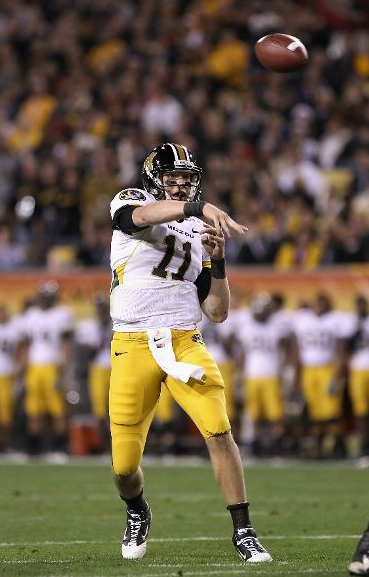
Blaine Gabbert (QB, Missouri)
Has everything you look for in a top quarterback – mobility, good arm, character and he’s accurate. Even so, he’s been inconsistent and there is a certain degree of ‘unknown’ about Gabbert. The system he comes from in Missouri makes it difficult to make a full judgement either way. I’d take him in the top ten, but I put him behind Newton and Mallett and into tier three.

Mark Ingram (RB, Alabama)
Loves the game and plays every snap like it might be his last. Ingram has major star quality minus the elite breakaway speed, but he’ll be a work horse with major production if he’s drafted by a team that can run the ball. Intelligent, driven, understands blocking and has the vision to turn a small hole into a big gain.

Corey Liuget (DT, Illinois)
Ideal size for the three technique position and has a great first step off the snap. Consistently disruptive on tape and he’ll get into the backfield and force mistakes. He hasn’t got the production of Fairley or the scheme adaptability of Dareus, but he comes a close third in a strong group of defensive tackles.

Tyron Smith (OT, USC)
It became apparent towards the end of the college season that Smith would be the best offensive tackle in a class lacking that elite player at the position. This choice is based completely on upside – he has the frame, the lateral mobility and the strength to be one of the best in the NFL. You’re taking a chance, but it’s a calculated gamble.

JJ Watt (DE, Wisconsin)
He hasn’t got the elite speed and he’s more perspiration than style, but JJ Watt finds a way to make plays. Every week he’ll play hard and he’ll over achieve. In 2010 he had seven sacks, an interception and he blocked three kicks. He’s strictly a 3-4 defensive end, but in that scheme he’ll do what it takes to have an impact.

Robert Quinn (DE, North Carolina)
There are things that concern me about Quinn – the tumor and the lack of football for two years ahead of his rookie season. I think he’s best suited to an orthodox 4-3 or the LEO position in Seattle. The tape shows real edge quality and no lack of effort, but he hasn’t got a great repertoire. If he plays college ball in 2010 and gets 10+ sacks he’d be a candidate to go second overall, instead he drops into tier three.

Aldon Smith (DE, Missouri)
Another player who could be higher but has some issues. Did he return from injury too quickly in 2010? He didn’t look the same dominant player from 2009 with top-ten potential. Smith was anonymous in the bowl defeat to Iowa. Otherwise he’s got perfect size for a 4-3 end, great technique and a better range than Robert Quinn.

Jabaal Sheard (DE, Pittsburgh)
Under rated player with the potential to be better than Quinn and Smith. Sheard plays hard every snap and he’s great against the run. He’s not the biggest statistically, but he looks big on tape. Speed is right up there off the edge and he was one of the quicker ends at the combine. Love the guy, his best years are to come and he fits both schemes.

Mike Pouncey (OG/C, Florida)
Just a solid player who starts in week one and gets on with his job. Had problems snapping early in the 2010 season but made corrections. I still prefer him at guard but teams who need a center should have no issues making this pick. The ultimate safe, unspectacular choice and good teams like New York and San Diego should consider this, with Tampa Bay, Kansas City and Philadelphia close behind.

Von Miller (OLB, Texas A&M)
I have Miller as a pure 4-3 outside linebacker. He can rush the passer from that position and still generate sacks – he could have a Julian Peterson type impact on the league. But the fact he’s a linebacker and can’t play up at the line lowers his stock for me. He’ll get washed out against the run up front and speed is really his only true asset. It’s also a big asset to have, of course.

Tier four: Prospects I’d grade as top-25 picks

Obviously players in this group will be off the board due to need (I fully expect Jake Locker to be drafted by Washington). However, these are the last five players I’d grade as part of my top-25.

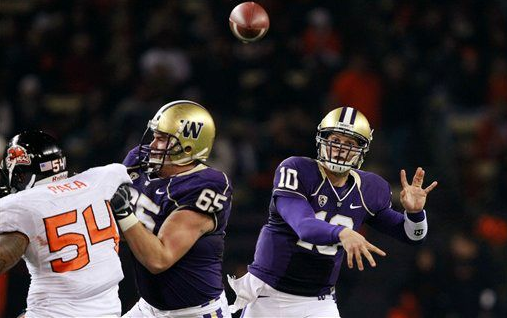
Jake Locker (QB, Washington)
If I needed a quarterback and the top three are gone, in this range I take a chance on Locker’s upside. He can become a great player in the NFL, something that’s often forgotten. There will be growing pains.

Phil Taylor (DT, Baylor)
Looks sensational given his size and moves freely for a big tackle. The weight instantly makes people think he’ll play the nose, but I could see him at the five technique and maybe even playing some three technique.

Stephen Paea (DT, Orego State)
Slightly undersized for a 4-3 nose tackle, but offers so much value against the run. Added some pass rush production as a senior but his value in the NFL will come as a run stopper. If I’m Indianapolis, I ignore the need at offensive tackle to take this guy at #22.

Kyle Rudolph (TE, Notre Dame)
Injuries have hampered his stock but there’s no doubt to me a clean bill of health secures a first round grade. He’s a playmaker who adds dimensions to an offense, opening up the playbook.

Prince Amukamara (CB, Nebraska)
You’re getting an athletic player with potential to become a solid if unspectacular starter. He will make mistakes and he’s not going to be a great playmaker, but he’s a solid pick.

Just missed out:

Rodney Hudson (OG, Florida State), Adrian Clayborn (DE, Iowa), Derek Sherrod (OT, Miss. State), Brooks Reed (DE, Arizona), Akeem Ayers (OLB, UCLA).

Players I rate higher than most:

Jordan Todman (RB, Connecticut), James Carpenter (OT, Alabama), Jeremy Beal (DE, Oklahoma), Brandon Burton (CB, Utah), Pernell McPhee (DE, Miss. State), Ricky Stanzi (QB, Iowa)

Phil Taylor (DT, Baylor) vs Oklahoma

This is the tape many of you have been waiting for. Thank you once again to the irreplaceable Aaron Aloysius for delivering.

I’ve mocked Phil Taylor to the Seahawks in my last two projections. Let’s look at the footage and see what he offers.

This is tape from Baylor vs Oklahoma and includes every snap directly involving Taylor – positive or negative.

The first thing that really stands out is how well Taylor carries his 337lbs frame. He doesn’t look sloppy at that weight – he’s a pretty compact build. The comparisons to B.J. Raji are legit in that both have unnatural movement for a prospect carrying that size. The key difference between the pair, however, is that Raji is a much more flaccid body type.

That could be crucial if you’re considering endurance as a determining factor on whether this is a logical option for Seattle. A lot of people argue against selecting a prospect in round one who can only play 25-30 downs per game.

You can see Taylor’s mobility clearly in this video. At 0:21 you see a play where the ball is dumped off to the running back in the backfield. Taylor tracks the play and pursues the ball carrier, eventually making the tackle for a loss. There are guys 40-50lbs lighter who don’t move like that who are currently starting in the NFL.

Perhaps the best play in the entire video comes at the 1:32 mark. Landry Jones calls a play action boot leg to the right. Taylor disengages from his block and sprints to the left hand side. Jones can’t see a viable passing option so pumps perhaps with the intention of selling out a scramble. He initially ducks to run, but senses Taylor’s presence and ducks out of bounds for no gain.

Elite mobility for 337lbs.

The next play on the tape shows the main issue I have with Taylor – leverage. When he gets low and uses proper hand technique he’s nearly unblockable. When he goes high he’s easily washed out – and it’s the guard shifting his frame out of the way which leads to the rushing score. It’s a technique problem he really has to work on.

Even so, we see at the 0:55 mark the benefit of having that big force up the middle on run plays. Taylor takes up two blocks (center and right guard) and still manages to wrestle free and tackle the running back for only a short gain. His ability to carry two blockers is again flashed on 1:21 and when stuffing the run on 1:42, 2:47 and 3:20.

This is crucial in Seattle’s current defensive scheme. You want the LEO to find one-on-one battles with the offensive tackle and that means persistent pressure up the middle on passing downs. If one guy is able to take up two blocks, it’s going to create opportunities not just for the LEO but also the three technique.

The play at 2:07 excites me from a Seahawks perspective. Taylor lines up slightly exaggerated to the left and ends up rushing the passer from the outside. He beats his man for speed and forces the QB out of the pocket. The end result is a broken play and Jones throws the ball out of bounds.

Why is that exciting? It’s further evidence that this guy can play the 5-technique (or Red Bryant role). If he can show speed like that off the edge and provide excellent run support, it means he can absolutely play the two most important positions on Seattle’s defensive line (5-tech and nose tackle). At the five he has the size of Bryant but could be an upgrade as a rusher. As a nose tackle he carries blocks and eats up space. Realistically you could start or spell him as a rookie for either of Seattle’s current starters – Bryant or Colin Cole.

The pass rushing skills flashed at 2:27 also make me wonder if the guy can play some snaps at the three-technique. He swats the left guard away with an incredible punch and flies into the backfield. Jones senses the pressure and just gets an incomplete pass away before Taylor makes a crushing tackle.

Both announcers over react by saying it’d be a penalty in the NFL – Jones isn’t driven into the ground. The combination of powerful right hook and explosive speed stand out in a big way.

His penetration skills are further emphasised when he breaks through the LT and LG to block a pass on 3:32.

It’s only one game’s evidence and I would rather do full game research on at least 2-3 times before coming to a respectable conclusion. However, the skills flashed on this tape scream top-20 talent.

Obviously there are some background issues. Taylor was kicked off Penn State’s roster for an ‘off the field’ incident and academic struggles. Will this put off teams? B.J. Raji was similarly held back a year at Boston College for academic reasons and had some other incidents on and off the field – he still went in the top-ten to Green Bay.

Taylor only recorded two sacks in two-years with Baylor. Is this lack of real production a concern? Perhaps – after all Raji had seven sacks in his senior year and nine total in the two seasons before turning pro.

Having said that, I still look at the potential with this prospect and wonder if he’s going to make a big rise up the boards. If the 3-4 teams see him as a defining nose tackle (like Green Bay did with Raji) then he won’t last very long. If teams are not entirely convinced, he will last into the 20’s as Dan Williams did last year (#26, Arizona).

On this evidence there’s no doubt what so ever that Taylor is a first round pick – and he could be a much higher selection than a lot of people are grading at the moment. Time to do more study.

But if he’s available when the Seahawks are on the clock this April he has to be a strong consideration.

Comparing Liuget to two alternatives – Austin & Casey

Yesterday I mocked Corey Liuget (DT, Illinois) to the Seahawks in round one of the 2011 draft. I wanted to represent comments made by Pete Carroll during his recent press conference that he was making improvement on both lines a priority.

With a certain degree of depth on the defensive line this year – it’s not a stretch to consider the Seahawks going in that direction early this April.

However – my knowledge of Liuget is limited to restricted tape and one game in 2010. I need to study up and learn whether he’s a clear upgrade over other DL prospects who will go later in the draft at a lesser cost. Depth on both lines may be a priority, but that doesn’t necessarily mean it’s forthcoming via a first round pick.

Two other ‘alternative’ prospects I’m going to highlight today are Marvin Austin (DT, UNC) and Jurrell Casey (DT, USC).

Austin was one of the North Carolina prospects suspended for the entire 2010 season after accepting gifts from agents. Based on 2009 evidence I had Austin in the round 2/3 range but wondered how the suspension may affect his stock.

Despite not playing any football this past season it’s to Austin’s credit that he’s appeared at the East/West Shrine work outs this week and reports indicate he’s performing well. I still think there’s a chance Austin will go lower than most expect. Aside from missing the entire 2010 season he was suspended for two games as a coaches decision and some have questioned his work ethic and attitude.

I also think he plays soft for a guy at 6-2, 305lbs with an ideal frame. As you can see (courtesy of Aaron Aloysius) I’ve published tape of Austin vs Pittsburgh from last year. He’s frequently driven back by the Panthers offensive line and doesn’t do a great job penetrating into the backfield. I think he best suites Seattle’s scheme as a nose tackle (the role used by Colin Cole) but he needs to be stronger and not get pushed around as much as we see here:

Even so, if we’re talking about depth Austin has the potential to fill a role on the roster without spending millions of dollars.

Jurrell Casey is someone who Pete Carroll will know all about from his USC days. He’s more of a three-technique who does a good job getting into the backfield. His frame is a bit sloppy and he could add a bit more tone, but nobody can deny his ability to be disruptive. He owns good gap control and offers benefits against the run with suprising agility at times.

I rate Casey above Austin at this point but a lack of major production (five sacks in 2010) and certainly not elite athleticism limits his stock. He’s also a pure 4-3 scheme prospect.

Casey is graded in the round 2-3 range this year but depending on work outs I appreciate there’s at least some chance he could be around when Seattle has the second pick in round four (thanks to the Deion Branch trade with New England).

He’s also famous for being removed from USC’s spring game last year after driving QB Matt Barkley into the ground and hurting his hand.

I wanted to publish this tape of Casey against Stanford’s elite college offensive line because he won’t face any better opposition than this ahead of the NFL:

So there are two alternatives if the team aren’t going to look at the Liuget’s, Paea’s and Nevis’ in round one. I still think the real position of value on this Seahawks defensive line – as proven in Red Bryant’s absence – is the five technique position. It’d be wonderful to have a shot at Cameron Jordan (DE, Cal) – someone I think is under rated with top-15 potential. He’s more than capable of adapting to 5-tech or DT for Seattle.

I’m not convinced he’ll be around at #25 though – perhaps making a prospect like Muhammad Wilkerson a more likely (yet much less spectacular) option.

I’ll look at the five-technique or ‘Red Bryant role’ in more detail this weekend.

BCS Championship – thoughts on Newton & Fairley

Nick Fairley was again impressive against Oregon

With Auburn winning the BCS Championship last night – it was an opportunity to put their two top prospects under the spotlight.

I’ve been mocking Cam Newton as a potential #1 pick ever since Andrew Luck’s decision to stay at Stanford. His performance against Oregon wasn’t one you’d necessarily associate with a prospect so highly touted.

This wasn’t classic Newton – he was a complete non-factor on the ground (22 carries for 64 yards) and while he put up decent numbers in the passing game (20/34 for 265 yards and two scores) it wasn’t a crisp display.

He threw one interception – a bad decision against double coverage – and almost had another thanks to a common problem he’s had all year. Newton’s arm is strong enough that it doesn’t really matter when he throws off balance or when he leans his weight onto the back foot. He’s still capable of getting the ball out and placing it downfield, but his accuracy and velocity suffers as a consequence.

Shortly after throwing that first pick he almost had another by taking a chance down the right sideline, leaning back and floating a pass dangerously into coverage. The defensive back made a great play for the ball and was unfortunate not to maintain possession in bounds.

Both touchdowns were products of smart game planning – exploiting Oregon DE/OLB Kenny Rowe in coverage to grab two comfortable scores.

Overall it was slightly underwhelming considering what we’ve seen from Newton in the past. It highlighted the project he’ll be as a rookie – his footwork at times looked awkward and certainly he’ll have to learn from scratch how to drop back from center and read a field without advice from the sideline. The brilliant playmaking qualities weren’t there to offset those issues.

However, it’d be too easy to drop him down the board after one average game against a strong Oregon team. Newton has dominated the SEC – clearly CFB’s toughest conference – and beaten many good defenses on his own along the way. I still maintain that he’s capable of becoming a big-time playmaker at the next level. His ceiling may be higher than Blaine Gabbert’s, but the drop may be more significant too if it doesn’t work out.

I still maintain, however, that both are still substantially better long term investment’s for Carolina than Jimmy Clausen. That doesn’t mean Carolina will necessarily agree. In my next mock I’ll have a look at what they could do if they don’t draft a quarterback with the #1 pick.

A lot of people will be projecting Nick Fairley as an option after another big performance last night. He took his sack tally to thirteen for the year and had a major impact on Oregon’s defense.

It has to be qualified though that he was often unblocked for some unknown reason. Time and time again the Ducks offensive line allowed Auburn’s best defensive player a free route into the backfield. When he was being monitored he still found ways to make significant plays, whether it was collapsing the line to help make a 4th-and-goal stop, dropping into coverage to keep an eye on screen passes or just using his speed off the snap to explode through and make the splash.

Fairley’s main strength, in my opinion, is when he’s playing three-technique and can line up with the intention of getting through the gap, using his speed and getting into the backfield. I don’t think he translates as well to 3-4 DE (or five technique) position lining up against the tight end and tackle where he’ll have to stand up blocks for the outside linebacker and rush from an angle. He could probably do the job, but you’d want him lining up in the heart of the line attacking the passer. He’s not a logical fit at the nose due to a lack of size/strength.

Carolina appear to be on the brink of appointing Ron Rivera (DC, San Diego) as their next head coach. He’s used both the 3-4 and 4-3 schemes in the past. If he switches the Panthers to a 3-4, I think it makes it less likely that they’d draft Fairley and more likely they’d take Da’Quan Bowers.

If they stick with a 4-3 even then there are some concerns about Fairley perhaps being a bit of a one-year wonder.

Really it’s anyones guess what Carolina might do with the #1 pick at the moment.

Muhammad Wilkerson vs Penn State

I was recently asked about Temple defensive lineman Muhammad Wilkerson. I’ve not had access to Owls tape this year, so haven’t previously been able to comment. He’s declared as a junior and reportedly got a grade in rounds 2/3. That’s the same grade that Janoris Jenkins received – who would (in my opinion) have been a sure-fire first round lock. It’s also the same grade given to Jake Locker last year and probably Justin Blackmon too – considering he is staying at Oklahoma State.

I managed to find some footage of Wilkerson against Penn State from September last year (see below). It’s only one sample but doesn’t restrict you to the ‘best bits’. What interests me in this montage is seeing Wilkerson like up at end. He’s 6-5 and 305lbs and being asked to rush off the edge and also seal it against the run. Given his size, it’s possible he could be an option at the Red Bryant 5-tech position.

Of course – Bryant did a fantastic job and was arguably the teams defensive MVP before a season ending injury. However, he has picked up knocks in his career and perhaps adding depth at the position (especially when these guys can also kick inside if needed) may be of benefit to the Seahawks.

Certainly to me at least it appears that 5-tech and the inside 1&3 technique positions carry most importance in Seattle’s scheme as opposed to the LEO rush position. Chris Clemons and Raheem Brock have enjoyed production despite their relative ‘plug in and play’ situation. The important characteristic of the LEO appears to be quickness and the ability to exploit one-on-one blocking – which is more frequently afforded when the other three lineman can penetrate and carry blockers.

It wouldn’t surprise me if the scheme allows the Seahawks to find consistent production from their LEO rushers, which maybe decreases the likelihood the team will spend a high draft pick on the position. Of course, that would probably change if a Demarcus Ware clone was sitting on the board.

Wilkerson has proved he can get to the passer with his production. In 2010 he had an impressive ten sacks and he has 16-total the last two years. Bryant’s key strength is working against the run – and he’s not built for rushing at around 330lbs. The Temple prospects’ size won’t necessarily negate any impact against the run, but he also flashes in the clips below that ability to get into the backfield and be a disruptive force.

It’s important to note the level of competition. It’s good to see how he fairs against Penn State’s line, but his sacks came against Buffalo (3), Kent State (3), Central Michigan (2), Army (1) and Miami Ohio (1). Clearly the competition level has to be taken into account – Nick Fairley’s twelve sacks came against top-level opposition. The same can’t be said for Wilkerson.

With more prospects opting not to declare, we’re going to see others rising. I’m tentative to grade Wilkerson as a potential round one pick based on the evidence of one game but I do believe it’s a position the Seahawks will consider adding depth to. Take a look at the footage yourself and let me know what you think.

Monday musings: Gabbert, Luck, Seahawks and more

I want to talk through the draft ramifications following Seattle’s qualification for the post-season which I’ll come on to later.

Firstly – the big news today is that Blaine Gabbert (QB, Missouri) has announced his intention to declare for the 2011 NFL draft. It became apparent in the last two weeks that Gabbert was leaning towards entering the draft, alongside fellow Missouri prospect Aldon Smith (himself a solid second -round defensive end prospect).

Coach Gary Pinkel is on the record for saying he thinks his players should enter the draft if they have a chance to go early. Gabbert has been told by scouts, coaches and the draft committee that he will be a high first round pick in April.

With exceptional character, physical qualities and mobility – Gabbert has the potential to be a top-end NFL quarterback. His accuracy is good although he remains a risk taker (which occasionally has led to costly errors). He will enter the league facing the same challenge that most rookies face – learning a more complex playbook, making difficult reads and not using as many scripted plays. That’s just part of the learning process.

For more on Gabbert’s recent performance in the Insight Bowl click here.

Even if the Seahawks had lost yesterday and picked #8 overall, I’m not convinced they would’ve had a shot at Gabbert. This is a quarterback league and there are a cluster of teams at the top of round with a big hole at the position. We could easily see the Missouri prospect in the NFC West next year with Arizona (#5) or San Francisco (#7). There’s no reason why he couldn’t also land in Cincinnati (#3), Buffalo (#4) or even Cleveland (#6). I’ve never been a fan of Colt McCoy’s pro-prospects.

Expect Andrew Luck (QB, Stanford) to make a similar decision very soon. He will compete in the Orange Bowl tonight against Virginia Tech and I suspect the Cardinal will win comfortably.

It will almost certainly be coach Jim Harbaugh’s last game – with an offer on the table to coach in the NFL (San Francisco) and a similar deal soon to be offered by his alma mater (Michigan).

Luck is leaning towards the draft anyway because he knows he will almost certainly be the #1 overall pick. It’s very difficult to turn down a potential $50m bounty whatever your intentions may have been in the past. If Harbaugh leaves, it will confirm his decision if he hasn’t made his mind up already.

Cam Newton (QB, Auburn) is an absolute certainty to declare which will mean three highly rated quarterbacks who could leave the board early.

A run on QB’s early seems likely to me. There are too many teams amongst the top ten picks for these talented prospects to hang around.

With all due respect to the Patrick Peterson’s and Nick Fairley’s out there – a team with a big need at quarterback is not going to pass on Luck, Newton or Gabbert to take a cornerback or defensive tackle. It wouldn’t happen in Seattle and it won’t happen elsewhere.

Here’s the confirmed top ten for the 2011 draft and each team’s likelihood they’ll take a quarterback:

#1 Carolina– Despite investment in Jimmy Clausen, a new coaching staff should not pass on Andrew Luck or Cam Newton. Both are vastly superior quarterbacks to Clausen. A no brainer.

#2 Denver– This team will also have a new coach soon and that man may not have Josh McDaniels’ faith in Tim Tebow. I wouldn’t rule out a quarterback pick here – but the Broncos are more likely to stick by Tebow for another year than Carolina with Clausen.

#3 Cincinnati – If Carson Palmer stays or go’s, this team should draft a quarterback for the long term.

#4 Buffalo– Chain Gailey says Ryan Fitzpatrick is his guy for 2011. I’ve no reason not to believe that, although you can’t rule out Buffalo drafting a QB. A.J. Green (WR, Georgia) looks likely here.

#5 Arizona – If they don’t bring in an obvious starter before the draft – this pick will be spent on a QB. Simple as that.

#6 Cleveland– I wouldn’t commit to Colt McCoy. Another team I wouldn’t rule out, but would Holmgren take a QB this early?

#7 San Francisco – See Arizona.

#8 Tennessee – If Jeff Fisher leaves, Vince Young is safe as houses. If the team stand by Fisher, who knows what happens?

#9 Dallas– Perhaps the only team we can definitely rule out. Tony Romo is the safe starter.

#10 Washington– Almost certainly will draft a quarterback after benching Donovan McNabb.

Although some will disagree, I’m looking at that list and seeing nine potential teams who might be open to drafting a quarterback. There are two teams (Arizona and San Francisco) who almost certainly will do without signing or trading for a quarterback before the draft. Others are perhaps more dubious (Denver, Buffalo, Cleveland and Tennessee) but neither can they be completely ruled out at this early stage.

So what does it mean for the Seahawks if they have hopes of drafting a quarterback?

There was a chance at #8 overall that one of the top three QB’s slipped through the cracks. With the team picking 21st overall, it’s virtually impossible.

Also – because the team traded it’s 2011 third round pick for Charlie Whitehurst, they have marginal stock to offer teams in a potential trade up the board. Seattle’s first round pick is worth 800 points and the second rounder 370. If you combine those picks together, it would be worth slightly more than the 13th overall pick (1150 points) which is now owned by Detroit.

Four quarterbacks will definitely be drafted in round one, possibly five. The two not mentioned so far are Jake Locker (Washington) and Ryan Mallett (Arkansas).

Despite my own misgivings on Locker, I still believe he will be strongly coveted by at least two teams in round one – including Seattle. So much so in fact, I could imagine if the Seahawks were locked into the top-five that they may have ignored all other options to draft him.

I cannot see the Huskies QB getting past Washington at #10 overall. Mike Shanahan loves Locker and will draft him to be the next Redskins quarterback.

If the Seahawks admire Locker as much as I suspect, they would have to trade with Tennessee (#8) or Dallas (#9) to have the opportunity to get him. The eighth overall pick is worth 1400 points in the trade chart and the ninth overall pick is worth 1350 points.

We already know Seattle’s two first round picks total 1170 points. The Seahawks also own the second pick in round four – acquired from New England for Deion Branch. That selection is worth a further 108 points. They may also gain the 28th pick in round four in the Josh Wilson trade if the deal is upgraded depending on certain criteria. If not – they will get the 27th pick in round five from Baltimore. The complete terms of the Wilson trade are not known to the public.

Even if the Seahawks include two fourth round picks in the package, they wouldn’t have enough points (1326) to completely match the worth of the 9th overall pick. In the process, Seattle would also be trading virtually it’s entire draft for one prospect despite having a roster weak in quality and overall depth.

However – a precedent has been set to get around what is becoming a generally outdated trade chart formula.

In 2008 Jacksonville traded a cumulative package worth 1127 points to Baltimore so they could move from #26 overall to #8 overall to draft Derrick Harvey. The deal included two third round picks and a fourth rounder. Seattle’s first and second round picks are worth 43 more points than the package Jacksonville put together.

The following year, Cleveland moved from the #5 overall pick (1700 points) down to #17 (950 points) after a trade with the New York Jets. The deal also included a second rounder (52nd overall, 280 points) and three New York players (Brett Ratliff, Kenyon Coleman and Abram Elam). Eric Mangini had just been appointed the Browns’ Head Coach after leaving New York and substituted points value for players he was familiar with.

In both cases (Baltimore and Cleveland) there was a real determination from the two teams to move down the board. The Ravens were aggressive in 2008, moving down and then back up to select Joe Flacco with the #17 pick. Cleveland moved down two more times in 2009 before taking center Alex Mack with the 21st overall pick.

Would Tennesse or Dallas be willing to make such moves? Both are teams who underachieved this year. Both teams may have new Head Coaches going into the draft.

Drafting in the top ten (particularly for Dallas) could be seen as a rare bonus. I just have a feeling Dallas in particular will fall for a guy like Jimmy Smith (CB, Colorado) who really needs to be discussed as a legitimate top-10 pick. Even so, this could be viewed as a chance to gain more picks if the right deal is on the table.

The Seahawks could move up the board, if they so wished, using possibly just their first two picks this year. That stands if they want a quarterback or anyone else for that matter.

Indeed if it really is a race between Seattle and Washington for Locker, the Seahawks may be in a preferable position. There’s little Washington can do, for example, if the Seahawks agree an on-the-clock trade.

If the team stays put at #21 there is still a chance Ryan Mallett falls into that range. Despite immense on-field talent I still have reservations about how he will grade following team meetings and work outs. He isn’t an ideal scheme fit for Jeremy Bates’ offense either, although this may be overplayed.

I also keep seeing things like this tweet from Wes Bunting at the National Football Post:

I talked with a number of NFL sources who wouldn’t touch Ryan Mallett with a ten foot pool* (SIC)

It isn’t all about quarterbacks for Seattle – although I maintain it’s the team’s greatest need and will be until the position is addressed for the long term. Over the next few days it’s only fair we review alternative options if the Seahawks are now out of position to draft a QB.

If you want some non-quarterback options as a teaser – let me give you some names:

Justin Blackmon (WR, Oklahoma State) – not an elite down-field threat but an under rated andfluid route runner withbig play potential. Even with Mike Williams’ extension – the Seahawks need more playmakers on offense.

Julio Jones (WR, Alabama) – unlikely to make it to #21 due to his incredible potential, but for every big fan of his (include me amongst them) there are sceptics. Receivers tend to fall on draft day. Could be a steal.

Stephen Paea (DT, Oregon State) – under sized for his position but incredibly strong and solid versus the run – has flashed ability as a pass rusher this year. Would play nose tackle in Seattle’s scheme.

Cameron Jordan (DE, California) – could shoot up the boards and even crack the top-15. Possible 5-technique option who can move inside as well.

Brandon Harris (CB, Miami) – excellent open-field tackler but a bit inconsistent in coverage this year. Had top-15 potential but missed the chance to go that early.

Mike Pouncey (OG/C, Florida) – I’m loathe to suggest the interior line this early but people keep asking about options there. Value isn’t good enough considering team needs elsewhere. Pouncey is really the only suggestion I can make this early.

Rose Bowl thoughts: Watt, Carimi and Dalton

TCU defeated Wisconsin 21-19 at the Rose Bowl

I’ve just finished watching an entertaining Rose Bowl between TCU and Wisconsin.

Neither team is filled with top-end pro talent, but there were one or two prospects I’d like to share some opinions on.

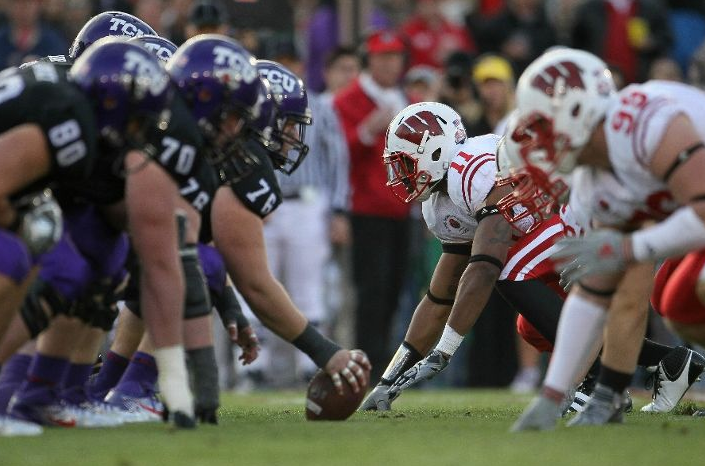
The best pro-prospect in the game was easily, in my opinion, J.J. Watt (DE, Wisconsin). He’s the kind of guy that makes me wish the Seahawks ran a complete 3-4 scheme with more orthodox five techniques.

At 6-6 and 292lbs, Watt is far too big and nowhere near athletic enough to play LEO rush end in Seattle’s scheme. He also gives up 30lbs on Red Bryant – who defined the 5-tech position this season and became the team’s defensive MVP in the process.

If the Seahawks are going to give up size at the 5-tech (or at least install a greater rotation), you really need to look at someone like Da’Quan Bowers (DE, Clemson). He can work at 285-290lbs and play strong against the run, while offering a greater pass-rush threat than Bryant.

Watt isn’t a dynamic enough pass-rusher to compensate on the size. Really it’s hard to find a home for him in Seattle, but 3-4 teams like San Diego, Green Bay, New York, Baltimore and maybe even Washington could show real interest in the talented junior.

Basically, he makes plays. Unlike a lot of playmakers, he does it through sheer power andeffort rather than elite quicks. I think he can translate that to the NFL. In 2010 (his second year starting) he had seven sacks, three blocked kicks and an interception.

Against TCU he was all over the field, tipping passes at the line and creating havoc for the Horned Frogs’ left tackle Marcus Cannon. He flashed an excellent spin move at one stage, provoking Cannon into a blatant hold which drew a flag. Watt also showed an effective swim and rip and while he’ll never be a great speed rusher, he certainly showed enough power to compensate.

The athletic restrictions were witnessed on a couple of read options. However, he also made one of his best plays of the day when he stuck with QB Andy Dalton and had the leg speed to switch to the running back after the pitch – wrapping up a smart tackle.

The 5-technique position has taken on new value in the NFL since Tyson Jackson went 3rd overall to Kansas City in 2009. Bowers at Clemson will almost certainly be drafted for the same role, more than likely by Denver if they select 2nd overall. Solid teams like Green Bay and Baltimore are always willing to invest in good lineman – but San Diego (who will be picking in the teens) remain a possibility too.

Watt could be a riser by the time we’re at the combine and may shoot up a lot of boards.

Of course he’ll have to declare first and a reminder here that the deadline for prospects to enter the draft falls on January 15th. I believe Watt will declare and it’ll be the correct decision.

One prospect I’m not so fond of is Gabe Carimi (OT Wisconsin).

Without wanting to sound like I’m lecturing anyone here – right tackles are essentially guys who aren’t athletic enough to play on the blind side. They’re not a rare species in drafts or in the NFL.

While Carimiplays left tackle for Wisconsin, he lacks the lateral mobility or athleticism to play that role at the next level. He’s very much considered a RT prospect in the pro’s.

Prospects like Carimi (strong. poor leverage and leg bend, better withTE support) can be foundoutside of round one every year. Because I rank Carimi as a limited athlete anda pure RT – I graded him in the late second, early third round.

I can see why he might find a home at the endof round one on a roster that is filled with talent. In my last mock I paired him with Philadelphia. Andy Reid is due to draft a lineman and they have a star studded roster that is capable of winning a title – maybe even this year. If they liked Carimi more than any other prospect – and I’m not entirely convinced they would with a big need at corner – they may be able to justify a luxury like that considering how often they run with Vick, McCoy, the full back or end arounds.

But I see Carimi mocked amongst the top-15 picks to teams with much greater needs and nowhere near Philly’s talent – and I have to shake my head.

In Rob Rang’s latest mock (published 12/21) he had Carimi going to the Seahawks. You can see the mock draft here.

I think this is very unlikely. I would be extremely surprised if Seattle made that pick.

Joseph Barksdale, James Carpenter, Demarcus Love, Ben Ijalana andMatt Reynolds. There’s five prospects who can fill a hole (if needed) at right tackle for Seattle. None will cost a first round pick. They may not be as polished or accomplished as Carimi. Do they necessarily need to be?

There will be plenty of options for Seattle at right tackle if they don’t renew Sean Locklear’s contract. I wouldn’t sleep on Ray Willis maybe getting a shot if he can return from injury. There will be other tackles available on the free market that can do what the team needs better than Locklear.

For a team with so many holes, not least at quarterback and receiver on offense andboth the defensive line and cornerbackon defense, this team cannot justify spending a first round pick on a right tackle. It is not a position that needs such investment.

Carimiwas his usually solid self in the Rose Bowl but nowhere near good enough to play blind side in the NFL, which limits his stock. Don’t buy into the hype and please temper expectations for the Wisconsin tackle next April. I wouldn’t be suprisedif he was aroundfor Seattle in round two if they so desired – even then there will probably be better options.

I had a couple of tweets asking about Andy Dalton (QB, TCU) and his stock. He’ll attend the Senior Mobile in Mobile later this month and will be part of the 2011 draft.

He’s a better prospect than Kellen Moore at Boise State – but then I don’t think Moore will even be drafted when he enters the 2012 event. Dalton has a decent shot at getting drafted in a few months time, but only as a round six or seven project.

For starters, he has better size than Moore (6-2, 220lbs). The arm is better but still largely average. In particular his deep ball lacks strength or accuracy and has led to problems in the past.

In this game Dalton was as good as he’s ever been against a solid Badgers defense. He limited the mistakes and passed for 219 yards and a score from 15/23 throwing.

He’s a mobile guy which helps, but won’t be a factor as a runner at the next level. He had passes tipped or batted down in this game which caused some concern, just by the regularity with which it happened.

But my main concern with Dalton is on-field resilience. In the past he’s let one mistake become two or three. He doesn’t handle pressure well and let’s his head drop too quickly. He’s not had too many problems managing a weak TCU schedule, but I think he’d actually benefit more in terms of a career if he’d learnt to lose. With the Frogs, every little mistake gets to him. He has to be perfect – like the TCU win record.

Considering he isn’t a brilliant physical talent, the mental make-up has to be top notch. So does the accuracy – which can be patchy too with Dalton.

He can be a project for someone in the late rounds. Unfortunately, that time has passed for Seattle and any quarterback drafted next April has to be more than a late-round flier.

Happy New Year to everyone and all the best for 2011.

Blaine Gabbert has first-round potential

Gabbert threw for 434 yards in a losing effort


For the most part, this was a statement of intent. 

Not many people are talking about Blaine Gabbert as a first round prospect. That may begin to change after a largley impressive display against Iowa in the Insight Bowl, despite a 27-24 defeat. 

I’ll qualify from the outset that this wasn’t a faultless performance by any means. A lot of questions remain unanswered from the article I published ahead of the Insight Bowl between Gabbert’s Missouri and Iowa. The Hawkeye’s didn’t do a good enough job taking away his first read which allowed Gabbert to throw a lot of scripted passes that look good, but won’t be so easily accessible at the next level. 

When Iowa did get into Gabbert’s head, he tried to scramble out of trouble. He’s mobile (expressed with a solid touchdown run) but he isn’t a difference maker. On a couple of occasions he was too quick to bail on the pass only to lose yardage attempting to run. 

The big mistake of the night came on a pick-six with 5:32 remaining. His first read wasn’t on so he chose to run. As he struggled to find space, he changed his mind again and decided to pass. The result was an ugly mistake that led to a turnover and the game winning score. 

It’d be very easy to dwell on the error seeing as it essentially lost Missouri the game. It’s an issue he has to correct, but it doesn’t take away from a performance that most people were ready to compliment profusely before one big gaffe. 

He also took a couple of unnecessary sacks in the game – further evidence of concern that sometimes he does hold on to the ball too long and that he isn’t always the coolest under pressure. He needs to know when to just save the lost eight yards (or avoid the pick six) and lob the ball into row F. 

So what about the positives? There were lots of them and these shouldn’t be over shadowed. 

The big arm is there for all to see and that’s never been in question. A lot of guys have a big arm and never make full use of it. Gabbert over shot a couple of passes, but overall showed unique touch for someone who owns a rocket arm. This was perfectly highlighted with 6:27 left in the third quarter when he threw a beautiful 30-yard touch pass over the middle into a zone covered by three defensive backs. Everything about the throw – the touch, the accuracy, the placement. Stunning. 

You could pair this with a 20-yard bomb in the first quarter on 3rd & 19. With pressure in his face, this time he stayed composed with his eyes downfield and lobbed a perfect strike to his wide out for the first down. It flashed the quick, high release, accuracy and velocity that Gabbert is capable of. 

A lot of prospects will trust their arm too much and it leads to mistakes. Gabbert makes a full range of throws and understands when to bring out the cannon and when he needs to tone it down. 

Over and over again Gabbert was able to fit the ball into windows a lot of NFL quarterbacks couldn’t. He consistently found the soft-spot between safety and cornerback. He isn’t afraid to throw down the middle and whilst there were scripted plays and underneath completions – the Tigers could make any play callwith confidence. Gabbert flashed a full repetoire of passes. 

Missouri pretty much abandoned their running game after going behind early. During the initial comeback Gabbert remained cool and unemotional and kept his composure despite being asked to make a number of difficult throws downfield. He was responsible for a confident comeback and managed the rest of his offense. His first turn over came off a smart tip from a cornerback, although the second interception was his fault and his only. 

But what do you want from a franchise QB? Accuracy? Mobility? Character? Big arm? Gabbert has all of these things. 

Make no mistake – this was a game that will catch every scouts eye. I cannot see anything but a positive review from the NFL draft committee, making it more likely Gabbert’s name will be added to those expected to declare for 2011. I put Gabbert at #13 in my Christmas Eve mock. Expect to see him in every other mock draft over the next few days.

Wednesday Notes – Kellen Moore and much more

I’m going to delay this week’s mock draft until nearer Christmas. In the meantime here’s a few things on my mind at the moment…

Boise State vs Utah – Thoughts on Kellen Moore

I’ll be watching the MAACO Bowl tonight between Boise State and Utah. I suspect it’ll be a very comfortable victory for the Broncos similar to the beating TCU put on the Utes earlier this season.

One guy I’ve been asked about occasionally is Boise quarterback Kellen Moore. He’s from Washington so it’s not hard to see why there’s some interest in Seattle. He was a Heisman finalist this year and was second only to Cam Newton in quarterback rating in 2010.

That said, he’s not a NFL quarterback.

Boise State’s publicity and the productivity of their offense has driven Moore’s stock much higher than it should be. You might see words like ‘moxy’ (cringe) tweeted several times tonight as KM moves the Broncos to another solid touchdown drive. When a quarterback’s greatest quality is ‘moxy’ it’s time to ask – “why?”

Moore is listed at around 5’11”-6’0″ depending on where you look. He’s approximately 185lbs and throws left handed. That alone is not a combination geared towards success in the NFL.

His production should be admired as he’s done an excellent job to master the scheme he works in. Reports put this down to solid game intelligence, a strong work ethic and real dedication. That is all good for a solid college career and he’s reaped the rewards with wins and plaudits.

It won’t be enough on it’s own in the NFL though.

If you get a chance to watch the game tonight look at his throwing mechanics. You may notice how often he throws with a slingy side-arm release. That won’t cut it at the next level especially for a guy listed a shade under 6’0″ – he’ll have passes batted down or tipped on a regular basis. It also doesn’t help when trying to generate velocity on medium-to-deep routes – he generally has a weak arm, but the slingy action puts too much air on the ball and will encourage turnovers.

Footwork is also another problem and Moore is a decidedly awkward runner in space.

People like Tom Brady and Drew Brees often get quoted when discussing guys like Moore. They got by without the eye-catching physical attributes and had the smarts and work ethic to win Super Bowls.

Let’s not forget they are very much the exception to the rule. For every Brees, there are a hundred QB’s like Moore that didn’t make it.

It has to be said as well that Boise generally are a deep team and outclass a lot of their opponents. They have a strong defense and an under rated offensive line and receiver group. A sign of their dominance is shown by the fact Moore has only been sacked five times this year – the same number as Andrew Luck at Stanford. Greg McIlroy (30), Jake Locker (47), Cam Newton (21) and Ryan Mallett (21) have faced much greater pressure.

It’s not completely negative, after all – there’s a reason he has the excellent numbers. The scheme plays its part – there’s a lot of underneath and short distance high percentage throws. The competition Moore faces is a lot weaker in the WAC than it would be against any of the top conferences. His game intelligence and ability to make quick judgements is a big plus point and whilst not owning elite accuracy, he’s certainly not inaccurate.

However, I struggle to find any home for him in the NFL. At the moment I’d grade him as an undrafted free agent. He’s a junior and will almost certainly return for another season at Boise. He’ll complete his career a hero for his team, but his future will almost certainly not lie in the NFL.

Cam Newton voted AP’s #1

The Auburn quarterback was today voted the Associated Press’ player of the year. Newton had already won the Heisman, O’Brien and Maxwell awards.

It’s another richly deserved honour for the best player in college football by an absolute mile.

Ridiculously, the aforementioned Kellen Moore was named first-team All-American QB ahead of Newton.

Let’s bring the whole thing into focus for a moment. Newton has single handed taken a likely 6-win team to an unbeaten season, the SEC title and now a National Championship. As a passer, he has the highest QB rating in the country (188.2). He completed 67% of his passes for 2589 yards, along with a 28-6 touchdown/interception ratio. Newton added 1409 rushing yards and 20 scores on the ground – making him the 10th best rusher in yardage and #2 behind LaMichael James for touchdowns.

People wrongly assume he’s a run-first, gimmick quarterback who will struggle in the NFL. They are wrong.

He’ll need to learn a much thicker and more complex playbook and move away from his two-read and run offense at Auburn. Indeed his ability to prove to GM’s and coaches he can be the ‘last guy out of the building’ type will essentially determine how high he goes.

The sky’s the limit otherwise.

Newton has better mechanics than most think – with a nice over the top release and strong arm. He needs to adjust his footwork and throw less from his back foot (he loses a lot of velocity), but he’s capable of some big-time NFL throws and he’s not inaccurate like some want you to believe.

To put it bluntly there isn’t a quarterback in the NFL right now who you could compare Newton to. He’s original and a top-five pick in the making. He’s never been out of that range in any of my mocks – and I’ve included him a lot longer than most.

Over rated or under rated?

Here’s two prospects I think need a bit more love from the ‘draft media’…

– Janoris Jenkins (CB, Florida): Only on Mel Kiper’s big board for the first time this week at #25. Not included in Rob Rang’s latest mock draft.

– Julio Jones (WR, Alabama): Has made significant strides this season yet only considered a border-line first round pick by Todd McShay or Rob Rang.

And two prospects I think are being over rated…

– Gabe Carimi (RT, Wisconsin): Came into the year a R2/3 prospect. Limited stock as a mere right tackle as not athletic enough for blind side, whiffs in space and struggles to stay low.

– Justin Blackmon (WR, Oklahoma State): Won the Biletnikoff but suddenly a top-15 pick instead of the R2-3 grade I have. Not elite speed or hands. Good but not special.

Right tackle in round one?

I mentioned Rob Rang’s latest mock for CBS Sportsline. He had the Seahawks selecting 14th overall in his projection published yesterday (Seattle would actually own the 13th overall pick if the season ended today).

Rang has the Seahawks taking Gabe Carimi with the pick, stating:

“Okung has played well when not hobbled by ankle injuries, but RT Sean Locklear has been the team’s greatest liability on the line this season. Carimi started his entire career at left tackle, but has the size (6-7, 327), strength and nastiness to handle a move to the right side.”

I wouldn’t disagree about Locklear. The Seahawks re-worked his contract to make him a free agent in 2011, so his days may be numbered after a disappointing 2011. Chris Spencer is also a free agent but should be a priority signing after a solid year. Doubts remains at both guard spots and right tackle.

Even so, the line has done better than most are willing to admit when it comes to pass protection. Run blocking has been less successful, but the Seahawks need to determine exactly what they want to do on the line. They started with Alex Gibbs, smaller lineman and the zone blocking scheme. Gibbs departed and bigger bodies were brought in. Is it a hybrid? Is it unclear and confused? Is it responsible for the issues in the run game? Has musical chairs on the line due to injury been an integral problem?

What I would argue is – the Seahawks are not 7-9 because the offensive line has been the #1 issue. The team made a substantial investment when they drafted Russell Okung 6th overall last April. A solid offensive line is not dependant on first round picks.

The Kansas City Chiefs are the #1 rushing offense in the NFL. On their roster they have one offensive lineman drafted in round one (by the previous regime) in Branden Albert. The rest are made up of four undrafted free agents, a third round pick, a fifth round pick and a selection in round six. Most of these prospects were not drafted by GM Scott Pioli in Kansas City, rather picked up in free agency or inherited.

Creating a productive running game is about more than expensie draft picks. It’s also about health, consistency, familiarity and a defined scheme.

The Seahawks have not suffered numerous blow-out defeats this year because of their right tackle.

Seattle’s two quarterbacks have passed for 13 total touchdowns, but 20 total interceptions. The starter – Matt Hasselbeck – is ranked above only Brett Favre, Jimmy Clausen and Derek Anderson statistically. Is that due to the performance of Sean Locklear?

It is obvious to me at least that investment at quarterback, the defensive line and cornerback (all premium positions) is of far more importance.

Quite frankly I would be stunned if the Seahawks spent a top-15 pick on a right tackle. As mentioned above, I also think Carimi is being over rated in that range anyway.

Nick Fairley – strictly 4-3

Not just in Rob Rang’s mock, but also many others (including this piece by ESPN’s Todd McShay) have placed Auburn defensive tacle Nick Fairley with teams using a 3-4 defensive scheme.

Whilst I think Marcell Dareus (DT, Alabama) is versatile enough to play the five-technique (and make him an attractive option for Seattle), in my opinion Fairley is strictly a 4-3 three-technique.

He’s at his best lined up in the middle using his quick burst off the snap and tremendous ability to dodge blocks and collapse the pocket. Playing at 5-tech will make a number of other demands that don’t suit his frame and perhaps detract from what he does best. You want to say to Fairley – “go get the quarterback”. You’re not going to want to ask him to hold his own at the point.

It’ll limit Fairley’s stock if he is considered strictly a 4-3 prospect. Right now there are four 4-3 teams in the top-ten (Carolina, Cincinnati, Detroit and Houston). He’s unlikely to go #1 overall to the Panthers and I expect the Bengals to consider Da’Quan Bowers or – if available – Cam Newton. Detroit have Ndamukong Suh and need to invest in their secondary or with an extra edge rusher. That leaves Houston at #10 as perhaps his first likely destination.

You can see why maybe he might not be the top-5 lock some are projecting.

The Jake Locker debate

Locker - back in the mock tomorrow

I’ve had a mixed reaction to my latest mock draft.

Understandably some have questioned the decision to once again pair Jake Locker with the Seattle Seahawks in the middle of round one.

I’ve spent a lot of time discussing Locker on this blog – and I’ve left him out of the first round altogether on occasions.

If you ask most GM’s or pundits what is the most important thing when it comes to a good, young quarterback – they’ll almost certainly say ‘accuracy’.

That is Locker’s biggest issue.

I certainly think the environment he plays in with Washington has had some effect. He’s been sacked 47 times in the last two years and constant pressure will tamper with any QB’s poise and accuracy.

In comparison, Andrew Luck has taken thirty-seven less sacks in the same time frame.

It’s not a complete excuse though.

Locker still made bad decisions and forced throws when afforded time in the pocket this season. Take a look at the first pass in the video below for an example of that:

That play was in the notorious Nebraska blow out from earlier this year, where Locker completed a meagre 4/20 passing.

The two teams meet again in the Holiday Bowl on December 30th.

When people see Locker make bad decisions like that and perform like he did against Nebraska and UCLA this year (where he was equally poor) – I appreciate why people want to know why I keep Locker in round one.

Plenty others have bailed on the former top ranked senior.

I could certainly see a situation where he falls into round two – or maybe worse.

At the same time, he could still be a top-15 pick.

To be presumptive, I’m not sure accuracy is as important to teams as perhaps they’d want you to believe.

Sure – we all want our team to have the quarterback who can dissect a defense with expert precision, make limited mistakes and achieve Tom Brady-esque perfection.

But there’s a history of physical ability trumping any other quality when it comes to the first round of the NFL draft.

Look at the recent history and you’ll see physically talented quarterbacks outnumbering those who are limited in that area.

Why else did Oakland take JaMarcus Russell first overall in 2007?

Ok – that’s the Raiders. They have history in over-rating physical aspects in draft prospects.

There are other examples. Denver fell for Tim Tebow’s ‘upside’ last year despite serious mechanical and accuracy issues.

Miami passed on Matt Ryan in 2008 – in preference of selecting the bigger arm of Chad Henne in round two and the physically strong Jake Long first overall.

Vince Young, Jay Cutler, Matt Stafford, Josh Freeman and Joe Flacco. All physically gifted – all with question marks about their mechanics, experience or accuracy.

Jimmy Clausen wasn’t inaccurate for Notre Dame last year. He completed 68% of his passes (Andrew Luck is currently at 70%) and protected the ball well – he only had four picks in 2009.

The reason he fell – in my opinion – had little to do with character and more to do with being a physically limited quarterback.

Rather than working from a pro-style offense under Charlie Weiss, it was a lot of high percentage, short range throws and a limited variety of plays.

When Lofa Tatupu picked off Clausen for a touchdown in week 13, he read the typical Clausen dump off with consummate ease.

Even as a rookie starter for a hopeless one-win team, it’s no surprise that he’s thrown seven picks and just the one score.

He hasn’t got a weak arm, but it’s far from strong. His throwing motion comes from the side and he struggles to generate velocity throwing off his back foot.

Overall he’s just an incredibly limited quarterback.

Teams will not allow Locker to fall like Clausen. Someone, be it a coach or GM, will be confident (arrogant?) enough to believe they can develop him into a pro-passer.

He has ideal size (6-3, 230lbs) and an over the top throwing motion. Locker has the arm and will be capable of making a full range of throws.

He’s an above average athlete – certainly a grade above Tebow – with ideal mobility and that ability to make things happen on the ground.

Locker also has a faultless character and work ethic. You wouldn’t be concerned introducing him to a veteran roster as your starting quarterback.

The accuracy issues are a problem that will be difficult to address. They could prevent Locker from ever developing his tremendous physical potential.

But someone is going to take that chance.

It might be that a coach feels he can restrict the mistakes – encourage ball security but still offer enough freedom to allow Locker to improvise and be a playmaker.

A GM might think some time spent watching and learning will be the cure to such issues.

When or if it happens – drafting Locker early may prove to be a tremendous mistake.

But that doesn’t mean it won’t happen.

I look at the Seahawks, the Vikings and the Cardinals and see potential landing spots for Locker.

Landing spots in round one.

Things could change over the forthcoming weeks. Locker has another big game against Nebraska not to mention possible appearances at the Senior Bowl and Scouting Combine.

As of today – right or wrong – I think he can still be a first round pick.

« Older posts Newer posts »

© 2026 Seahawks Draft Blog

Theme by Anders NorenUp ↑