A quick programming note — tomorrow I’ll be joined again by Brady Henderson from ESPN for a live stream at 9:15am PT. In the meantime, check out my review of the draft class with Bump & Stacy below — and please like the video and leave a comment if you can…
Page 8 of 469
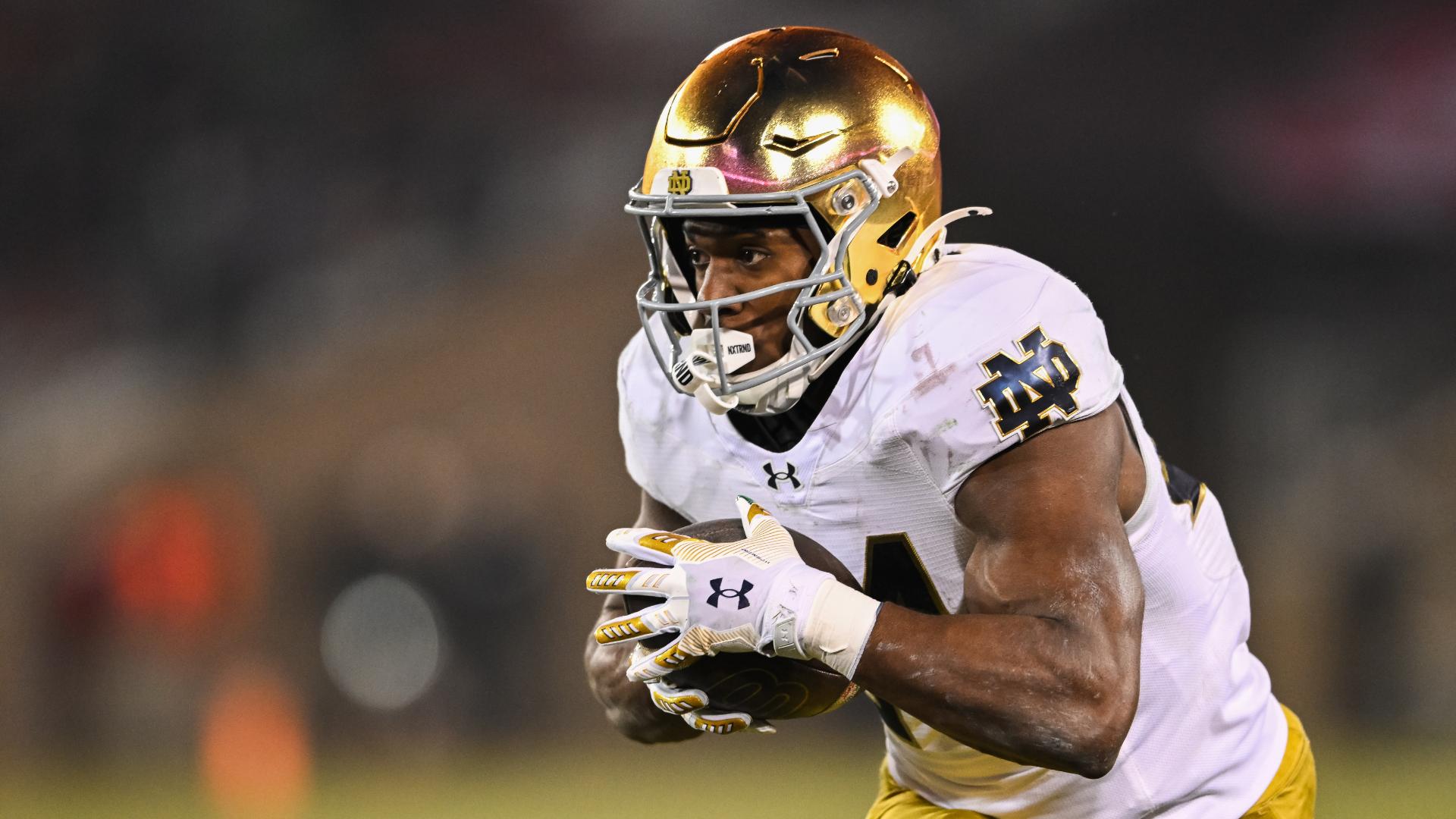
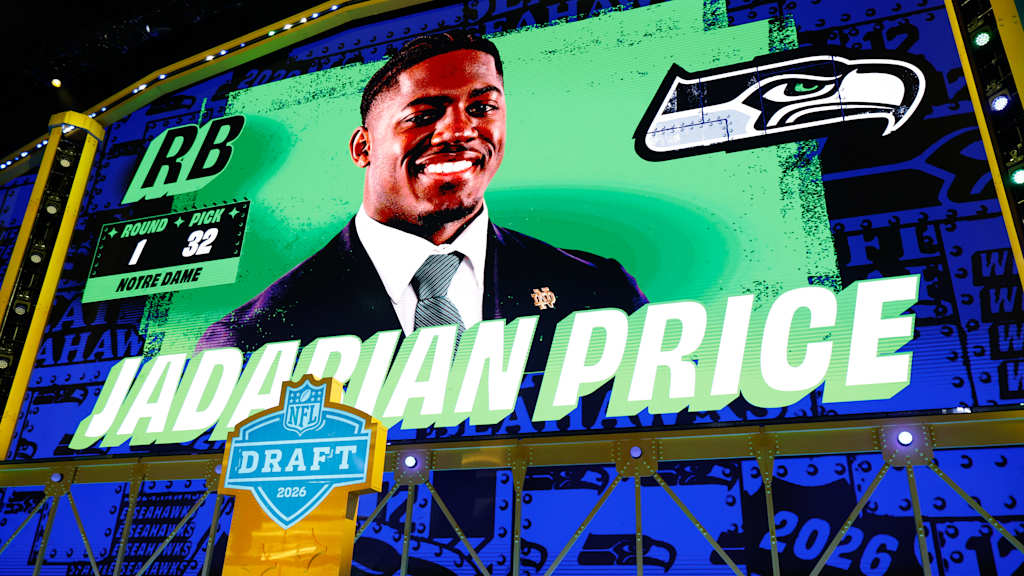
Why did the Seahawks use the 32nd pick on Jadarian Price?
It’s a question a lot of people in the media are asking.
There isn’t going to be an ‘aha’ moment where we see one specific set of statistics or a testing score that suddenly explains everything.
However, we can use data to help explain why the Seahawks felt this particular running back was worth taking at the end of round one.
One of the data points we know the Seahawks look at is yards after contact per carry. John Schneider revealed as much during one of his recent interviews on Seattle Sports.
I looked at college career statistics for yards after contact per carry for every prominent running back over the last 10 years.
Here’s how the top-20 rank:
Ashton Jeanty — 4.76
Rhamondre Stevenson — 4.65
Travis Etienne — 4.51
Bijan Robinson — 4.40
Jeremiyah Love — 4.35
Rashaad Penny — 4.31
Jadarian Price — 4.28
Ken Walker — 4.27
Javonte Williams — 4.26
Jonathan Taylor — 4.24
Jonathon Brooks — 4.13
Josh Jacobs — 4.10
Omarion Hampton — 4.01
Cam Skattebo — 3.95
De’Von Achane — 3.93
Dalvin Cook — 3.93
TreVeyon Henderson — 3.89
Aaron Jones — 3.82
Bucky Irving — 3.81
Alvin Kamara — 3.77
There are a few things to note here. I gathered data for 36 running backs in total over 10 years. Jadarian Price ranked 7th. You can see the company he keeps near the top. You can also see the names he’s ranked above.
You can choose how much weight you personally want to place in this data point. If it’s something the Seahawks have worked out is significant for NFL success — and this list suggests it might be — it’s easy to see why they might think Price is well worth taking a chance on.
Half of the players ranked above Price were top-10 picks. 14 of the top-20 were first or second round picks. The other six are De’Von Achane, Aaron Jones, Alvin Kamara, Rhamondre Stevenson, Cam Skattebo and Bucky Irving. Achane, Jones and Kamara have gone on to become NFL stars. Stevenson is the 13th highest paid back in the league. Skattebo and Irving have shown early promise in their careers.
The list, if nothing else, is a collection of successful pro’s or players drafted early. If you place a lot of faith in yards after contact per carry, you can build a case for Price based on his data in this category.
It’s also worth noting the two players directly next to Price in the list. He’s just below Rashaad Penny and just above Ken Walker. Coincidentally their positions in the ranking mirror the order in which the Seahawks selected them — Penny 27th overall, Price 32nd and Walker 41st.
If you’re wondering why the Seahawks were prepared to draft all three players early — their placing in the list above might be a hint.
Obviously yards after contact per carry isn’t the be-all and end-all. Here’s how the next 16 players ranked:
Joe Mixon — 3.75
Nick Chubb — 3.71
Najee Harris — 3.69
JK Dobbins — 3.65
James Cook — 3.59
Ezekiel Elliott — 3.57
Zach Charbonnet — 3.54
Saquon Barkley — 3.51
David Montgomery — 3.50
Jahmyr Gibbs — 3.53
Derrick Henry — 3.27
Chase Brown — 3.26
Quinshon Judkins — 3.23
Breece Hall — 3.22
Leonard Fournette — 3.04
Christian McCaffrey — 2.89
Clearly Christian McCaffrey’s career hasn’t suffered due to a lack of yards after contact at Stanford. It’s quite striking to see Derrick Henry so far down the list too, plus Saquon Barkley.
The point isn’t to argue that every good player will score well here. It’s simply a single interesting piece of data that reflects well on Price.
Let’s look at a second piece of data — explosive run rate. This measures the rate in which players run for +10 yards among their college carries.
These numbers reflect rates for each player’s entire college career:
Javonte Williams — 23.3
Rhamondre Stevenson — 23.0
Najee Harris — 21.1
Rashaad Penny — 20.6
Joe Mixon — 20.3
De’Von Achane — 20.1
Dalvin Cook — 20.1
Jonathan Taylor — 19.8
Josh Jacobs — 19.8
Travis Etienne — 19.6
Jadarian Price – 19.2
James Cook — 18.7
Alvin Kamara — 18.7
Bucky Irving — 18.5
Nick Chubb — 18.3
Cam Skattebo — 18.0
TreVeyon Henderson — 17.5
Ezekiel Elliott — 17.3
Zach Charbonnet — 17.3
Jeremiyah Love – 17.1
Ken Walker — 16.7
Leonard Fournette — 16.7
Christian McCaffrey — 16.6
Ashton Jeanty — 16.6
Aaron Jones — 16.5
Saquon Barkley — 16.2
Bijan Robinson — 16.0
Chase Brown — 16.0
JK Dobbins — 15.6
Jahmyr Gibbs — 15.1
Omarion Hampton — 14.9
Quinshon Judkins — 14.7
David Montgomery — 14.4
Jonathon Brooks — 14.3
Breece Hall — 14.2
Price ranks 11th out of 36 and is within one percentage point of De’Von Achane, Dalvin Cook, Jonathan Taylor and Josh Jacobs. All but two players above him were drafted in the first or second round.
If nothing else, it highlights just how explosive he was in his college career. He produced big plays at a higher rate than most players entering the league. This also doesn’t take into account his three kick-return touchdowns and his average of 36.1 yards per attempt from 22 returns.
He’s a big play specialist who also produces strong results after contact. Coming into the league, he compares well to some of the best running backs in the NFL in both categories.
That’s something to consider when assessing whether he was worth the #32 pick — especially for a team who needed to add big plays to their running game.
It was a need because they opted not to pay Ken Walker $14.4m a year, with cap-hits in 2027 and 2028 of $18.7m.
Price’s projected average salary is $4.2m per year on his rookie contract. That’s a significant saving for a team that has already paid big money to Charles Cross and Jaxon Smith-Njigba and will need to pay big money again in the future to Devon Witherspoon and, next year, potentially Byron Murphy and Sam Darnold (not to mention possible new deals for players like Derick Hall and AJ Barner).
Finally, an argument could be made that the Seahawks could’ve waited until pick #96 to select a running back. Both Mike Washington Jr and Jonah Coleman, for example, were available.
Here’s how the three backs compare for career yards after contact per carry:
Jadarian Price — 4.28
Jonah Coleman — 4.12
Mike Washington Jr — 3.09
And here’s how they compare for career explosive run rate:
Jadarian Price — 19.2
Jonah Coleman — 16.7
Mike Washington Jr — 13.4
Price is ahead in both categories — significantly so when it comes to explosive plays (the key area of need for the Seahawks). The yards after contact per play data is reasonably similar between Price and Coleman but you need to consider this — if you pass on Price with the intention of selecting Coleman at #96, how can you be sure he’ll still be on the board? He was the #108 pick to Denver. That’s uncomfortably close and it wouldn’t have been a foregone conclusion he’d be there for you to select.
The risk of missing out completely had to play into the equation. The Seahawks could get the player who best fit what they needed with the #32 pick — eliminating any middle-round anxiety.
I’m not sure anyone can seriously argue selecting Colton Hood at #32 instead (for example), then hoping Coleman was there at #96, is clearly a better use of resources. The trio of Price, Bud Clark and Julian Neal sufficiently addressed three key need areas.
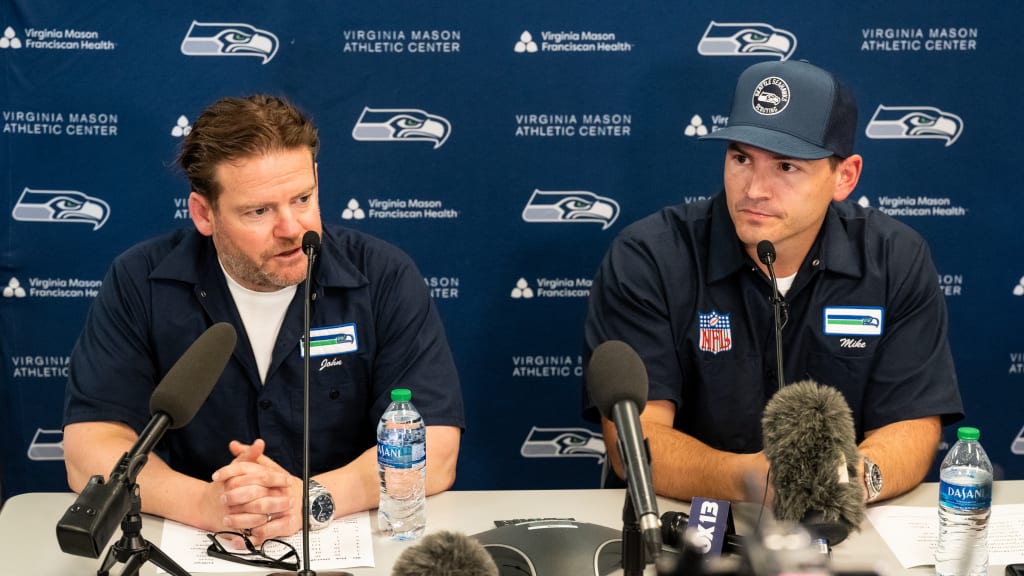
The 2026 draft is in the books and I wanted to wrap things up with a few thoughts…
Seattle’s draft success continues
I’ve seen a lot of sniffiness from the online ‘draft media’ crowd, who will overreact to the drafting of a running back at #32 like an act of self-flagellation took place in Seattle’s draft room.
This wasn’t a deep draft class at the top end and on my horizontal board, for what it’s worth, I had Price as one of the 32 best players in the class. That’s not hindsight, it’s a view crafted long before the increasing chatter that he could be the Seahawks’ pick.
They needed big plays in their running game and Price was #1 for explosive run rate, #1 for missed tackles forced rate and #2 (behind Jeremiyah Love) for yards after contact per attempt.
They followed it up with value picks at positions where they lost players in free agency, adding Bud Clark (a perfect fit for the personality of the team and the scheming creativity of Mike Macdonald) and Julian Neal (who will adequately replace the size and length they lost with Riq Woolen).
I had second round grades on Price and Clark, with a third round grade on Neal. I had a day-two grade on Beau Stephens and the Seahawks traded back into round five to get him.
When you’re picking at the end of every round as the Super Bowl Champions, your options are always going to be somewhat limited. If they’d done things differently — say landing Colton Hood at #32 and getting Jonah Coleman at #96 instead, would they be any better off? It feels like a wash at best.
They’ve positioned themselves to pick up where they left off in 2025. They’ve effectively replaced lost talent and will be ready to go next season.
Other rivals can’t be as optimistic
It’s hard to take significant steps forward as the defending champs. Those trying to reach the pinnacle are always likely to be more aggressive or have bigger holes they can fill.
I’m not convinced Seattle’s main NFC rivals closed the gap.
The Seahawks blew the doors off San Francisco at the end of last season and in the playoffs. They were physically overwhelmed. Their off-season moves don’t make them physically more able, meaning they’re relying on returning heroes from injury. That’s fine — Nick Bosa and Fred Warner are two of the best players in the league. I’m not convinced the 49ers’ draft and free agency moves make them any more likely to go further than last season.
The Rams had a great opportunity to grow with the gift of the 13th overall pick courtesy of Atlanta. Instead of selecting someone like Vega Ioane or Rueben Bain Jr, they took a flier on a quarterback many didn’t see as a true first round talent. They then used their second round pick on yet another tight end.
Meanwhile, the Eagles made their moves but will inevitably lose AJ Brown soon.
The Tampa Bay Buccaneers had an A+ draft and could emerge as a contender if they stay healthy. Overall though, I’m not convinced anyone made a statement to say ‘we’re coming for you’ in the NFC.
A message to anyone thinking of buying the team
The Seahawks will have new owners soon. Whoever the individual or individuals are, you don’t need to change anything.
Here was my message on Hawk Blogger’s live stream yesterday:
What happens next?
The Seahawks didn’t draft an EDGE rusher and will almost certainly sign a veteran in the coming days. From Monday, signings don’t count against your comp-picks.
Dante Fowler recently had a visit. Von Miller is available too. They have options.
What about the future though?
They were said to be aggressively pursuing options before the last trade deadline, emerging with Rashid Shaheed while looking at other moves — including the prospect of adding Maxx Crosby.
Doing business before the 2026 draft was tough because they owned the #32 pick. Every other team had a value advantage simply by picking earlier.
Now, all of those picks are valued the same again. Seattle’s 2027 stock doesn’t have a number attached to it, any more than Philadelphia’s does — or the Rams, 49ers, Chiefs or anyone else.
They are now in a better place to do deals.
As the summer goes on — and when we get into training camp and before the deadline — I would think there’s a reasonable chance the Seahawks go hunting again.
Could they make some form of trade to add a pass rusher this year? I think there’s a good chance.
Welcome to the final day of the 2026 NFL Draft. As soon as the Seahawks make their final pick today, I will begin an immediate live stream with reaction. In the meantime, use this as an open thread and give your reaction to everything in the comments section.
PLEASE DO NOT TIP PICKS
Seahawks picks
The Seahawks traded a 2027 fourth round pick for pick #148
The Seahawks traded #188 to the Jets for #199 and #242
The Seahawks traded #216 to the Packers for #236 and #255
R1 — #32 — Jadarian Price (RB, Notre Dame)
R2 — #64 — Bud Clark (S, TCU)
R3 — #99 — Julian Neal (CB, Arkansas)
R5 — #148 — Beau Stephens (G, Iowa)
R6 — #199 — Emmanuel Henderson Jr (WR, Kansas)
R6 — #236 — Andre Fuller (CB, Toledo)
R7 — #242 — Deven Eastern (DT, Minnesota)
R7 — #255 — Michael Dansby (CB, Arizona)
Video reaction to the Beau Stephens pick…

When you’re picking at the end of every round, it’s not easy to come away feeling like things have fallen your way. Despite this, after two days of the 2026 NFL Draft, the Seahawks can feel really good about the players they’ve acquired.
This always felt like it was going to be an exercise in replacing lost talent. With each pick, it was easy to see value matching need at multiple positions. In Jadarian Price, Bud Clark and Julian Neal — they’ve filled three of four key vacancies without reaching.
I don’t do a vertical board ranking players one after the other. I do a horizontal board where players are stacked in ranges. Therefore, I never quote that players are ’32nd on my board’ or anything like that. When I reviewed the board earlier today, I can say that Price was one of the 30 best players in this draft in my opinion.
Taking him at #32 immediately addressed Seattle’s need to add big plays to their running game and took the pressure off needing to find solutions later on at the position. Kaelon Black is the only other running back to be selected since, pointing to the scarce options this year.
Bud Clark was a solid mid-second round player for me and they got him ay #64. I had him graded higher than Emmanuel McNeil-Warren and just behind Treydan Stukes. This was a fantastic value pick for a terrific player.
I had Julian Neal bunched among several corners with a mid-third round grade. They got him at #99. Again, the value is clear as they replace the length they lost with Riq Woolen departure.
How can you not love his reaction to being drafted by the way?
No one had more fun than @J12_neal tonight. 🗣️ pic.twitter.com/P4PbCtTn02
— Seattle Seahawks (@Seahawks) April 25, 2026
The Seahawks didn’t do anything like start drafting fourth round tight ends like multiple teams, come up with the idea that Carson Beck is a possible solution at quarterback or use a third round pick on a late round receiver like the Dolphins. For the fifth draft in the row they executed what feels like a textbook plan to add value and talent.
I don’t think it could’ve gone any better frankly.
Meanwhile, Seattle’s nearest rivals in the NFC failed — in my opinion — to get significantly better, with the exception of the Tampa Bay Buccaneers who I think are having a great draft.
They still need to replace Boye Mafe and that’ll be something they likely use the veteran market for, with Dante Fowler and Von Miller two standout options. With $29m in effective cap space, they can begin negotiations knowing their comp picks are secure from Monday.
Enjoy these days, Seahawks fans. You’re Super Bowl Champions and have the right people running the franchise. Very few teams get to say that.
Bud Clark (S, TCU)
An interception machine with 15 picks for TCU. He was a two-time team captain who is said to be highly respected by team-mates.
Clark plays every down with a sparky energy. He’s clearly a competitive player who loves the game. His ball skills, unsurprisingly given his production, are really good — he makes difficult catches look easy.
He’s capable of playing roaming centre field and has enough range to play the ball on deep throws. He’s not an eraser, so don’t expect Earl Thomas. But he’s quick and shows evidence of recovery speed.
Played mostly slot in 2025 (313 snaps), then the box (250), then free safety (160). He will jump up and dislodge the ball or tip passes when he can’t make a pick.
He just has a very natural knack for being in the right place at the right time.
Clark’s eyes sometimes stay on the QB too long and I worry about post routes when he does this. I’ve seen receivers get in behind him and sometimes he was lucky not to get torched. I would prefer to see him playing with things in front of him, not at the line too often.
His blitzes can be sharp, dynamic and come unexpectedly from the deep field. He only missed three tackles in 2025 and his run defense grade was high (83.1).
He was outstanding at the Senior Bowl, winning multiple 1v1’s. This is not typical for a safety and he came away with the play of the week with a crazy acrobatic grab for an interception during practise in Mobile.
Julian Neal (CB, Arkansas)
Great length and size (6-2, 208lbs, 33 1/8 inch arms). His wingspan/arm length looks like a real asset on tape.
I expected him to be leggy at his size but he closes quickly and sticks downfield. He was the 13th fastest player at the Senior Bowl, running 20.22 mph.
He doesn’t have top-level quickness and NFL speed-demons could give him trouble downfield.
He’s competitive when the ball’s in the air. He was predominantly used outside but did get snaps in the slot and the box in 2025. He only missed four tackles in his final season for Arkansas.
He’s a tremendous run defender and this will be a major plus point. His tackles are forceful and he’s an extremely physical defender for a corner.
Neal did get away with some early contact in 2025 that could be flagged in the NFL.
Watching him it was so easy to see he was well worth a middle round pick to try and develop. He will bring size and length to the position to make up for the loss of Woolen.
If you missed my end-of-day-three reaction stream, check it out below:
Welcome to day two of the 2026 NFL Draft. As soon as the final pick is made today, I will begin an immediate live stream with reaction. In the meantime, I will be updating this post with every pick and you can give your reaction to everything in the comments section.
PLEASE DO NOT TIP PICKS
Round Two
#33 San Francisco — De’Zhaun Stribling (WR, Ole Miss)
#34 Arizona — Chase Bisontis (G, Texas A&M)
#35 Buffalo — TJ Parker (EDGE, Clemson)
#36 Houston — Kayden McDonald (DT, Ohio State)
#37 NY Giants — Colton Hood (CB, Tennessee)
#38 Las Vegas — Treydan Stukes (S, Arizona)
#39 Cleveland — Denzel Boston (WR, Washington)
#40 Kansas City — R Mason Thomas (EDGE, Oklahoma)
#41 Cincinnati — Cashius Howell (EDGE, Texas A&M)
#42 New Orleans — Christen Miller (DT, Georgia)
#43 Miami — Jacob Rodriguez (LB, Texas Tech)
#44 Detroit — Derrick Moore (EDGE, Michigan)
#45 Baltimore — Zion Young (DE, Missouri)
#46 Tampa Bay — Josiah Trotter (LB, Missouri)
#47 Pittsburgh — Germie Bernard (WR, Alabama)
#48 Atlanta — Avieon Terrell (CB, Clemson)
#49 Carolina — Lee Hunter (DT, Texas Tech)
#50 NY Jets — D’Angelo Ponds (CB, Indiana)
#51 Minnesota — Jake Golday (LB, Cincinnati)
#52 Green Bay — Brandon Cisse (CB, South Carolina)
#53 Indianapolis — CJ Allen (LB, Georgia)
#54 Philadelphia — Eli Stowers (TE, Vanderbilt)
#55 New England — Gabe Jacas (EDGE, Illinois)
#56 Jacksonville — Nate Boerkircher (TE, Jacksonville)
#57 Chicago — Logan Jones (C, Iowa)
#58 Cleveland — Emmanuel McNeil-Warren (S, Toledo)
#59 Houston — Marlin Klein (T, Michigan)
#60 Tennessee — Anthony Hill Jr (LB, Texas)
#61 LA Rams — Max Klare (TE, Ohio State)
#62 Buffalo — Davison Igbinosun (CB, Ohio State)
#63 LA Chargers — Jake Slaughter (C, Florida)
#64 Seattle — Bud Clark (S, TCU)
Round Three
#65 Arizona — Carson Beck (QB, Miami)
#66 Denver — Tyler Onyedim (DT, Texas A&M)
#67 Las Vegas — Keyron Crawford (EDGE, Auburn)
#68 Philadelphia — Markel Bell (T, Miami)
#69 Chicago — Sam Roush (TE, Stanford)
#70 San Francisco — Romello Height (EDGE, Texas Tech)
#71 Washington — Antonio Williams (WR, Clemson)
#72 Cincinnati — Tacario Davis (CB, Washington)
#73 New Orleans — Oscar Delp (TE, Georgia)
#74 NY Giants — Malachi Fields (WR, Notre Dame)
#75 Miami — Caleb Douglas (WR, Texas Tech)
#76 Pittsburgh — Drew Allar (QB, Penn State)
#77 Green Bay — Chris McClellan (DT, Missouri)
#78 Indianapolis — AJ Haulcy (S, LSU)
#79 Atlanta — Zachariah Branch (WR, Georgia)
#80 Baltimore — Ja’Kobi Lane (WR, USC)
#81 Jacksonville — Albert Regis (DT, Texas A&M)
#82 Minnesota — Domonique Orange (DT, Iowa State)
#83 Carolina — Chris Brazzell (WR, Tennessee)
#84 Tampa Bay — Ted Hurst (WR, Georgia State)
#85 Pittsburgh — Daylen Everette (CB, Georgia)
#86 Cleveland — Austin Barber (T, Florida)
#87 Miami — Will Kacmarek (TE, Ohio State)
#88 Jacksonville — Emmanuel Pregnon (G, Oregon)
#89 Chicago — Zavion Thomas (WR, LSU)
#90 San Francisco — Kaelon Black (RB, Indiana)
#91 Las Vegas — Trey Zuhn (G, Texas A&M)
#92 Dallas — Jaishawn Barham (LB, Michigan)
#93 LA Rams — Keagen Trost (T, Missouri)
#94 Miami — Chris Bell (WR, Louisville)
#95 New England — Eli Raridon (TE, Notre Dame)
#96 Pittsburgh (via Seattle) — Gennings Dunker (G, Iowa)
#97 Minnesota — Caleb Tiernan (T, Northwestern)
#98 Minnesota — Jakobe Thomas (S, Miami)
#99 Seattle — Julian Neal (CB, Arkansas)
#100 Jacksonville — Jalen Huskey (S, Maryland)
If you missed my write-up on the Jadarian Price pick last night, click here.
The Seahawks addressed the running back position. Now, the key is to come away with an edge rusher and at least one defensive back today.
I’ve updated my horizontal board with the drafted players removed:

There are 17 players with firm second round grades or higher on my board and 37 players I would be prepared to take at #64. There should be some good options available when they’re next on the clock.
If there are more surprises, such as additional quarterbacks being drafted, the Seahawks might feel comfortable trading back from #64. That’s something to keep an eye on.
I still think Keyron Crawford could be a key target. The GPS data we have on him shows he is tremendously quick over 10 yards (16.4mph — the fastest of the available options). He also had the largest number of high-speed plays (17) — measuring any play where he reaches 16mph.
They need speed in their rush and Crawford is a ball of clay waiting to be moulded.
I have 11 defensive end or edge rushers graded in the third round or higher. They will have alternative options here and can use the depth to their advantage.
Cornerback remains loaded, with 14 players graded before round three. I think they can find an extremely productive corner at #64 and possibly even #96.
It might be that there are great options remaining at the end of round two and people understand why Jadarian Price + the player they get is a better combo than Colton Hood or Brandon Cisse and hoping a running back lasts to #96.
I have six safeties graded in round three or higher, so this might be a trickier position to address — yet clearly the likes of Treydan Stukes, Bud Clark, AJ Haulcy, Jalon Kilgore and Emmanuel McNeil-Warren could be intriguing in this defense.
Other options could include a linebacker, with the excellent Josiah Trotter recently visiting Seattle. Iowa duo Gennings Dunker and Beau Stephens could be in play.
I do think the needs will match value though and they’ll continue to address the areas they need to fill. Remember, in the 2014 off-season they lost Golden Tate and Breno Giacomini in free agency after winning the Super Bowl. They cut Chris Clemons to save money.
They drafted Paul Richardson, Justin Britt and Cassius Marsh with their first three picks — directly replacing what they lost.
They replaced Ken Walker with their top pick last night. Today, I would imagine the priorities will be replacing Boye Mafe and Riq Woolen.