Page 13 of 469

Explosive traits matter for offensive linemen.
We’ve spent a considerable amount of time talking about this on the blog and a year ago, even John Schneider made reference to a 30/30/30 ideal where a player achieves a 30-inch vertical, 30 reps on the bench press and a +30 score on the Wonderlic test.
For years we’ve been calculating explosive power by taking the vertical jump, broad jump and bench press and creating a formula called ‘TEF’. We use ideal scores, as revealed by Tom Cable a decade ago, to measure traits. The ideals are a 31-inch vertical, 9-0 in the broad jump and at least 27 reps on the bench press.
Here’s a quick explainer as to what the TEF formula is:
1. Vertical ÷ 31
2. Broad ÷ 9, then cube the result
3. Bench ÷ 27
4. Results added together = TEF
Here’s what the ideal (31 — 9 — 27) would look like using this formula:
1. Vertical: 31 ÷ 31 = 1
2. Broad: 9 ÷ 9 = 1, cubed = 1
3. Bench: 27 ÷ 27 = 1
4. Overall score = 3.00
So a prospect achieving the exact ideal (31 — 9 — 27) will score a 3.00 in TEF.
Here are the top explosive testers from last year’s draft:
Armand Membou — 3.45
Luke Newman — 3.26
Bryce Cabeldue — 3.25
Grey Zabel — 3.23
Jalen Travis — 3.21
Garrett Dellinger — 3.20
Donovan Jackson — 3.19
Tate Ratledge — 3.10
This at least suggests it’s something the Seahawks are conscious of. Both Bryce Cabeldue and Grey Zabel performed very well in terms of explosive testing.
As we wait for players to do the bench press at their pro-days and the results trickle in, I have 15 confirmed TEF scores for 2026. One player doesn’t just stand out, he’s among the best testers ever.
His name is Emmanuel Pregnon from Oregon.
With a 35-inch vertical, a 9-3 broad jump and 32 reps on the bench press — his TEF score is a 3.40. This is how his score compares historically:
Beaux Limmer — 3.68
Braden Smith — 3.52
Trey Smith — 3.49
Tristan Wirfs — 3.47
Armand Membou — 3.45
Sebastien Vollmer — 3.45
Lane Johnson — 3.44
Cole Strange — 3.42
Emmanuel Pregon — 3.40
Rashawn Slater — 3.40
Terron Armstead — 3.38
Peter Skoronski — 3.37
Bernhard Raimann — 3.37
Quinn Meinerz — 3.34
Cam Jurgens — 3.34
Zach Tom — 3.33
Drew Dalman — 3.31
Kolton Miller — 3.31
Frank Ragnow — 3.29
Creed Humphrey — 3.25
Cesar Ruiz — 3.25
Bryce Cabeldue — 3.25
Grey Zabel — 3.23
Donovan Jackson — 3.19
Chris Lindstrom — 3.18
Joe Thomas — 3.16
Alijah Vera-Tucker — 3.16
Trent Williams — 3.11
Will Fries — 3.10
Quenton Nelson — 3.07
Tyler Linderbaum — 3.05
Erik McCoy — 3.05
Penei Sewell — 3.04
Joe Thuney — 3.04
Joe Alt — 3.02
Elgton Jenkins — 3.01
Cody Mauch — 3.01
Garrett Bolles — 3.00
There are 38 names on the list above including Pregnon. Of the 37 already in the league (or retired), 20 of them were taken in the first round. A further seven were taken in round two, with four more in round three.
Included among the six players not taken in the first two days of the draft are Trey Smith, who fell due to health concerns, Zach Tom, a big blog favourite who had no business lasting to round four, Drew Dalman, another blog favourite, plus Bryce Cabeldue and Will Fries.
The point here is that typically the players on this list go early in the draft.
Only six players were more explosive than Pregnon. The four directly above him on the list were all first round picks, with Braden Smith going 37th overall.
The two players just below Pregnon were also first round picks.
So what does this mean? There’s a reasonable chance Pregnon will be taken earlier than many are projecting. These kind of traits, typically, are not ignored by the NFL.
Why do I bring the Seahawks up specifically for Pregnon? Well, they run an outside zone system. The draft-eligible player with the highest zone blocking grade in college football last season was Emmanuel Pregon:
Emmanuel Pregnon — 93.0
Keagen Trost — 91.6
Beau Stephens — 89.5
Brian Parker — 89.4
Travis Burke — 88.7
Austin Barber — 87.1
Gennings Dunker — 86.6
Evan Beerntsen — 85.3
JC Davis — 83.9
Kadyn Proctor — 83.6
Carver Willis — 81.8
Jake Slaughter — 81.7
DJ Campbell — 81.2
Sam Hecht — 79.8
Spencer Fano — 79.4
Matt Gulbin — 79.2
Keylan Rutledge — 77.4
Garrett DiGiorgio — 77.3
Fernando Carmona — 76.8
Blake Miller — 76.6
Ar’maj Reed-Adams — 75.8
Dametrious Crownover — 74.9
Francis Mauigoa — 74.3
Logan Jones — 74.0
Pat Coogan — 72.8
Billy Schrauth — 72.3
Olaivavega Ioane — 72.2
Logan Taylor — 71.3
Markel Bell — 71.3
Jude Bowry 70.6
Chris Adams — 70.6
These are PFF’s grades. I’m not sure, having studied Pregnon, that I’d suggest he’s the ideal zone blocker. He’s a big human and while he moves well for his size, he’s far from the quickest. He ran a 5.21 forty at the combine and his 10-yard split of 1.82 was one of the slower times. He only managed a 4.84 short shuttle at his pro-day which is nothing to write home about.
For comparison, Gennings Dunker ran a slower split (1.83) but a faster shuttle (4.63).
He feels more suited to a power gap scheme just to look at him — but the grade is the grade and he’s a 93.0 and the rest of the group isn’t. If that translates in any way to the next level — plus you throw elite explosive traits into the mix — you’ve got a heck of a combination.
He played mostly left guard for Oregon but did fill in at right guard for one game against Minnesota so he at least has some experience there.
Pregnon gave up one sack in 2025 (vs Texas Tech) and only five pressures. He had the sixth fewest pressures among guards who played 50% of snaps in 2025.
He has massive 11-inch hands and nearly 34-inch arms. He has a very attractive physical profile. He will be a 25-year-old rookie though — he’s an older player who previously played at Wyoming and USC before moving to Oregon.
Would the Seahawks take another interior lineman at #32? It’s questionable. This off-season does feel very similar to the one in 2014 after they last won a Super Bowl. They lost Golden Tate and Breno Giacomini in free agency and used their first two picks on replacements (Paul Richardson and Justin Britt). The chances are the Seahawks will focus their draft resources on replacing Ken Walker and Riq Woolen (and possibly Boye Mafe — but that might be something they sort out after the draft with a veteran addition like Von Miller).
You can’t force picks though. What if they don’t think Jadarian Price is worth #32 — or what if he’s taken before they pick? What if the cornerbacks they value at #32 are gone and they think the depth at the position is good enough to wait until #64 or even #96?
In that instance it might be time to look at the board, assess the options and perhaps a big explosive, nicely graded zone-blocker could be the decision? Finishing off the O-line rebuild and investing, once again, in the trenches.
There’s a least been a little bit of buzz around Seattle and the right guard spot. For example, in ESPN’s free agency predictions two weeks ago, Brady Henderson brought up the possibility of an O-liner being signed:
“They could be looking to upgrade right guard after Anthony Bradford’s up-and-down season. But they won’t break precedent and overspend on a guard to replace a player who was good enough to help them win a Super Bowl.”
Brady didn’t have to mention the O-line, when there were other areas he could’ve looked at. Maybe it’s something, maybe it’s nothing — it seems as if they were keeping their options open if a decent opportunity emerged to sign a guard.
Also, Lance Zierlein did say during an exchange we had on X that he was hearing interior O-line was a target for Seattle in the draft.
Maybe they think they can committee their way to a running attack, or like a running back in the middle rounds, and perhaps they believe in their ability to develop a cornerback (there are definitely attractive day two options here) allowing them the opportunity to go O-line early?
In John Schneider’s 16 drafts as GM in Seattle, on nine occasions they’ve taken an offensive or defensive lineman with their top pick. With their second pick, they’ve also taken a lineman nine times. There’s been a very consistent theme to focus on the trenches, despite what some fans might assume. It’s not a surprise given Schneider worked for Ron Wolf, whose mantra was to build up the lines.
Pregnon’s a player to keep in mind over the next few weeks. He might not be the only one. I don’t know if they think Blake Miller can kick inside from right tackle — but the way he moves around would suggest he’d be an excellent zone-fit. His TEF score was also a highly impressive 3.36.
Confirmed TEF results so far for the 2026 draft class:
Emmanuel Pregnon — 3.40
Blake Miller — 3.36
Parker Brailsford — 3.35
Jager Burton — 3.23
Josh Gesky — 3.20
Micah Morris — 3.14
Max Iheanachor — 3.12
Chase Bisontis — 3.03
Kayden Proctor — 3.00
Keylan Rutledge — 2.98
Garrett DiGiorgio — 2.79
Febechi Nwaiwu — 2.78
Fernando Carmona — 2.77
Aamil Wagner — 2.73
JC Davis — 2.53
Sam Hecht — 2.46
You can read my scouting profile on Emmanuel Pregnon by clicking here.
Miami say De’Von Achane won’t be dealt
A day on from the Jaylen Waddle trade and many of us have been wondering whether the Miami Dolphins would be willing to deal star running back De’Von Achane.
Apparently not. According to Adam Schefter, teams calling the Dolphins have been told he isn’t available.
This shouldn’t be shocking. Achane is legitimately one of the best offensive players in the league.
I was a little bit surprised to see how some people reacted to the idea of trading for Achane yesterday. I get the sense that many don’t realise just how good he actually is. The arguments put against it — that I tried to push back against in this video — didn’t seem to truly grasp his excellence.
Sadly, it seems like it won’t be possible to get him. Just as it wasn’t possible to get Maxx Crosby. The Seahawks might be forced to use their picks and I’ll pre-warn the people so opposed to the Achane trade idea that they might have a different view on acquiring an elite talent in six weeks time when they face the reality of actually picking in this class.
It’s not a good draft. The Broncos explicitly showed us that yesterday with their very aggressive move for a receiver who hasn’t reached 1000 yards in either of his last two seasons. It’s a shame that the Seahawks might not be able to use their premier off-season asset on acquiring someone who can legitimately elevate the team and increase their chances of repeating as Champions.
Scouting notes on two Washington prospects in the draft
Carver Willis (OL, Washington)
I finished watching Willis’ tape this week and there’s a lot to like. He looks like an ideal interior zone blocker, with the athleticism, instinct and game experience to be an intriguing possibility for a team like the Seahawks.
He ran a 5.11 forty at 6-5 and 303lbs, while jumping a 9-0 broad. This speaks to his athleticism and explosive power. I thought his Ohio State tape in particular was very strong, showing what he can do against a quality opponent while featuring at left tackle.
Willis can move people in the running game. He’s not Taliese Fuaga by any stretch but there were many reps where he displaced defensive linemen to create big opportunities for his running backs.
He’s very mobile and agile and it helps him pass-off blocks, moving to re-set his position and then find secondary targets. He’s a very easy mover on the pull, shooting out of his stance and looking very natural on the run.
His backpedal at tackle showed athleticism. He’s not the most natural left tackle but handled the position well in a top conference. Pass rushers, including some big names, struggled to get off his blocks.
Willis is also always looking for the next block. He doesn’t sit in his position. There are multiple tape examples where his willingness to seek out the next block sprung a big run. He can also be very physical. It’s not often you see Ohio State linemen put on the floor.
Sometimes you’d like to see a lot bit more consistency in his aggression. There are second-level blocks where he engages and falls off a bit. It’d be nice to see him hammer someone like Grey Zabel and Chase Lundt often showed in last years draft class.
At the Senior Bowl he had a beastly rep against Clemson’s TJ Parker — taking the contact, out-muscling his opponent then throwing Parker to the turf. He also sat Dani Dennis-Sutton down in a 1v1 at left tackle. It wasn’t all plain sailing — he had a rough rep in scrimmages when Nadame Tucker put him on the deck.
What was emphasised in both Mobile and on tape is that he’s athletic enough that when he faces mobile, quick pass-rushers he can keep re-setting his feet to seal position and execute his blocks. Sometimes you’d like to see his initial punch land sooner. Be the enforcer. He took out Cian Slone at the Senior Bowl by just completely getting after him right off the snap. More of that would be great. He plays with intensity and physicality so consistently landing that first blow would be good to see.
His zone-blocking grade was an 81.8 last season and Washington used zone concepts 72% of the time. He only gave up two sacks at left tackle, plus 22 pressures. This included the Ohio State game where he gave up zero sacks and only two pressures. He was flagged four times in 2025. He took 1870 college snaps — so he’s battle tested.
Finally, a well placed source passed on this story which I think is pretty cool. When he transferred to UW from Kansas State and arrived in Seattle, the team received a letter from a local fire captain. Willis had gone out for dinner, saw a group of 14 firefighters eating at the same place, and he went over and introduced himself before thanking them for their service. The fire crew later discovered he’d paid their bill.
I’m told Willis has great leadership qualities, is very mature and has a big personality. He has worked with highly respected O-line trainer LeCharles Bentley for some time.
He checks a lot of boxes the Seahawks look for and could be a good addition to add further competition and versatility to the O-line.
Jonah Coleman (RB, Washington)
Coleman is a very interesting player to study because he presents a few challenges. There aren’t many players like him with this kind of frame (5-8, 220lbs). Coleman opted not to run at either the combine or pro-day.
It speaks to one of the concerns. Is he quick enough? There are legit question marks about his burst, acceleration and ability to turn good runs into great runs when he breaks into the second level. Yet funnily enough his lack of pure speed also plays into his favour at times too. I noted it down as ‘forced patience’. He is able to let plays develop as he navigates through traffic because everything is a little less rushed. If he was quicker, he might not possess this ability.
Coleman also didn’t do any jumps which is a bit concerning. Running backs need to show explosive power. If he has it, why not jump?
He’s a bowling ball of a player — he’s so small and thick he’s tough to grab hold of. He slips through contact because he’s just awkward to tackle at his height and thickness. However, when he is engaged and hit, he tends to go down. It can take multiple defenders to slow him but when they do, he goes down fairly quickly.
To look at him you’d think he’d be a big yards-after-contact runner but he wasn’t on tape and the data matches up to that. He only had 562 yards after contact in 2025 (3.58 yards-after-contact per attempt).
The burst worries me a bit. He doesn’t accelerate through contact and often slows at the vital time when you want him to quicken up and run through the defender. I wonder if he’ll get caught in the backfield too often at the next level.
He’s not a home-run hitter and his best runs are where he’s slaloming through defenders and using his low center of gravity to change direction and shift around. It’s hard for taller defenders to wrap him up so he often just slips their grasp.
He had 20 +10 yards runs in 2025. Coleman only had two +100 yard games — vs Colorado State and UC Davis. In the games against Colorado State, UC Davis & Boise State he averaged 7.3 YPC. Yet in his other 10 games he averaged only 3.2 YPC (including the entire BIG 10 slate).
Coleman fumbled the ball twice and was tied a lowly 160th in college football for yards per attempt (4.8).
He’s very willing in pass-pro but his technique is off —- he tries to shoulder-up on contact and doesn’t play square.
He’s very well regarded for his character and a team captain at Washington. He’s been described to me as a ‘huge personality fit’ for the Seahawks per a source who would know.
When I was watching him I envisaged his role as more of a David Montgomery complement to someone with twitchy dynamism and long speed. He’s a knuckles but he probably needs to play with a Sonic. It’s worth noting there was a fair amount of buzz around the Seahawks having interest in Montgomery before he was dealt to the Texans. I should add that I think Montgomery is a potential ceiling. It’s far from a formality that Coleman will be as good.
If you want someone who brings a physical presence who might help wear down opponents in the fourth quarter, Coleman feels like a decent choice. I’m just not sure you can rely on him in the NFL to bring consistent explosive plays and his surprising lack of work through contact needs to be noted.
It’s worth noting that his 2024 production was way better than 2025. With a 19.8% explosive run rate, 34.9% missed tackle forced rate and 4.34 yards after contact per attempt — those numbers would have him up there towards the top of the running back class. If the Seahawks see 2024 as a better representation of what he is as a player — he will be interesting.
A blockbuster trade has been completed today, with the Broncos acquiring Jaylen Waddle from the Dolphins. They’ve paid a steep price, giving up a first and third round pick, while swapping fourth rounders.
It’s worth noting the increasing pressure on Denver’s front office. They were inactive during free agency, with fans and media ramping up the rhetoric that they were asleep at the wheel. There’s a definite sense that they’ve ‘made this happen’ — even if, per reports, they’d been chasing a Waddle trade going back to the deadline.
It’s interesting because as recently as three-and-a-half weeks ago the messaging out of Miami was that both Waddle and star running back De’Von Achane wouldn’t be dealt:
The Dolphins see De’Von Achane and Jaylen Waddle as important parts of their franchise
They’ll listen to offers for both players (as they would for any player) but the plan is for Achane and Waddle to remain in Miami, per Jon-Eric Sullivan
Miami not actively shopping either…
— Marcel Louis-Jacques (@Marcel_LJ) February 24, 2026
This was after both players were heavily connected to trades pre-deadline. Now that Waddle has been moved, is it possible GM Jon-Eric Sullivan’s words were merely an attempt to make sure he gets the best possible price for both players?
Clearly this is a tear-down rebuild by the Dolphins. They’ve moved so many pieces over the last few months. The signing of Malik Willis is a shot-to-nothing at quarterback and makes relative sense. It also provides a little bit of excitement for fans who are otherwise staring at a rough 2026 season.
Yet Miami, in the past penalised for a tanking and tampering probe, appear to be positioning themselves for the possibility of being well placed in the draft next year. Or at the very least, embracing a completely fresh start.
It’s entirely plausible Achane fits into their plans. He is immensely talented. He only turns 25 in October. They don’t have to get rid of everybody.
Yet with his contract due to expire at the end of the 2026 season, they are very quickly going to face a choice on whether to pay him. Does a big contract extension for a running back at this stage really make sense?
It might be beneficial for the Dolphins to work out the best trade package and keep adding stock. Achane playing on a desperate team isn’t going to be an environment for a productive ground game nor the best way to see his stock rise if you decided to move him before the deadline on a rental basis.
They really need to commit or move on, unless they’re comfortable rolling with a franchise tag next year.
It’s hard to work out what would be a fair offer. The Denver deal speaks to how teams view this draft class. The Broncos have given away a late first and third round pick for a player in Waddle who hasn’t reached 1000 yards in his last two seasons. It’s further proof that the value simply isn’t there in the late first round.
You could argue in the Seahawks’ case that no player at #32 could provide the level of impact Achane can. Meanwhile, you’d imagine other teams might be willing to offer more than #64.
Would the Dolphins trade their star runner for #32? Should the Seahawks consider it?
Firstly, this would be very similar to the Jamal Adams trade. You’d be acquiring a player for a hefty price at a non-premium position, then waiting (presumably) to pay them. This is a risky proposition, especially if Achane got hurt. It’d be a gamble — but perhaps one a defending Super Bowl champion can afford to make.
Secondly, they would have to view Achane in a totally different light to Ken Walker. They’d have to view him as one of the truly great running backs.
There’s evidence to back that up. Only Jonathan Taylor, Derrick Henry and Bijan Robinson had more yards after contact than Achane in 2025 (977). He was was the only running back to average over +4 yards after contact per attempt. His mark, 4.11, was a fair bit ahead of Robinson in second (3.95).
No running back had more +10 yard runs (he had 40). He only fumbled once. His yards per attempt (5.7) was again well ahead of everyone else. He’s well versed in the zone scheme playing for Mike McDaniel.
Achane is a star — the kind who would warrant the level of contract given to the top players at his position. He’s done it all playing for a non-elite team, with a struggling quarterback. Imagine what he would look like playing for a contender?
Perhaps the Seahawks are resigning themselves to a cheap committee? They met with Jonah Coleman yesterday at his pro-day and he’s free to visit them without it costing an official-30 visit as a local prospect. They might just add a runner in the draft — be it Jadarian Price at #32 or someone else on day two and call it a day.
It really depends on their level of interest in adding proven quality to the position. They also need to consider, if their intention is to keep Zach Charbonnet beyond 2025, whether it will be unhelpful to add a star name on a big contract.
They have a lot of big deals to pay out over the next 12 months. Can they afford to add another from the outside?
They also might want to keep their options open. There’s over a month to the draft. Maxx Crosby is back with the Raiders but is there still a chance, before the draft, that he gets moved? You might want to leave the door open there.
However, running back is a need. Achane is one of the best. The Dolphins appear open for business. It’s something to consider.
For all my previous player scouting notes, click here.
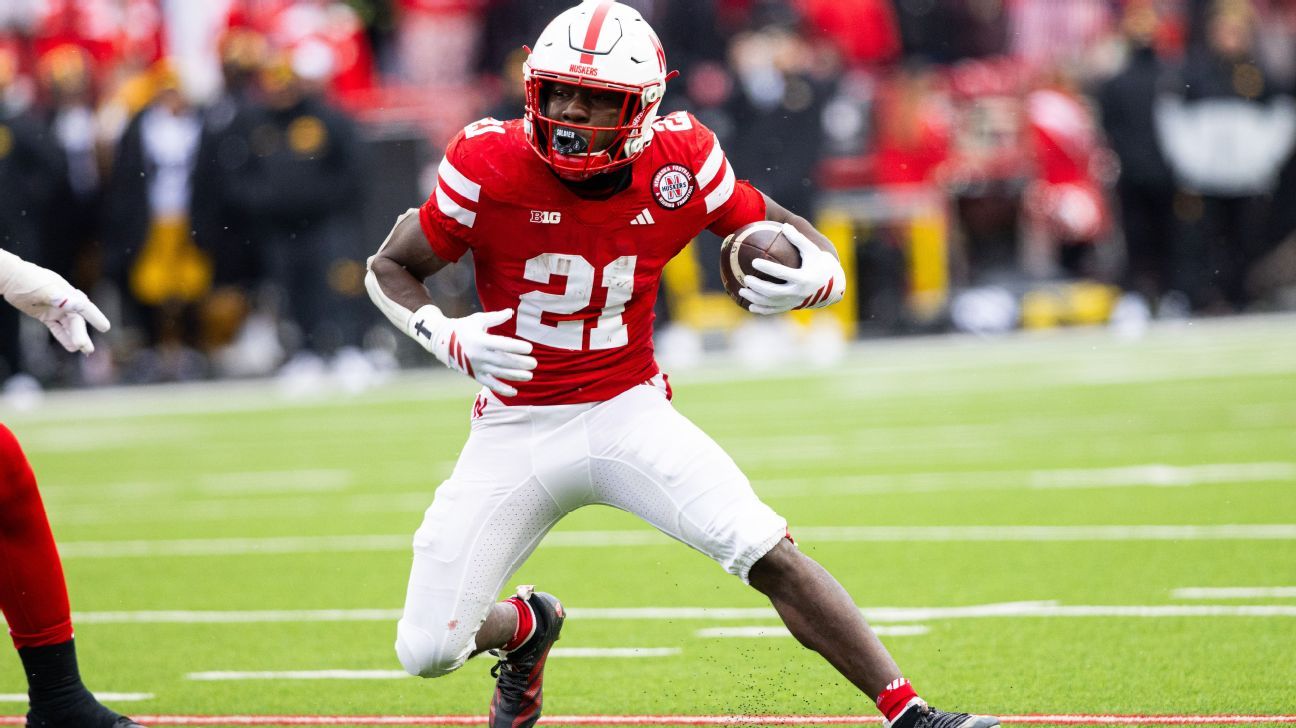
Emmett Johnson (RB, Nebraska)
There are a few players who immediately stand out when you watch their teams play. Johnson had that influence when watching Nebraska in 2025. He was an electric runner who was constantly making plays.
I started to dig around on him and became very aware he is a high character individual. There is a lot to like here, yet determining his level of upside will be the key to working out how early he could go.
His change of direction skills are very impressive. He had one of the runs of the season against Maryland — bouncing outside, running to the second level, breaking multiple tackles, cutting back to create even more yardage and then eventually being brought down after an exhausting 50-yard effort.
Johnson’s game appears to be built on shiftiness and quickness, not power or explosion. He is not the type of back who just plows through contact and sets the tone. Neither is he necessarily the kind to win with raw speed, find a crease and be a big-play artist. However, he is slippery to bring down and he has an initial burst that gets him moving.
He has rare ability to dodge tackles and escape into space. He recorded 741 yards after contact which was third behind only Jeremiyah Love and Kaytron Allen. I would note, though, that his yards after contact per carry was a lowly 2.95. So this was more attempt-driven than necessarily being a big tackle breaker.
He can be used very effectively as a pass-catcher (46 catches in 2025). There was clear evidence too of very natural hands and catching the ball away from his body.
Johnson shows no hesitation on the hand-off and gets up field decisively. His cuts are built into his running stride making them seamless if not massively explosive. He makes himself small through the hole to pick through gaps. I like how he sets up his blocks to make the most of certain runs.
I think his lack of size is overstated because he’s muscular and well put together. Plus, we’re living in an era of NFL football where slightly smaller backs are succeeding. However, at 5-10 and 202lbs he doesn’t have a lot of heft. He might have limited value in short-yardage and redzone scenarios.
He ran a 4.56 which is a bit slower than ideal for his size. He jumped a 35.5 inch vertical and a 10-0 broad.
I had a lot of fun watching him. I think he’s a 6.5/10 runner as a prospect. He won’t necessarily provide starter quality but he can play a role in the NFL for sure. He will be worth a pick late on day two or early day three.
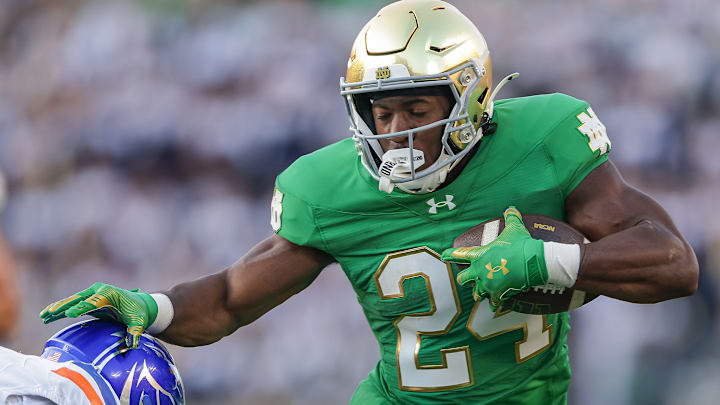
Jadarian Price (RB, Notre Dame)
His acceleration and burst hint at major NFL potential, particularly in a zone system. Watching Price run to the boundary, hit the edge with decisiveness and then explode upfield is interesting.
He loves to fly outside, stick his foot in the ground and get vertical. When he bounces outside he doesn’t dance. He gets downhill quickly, breaking through gaps and then the fun starts. Get him into the open field and he can really go. If he breaks into the second level he’ll be a threat to score at any time.
Equally he is patient letting gaps establish without any wasted motion
All of this contributes to his effectiveness as a kick-returner. He averaged 37.8 yards per attempt on kick returns, scoring two touchdowns in 2025.
Playing alongside Jeremiyah Love obviously capped his ability to produce big numbers. Love is one of the better running backs to enter the NFL in a generation and you’re going to have a hard time stealing carries away from him. I think the league will like that Price stuck it out, didn’t transfer and wanted to remain with his team.
He averaged 3.92 yards after contact per attempt which is a good mark. He played at about 5-11 and 210lbs but slimmed down to 203lbs for the combine, running a 4.49. I think Mike Washington Jr running a 4.33 can be deceptive. A 4.49 forty isn’t going to have anyone suddenly pushing Price into the top-20 but it’s more than quick enough to be a positive in his projection to the next level.
Despite being spelled, he had a +20 yard run in eight games last season. He did fumble three times though and along with the rest of the running backs in this class, his pass protection grades are nothing to write home about.
Having only six catches on seven targets in the passing game in his backup role also prevents you from getting a true angle on his third-down capabilities.
I do think he ticks a lot of boxes for being a productive starting NFL running back. Decent size, enough electricity to break to the second level and hit home-runs, explosive traits (35 inch vertical, 10-4 broad), the ability to break through arm tackles and retain his contact balance. He’s not likely to be the next Jonathan Taylor but if you need someone who can start and perform at a high level, I would bet that Price can deliver for you.
Character wise he is another strong personality. He could be very much on Seattle’s radar.
Mike Washington Jr (RB, Arkansas)
A blog favourite during the college season, Washington’s combination of size and speed was always intriguing. Plus, he fits the outside zone system very well.
He ran a 4.33 at 6-1 and 223lbs at the combine, adding a 39-inch vertical and a 10-8 broad jump. Washington’s profile of a dynamic, electric runner combined with top-end explosive traits demanded more attention post-combine in the wider media and he’s been one of the most-talked about players since.
De’Von Achane ran a 4.32 at his combine at 191lbs. Washington is 32lbs heavier than Achane and runs at the same speed. He’s also far more explosive — Achane jumped only a 33-inch vertical and a 9-3 broad.
Achane had flaws, was underestimated by the NFL and has turned into one of the very best backs in the game. This is an opportunity to draft someone in Washington with the same level of speed yet with a far bigger frame and level of explosive power.
He is adept at sprinting to the outside and then turning upfield for big gains. I think he has every chance to be an excellent outside-zone runner. However, he’s also capable of running through contact to get the tough yards. He recorded 644 yards after contact in 2025.
You see the acceleration on tape. He changes direction well too and finishes his runs. There’s a gliding quality to his running style you don’t often see on a physical back like this.
Washington gets to the outside, allows blocks to establish then cuts upfield with explosion. He also hits the hole well and finds gaps up the gut. When he gets to the second level he accelerates and becomes very difficult to stop and there is some home-run hitting potential.
However, he doesn’t make enough defenders miss. He’s a little bit stiff in the open-field to juke away from defenders and tends to run into tackles. He lacks the wiggle and shake you see with Jadarian Price and Jonah Coleman.
He will typically need good blocking to allow his excellent athleticism to capitalise. He is not likely to make magic happen on his own. Execute your blocks and he can make big plays because he’s so big and fast. If you play a team that beat you in the trenches though, he isn’t going to make things happen on his own.
Arkansas played very poorly on defense in 2025 and often were left chasing games. This impacted his ability to put up better numbers.
He had 3.86 yards after contact per carry. His explosive run rate was an above average 18%. His missed tackle forced rate is middle of the pack for this class at 20.4%.
Fumbles are a well publicised issue. He had three for Arkansas last season and four for New Mexico State in 2024. It’s an area teams will look into to work out how fixable the problem is. Again, pass-protection is not a strength at the moment.
I’d also suggest he doesn’t have a classic running back frame — his lower body isn’t quite as thick as you’d usually expect for a 220lber. We’re living in an unorthodox era at the position though.
There simply aren’t many players with this kind of size and speed. You get the sense he’s only scratching the surface of his potential too.
Skyler Bell (WR, Connecticut)
Bell is one of the harder players to get an angle on because the high’s are incredibly high and then you remember the competition level.
He’s 6-0 and 192lbs with massive 10-inch hands. Immediately that grabs your attention. Then he ran a 4.40 at the combine and jumped a 41-inch vertical and an 11-1 broad. These are big-time numbers that demand a return to the tape post-Indy.
You see the vertical on film because he can certainly climb the ladder to high-point in tight coverage. You see very clearly the speed to run away from defenders when he breaks into the open field. You wouldn’t say he has elite suddenness but the quickness is more than good enough for the NFL level.
He can string out a slant and carry it with YAC at an angle, running away from defenders. He shows good concentration to make difficult catches in traffic. Bell made highlight-reel one-handed grabs in 2025. His route-tree was more varied than I expected although scheming also did a good job creating openings for him.
Admittedly there were also plenty of moments on tape where he benefitted from some awful blown coverages.
He’s a willing runner over the middle. He can separate then turn upfield. The intermediate range is where he could make his money because he’s difficult to stick with. He scored seven touchdowns on 10-19 yard passes in 2025. He was very effective in the red zone.
His routes overall show a high level of polish and patience but he will freelance at times. He didn’t get jammed and you wonder how he’ll handle it at his size.
Drops have been a problem and that’s why I’m keeping him in the third round range — 24 drops in four seasons at UConn and Wisconsin is simply too many. That said, four drops in 2025 was his best effort and an improvement.
Romello Height (EDGE, Texas Tech)
The first thing to note was his frame. When he stood next to David Bailey at the combine, he looked like a Terminator. Bailey on the other hand does not have a typical ‘NFL EDGE’ body type.
He was 239lbs in Indianapolis so he’s undersized and will need to be used as an outside linebacker or situational rusher. He has a shade under 33 inch arms but nothing egregious like Cashius Howell. You would hope for amazing testing numbers at his size but a 1.63 10-yard split is very much in the ‘good not great’ category.
Height is explosive though — jumping a 39 inch vertical and a 10-5 broad. He reached a max speed during the season of 18.1mph.
His big selling point is pass-rush win percentage. His mark of 21.8% was second only to Nadame Tucker (playing for Western Michigan) and Reuben Bain. He was fourth for pressures behind only Bain, Bailey and Akheem Mesidor. There’s enough production data here to think Height is worth a second round shot.
He can dip and bend around the edge. His bend and straighten isn’t exactly elite but he’s shown he’s capable of working tackles. He can swipe away contact to disengage and he will shock tackles with his quickness at times. They need to engage him quickly and forcefully or he will win.
Height has shown evidence of a devastating inside move. He can absorb contact and slip free. He just doesn’t have amazing, game-changing angles on his bend or the terrifying quickness to be a truly high pick.
He can execute an effective spin move. He doesn’t have the sand in his pants to win with power. On top of this, he will unsurprisingly have issues vs the run at times.
As a situational rusher working in a rotation, there’s something to work with here. He doesn’t have the profile to go earlier than day two but it’ll be interesting to see where he lands, probably in the #50-75 range.
TJ Parker (EDGE, Clemson)
He had an underwhelming and disappointing 2025 season after showing some promise in 2025. Fair play to him for trying to repair some of the damage by appearing at the Senior Bowl as one of the bigger name attendees.
However, the tape (and Senior Bowl reps for that matter) showed a player with very average get-off and quickness. He tends to prefer to engage contact and use a straight arm to disrupt a blocker then play off that. There’s very little evidence of him attacking the outside shoulder, winning to the point then turning around the arc.
His straight arm is very effective in fairness at the college level. You could especially see in Mobile how it would consistently get the tackles off balance and then his secondary move to disengage and circle round to the quarterback was impressive (he did have losing reps though, including against Carver Willis).
At the next level I’m not sure this is going to consistently work. It’s easy to imagine him walking into contact too often, coming up against a tougher, more physical opponent and stalling out.
You just want to see a bit more twitch on tape. He did run a 1.61 10-yard split at 263lbs which is good. You wish you could see more evidence of that. He ran a max-speed during the college season of 17.4mph.
He’s nearly 6-4, has 33 1/4 inch arms and nearly 10-inch hands. These are good measurables. Other positives include working his hands to disengage well and when he kicked inside I thought he did a decent job extending his arms to keep his frame clean.
I do think he’s slightly one-dimensional at the moment. He had six forced fumbles in 2024 but zero in 2025. In his final year at Clemson he had just two sacks in 11 games before finishing the season with four sacks against South Carolina’s pathetic O-line. He only had 31 pressures in 11 games before recording 10 against South Carolina alone to boost his numbers.
In 2024 he had 51 pressures and 12 sacks in 2024. Why did his production fall off a cliff? He gave an unimpressive explanation at the Senior Bowl, saying Will Heldt basically gathered the production instead.
I can see teams who are desperate for edge rush help considering him between pick #25-50 but I didn’t feel like I was watching a player with tremendous pass-rushing upside.
Keyshaun Elliott (LB, Arizona State)
Hailed for his football character, I really enjoyed watching Elliott’s playing style and noted that twice when pouring over the film.
We know teams value explosive traits at linebacker. He had a 38 inch vertical and 10-5 broad jump so he ticks those boxes. His size (6-2, 231lbs) is very appealing.
Elliott sifts through the line to find his opening and then packs a punch when he takes on the ball-carrier. When offensive linemen try to get to the second level he can dip beyond them to avoid contact.
His pursuit speed is more than good enough when sprinting to the sideline and he will absolute fly to the ball.
He came off the edge at times and had success, recording seven sacks in 2025.
He’s a very fluid mover to navigate through traffic, making it look easy. His patient running style allows the play to develop and then he’s decisive to capture opportunities.
In coverage he’s very much a spot-dropper and not someone who is going to back-pedal with ease. He will be tested here but he’s not a slug by any stretch. Like most linebackers, he’s better moving forwards though.
He works along the line very well and he’s a tenacious hitter who is going to bring a physical edge to a defense. Elliott can take on blocks and disengage, using heavy hands to compete with an edge.
Missed tackles are a problem for him — 67 in four seasons with 16.9% and 16.8% in 2024 & 2025. That is a technique thing and not a want-to problem, so it can be fixed.
If you don’t obsess about coverage ability and you embrace the challenge to tweak his tackling, you will love Elliott. He is a winning football player and you need these types on your team.
There are multiple linebackers in this draft you can say that about. Here’s another.
Chandler Rivers (CB, Duke)
The first thing I wrote down was ‘extremely competitive’. He’s a shade under 5-10 and 185lbs but he played bigger. Unlike with D’Angelo Ponds, I never felt like size was an issue with Rivers.
He shows sparky suddenness in his movements. He’s very instinctive in zone and can read what’s happening effectively and react. He switches in zone with ease, not recklessly freelancing, and he understood his system.
Rivers shows a relentless determination to get to the ball/ball-carrier. He also jams receivers like he’s 15lbs heavier.
He’s a very good blitzer when he kicks inside to the slot. I kept thinking he has the potential to drop and play safety like Coby Bryant. His read/react to the ball-carrier is decisive and he accelerates like a missile. On receiver screens, he regularly ducks the first blocker to make the tackle.
His technique on his back-pedal needs work, it’s side-on and clunky. He could get beat deep without a more natural back-pedal and transition. That, again, might speak to a better fit as a Bryant-esque safety transition where it’d be less of an issue.
You will never ever have to worry about Rivers’ ‘want to’. I do think he can play outside corner even if I’m intrigued by a position change.
He ran a 4.40 forty and jumped a 39 inch vertical and a 10-10 broad. Only having 29 3/8 inch arms are an issue but he only missed six tackles in 2025 (11.8%) which is good for a smaller cornerback. He was also only flagged twice last season. He gave up one touchdown and had two interceptions.
Rivers played 591 snaps at outside corner in 2025, 154 in the slot, 64 in the box and 30 at free safety. His run defense was a 70.8 grade but I thought he performed even better than that based on what I saw.
I really like this player.
Treydan Stukes (S, Arizona)
Another player highly celebrated for his character and leadership, Stukes has good size at 6-1, 190lbs with 32 inch arms. He ran an excellent 4.33 with a 1.50 10-yard split at the combine while also jumping a 38 inch vertical and a 10-10 broad. This is a very interesting physical profile.
At Arizona he played mostly in the slot in 2025 (380 snaps) with a further 197 reps in the box. He only played outside corner four times. I think his best fit will be safety at the next level and he could be a really good one at that.
The first thing you notice is he clearly looks like he does his homework on tape. His mental processing is evident — anticipating developing routes and being in the right place. You especially see his recognition skill on screens and he has the want-to to go and make a play.
He’s physical and loves to mix it up and help set the tone. Range is very much there, as you’d expect with his testing speed. He missed only six tackles in 2025 (10.7%) and his run defense is very reasonable. I like his tackling form and he had no trouble bringing down bigger backs or receivers.
Production wise, he had four interceptions in 2025 and he was at 59% for completions on targets which is impressive for someone playing so often in the slot.
He only gave up four penalties in his entire college career. He very much ticks the ‘smart, tough, reliable’ box.
He just moves so easily for his size. He can switch direction, flip his hips and charge on.
He is an older player but he spent all six seasons at Arizona — which is something the league will like. He will be a 24-year-old rookie. He has an ACL injury in his history that’ll need checking. These things will cap his stock a little bit — but it’s an opportunity to get value on day two.
If you want a playmaking chess-piece who can play in multiple parts of the secondary, this is a player for you. There’s a ton of potential here.
When the Seahawks last won a Super Bowl, they lost Golden Tate and Breno Giacomini in free agency. They also cut Chris Clemons, creating a spot in the defensive line rotation. Facing the prospect of having to pay a number of young core players, they had to make calculated decisions. They weren’t active in free agency and they had to use the draft to replenish.
Sounds familiar.
Their first three picks were Paul Richardson, Justin Britt and Cassius Marsh.
This is a strong indicator as to how they might approach the 2026 draft. They lost Ken Walker, Boye Mafe and Riq Woolen in free agency. They’ve protected comp picks by avoiding the veteran market and have had to make decisions knowing they’ll be paying out big guarantees on new contracts over the next 12-24 months.
The chances are they will now set about replenishing in the draft — targeting running back, pass rush and cornerback.
That’s hardly a revelation — but acknowledging this allows us to look at the options the Seahawks have and how they might go about things.
Running back
Of the three positions we’re discussing, this is the thinnest in the draft.
The Seahawks have typically done a good job identifying the positional shelves in previous draft classes. The one at running back this year will be the steepest in terms of talent drop-off. This is worth noting before discussing anything else.
It’s time to embrace the possibility they take a running back early, knowing there will be good options at cornerback and pass rush on day two.
The Seahawks have a recent history of drafting running backs early:
2013 — Christine Michael — 62nd pick
2016 — CJ Prosise — 90th pick
2018 — Rashaad Penny — 27th pick
2022 — Ken Walker — 42nd pick
2023 — Zach Charbonnet — 52nd pick
If they think a player such as Jadarian Price can come in and provide an immediate impact, they will probably consider him at #32. A lot of fans won’t like it. Yet if Price comes in, picks up the slack from Walker and helps the Seahawks continue to thrive in the running game — it’d be an understandable decision.
Price is currently Lance Zierlein’s 30th ranked player on his list. He is Daniel Jeremiah’s 40th ranked player. It shouldn’t be seen as a reach to take him at #32.
They might do it. As we’ll discuss in a moment, he fits their typical profile in terms of explosive testing. He’s a strong character fit. Despite being spelled next to Jeremiyah Love, he had a +20 yard run in eight games last season.
If they rate the player it’s quite easy to imagine how they look at $14-15m to keep Ken Walker vs taking Price at #32 and paying him $2.6m as a rookie and only $4.6m in his fourth year in the NFL. With the Penny, Walker and Charbonnet selections, they appear to be showing they appreciate the cost-effective value you can get at the running back position in the draft.
The big question mark will be Mike Washington Jr. A big blog favourite during the season, his stock has caught fire after running a 4.33 at 223lbs. There are not many people capable of that kind of speed at that size. When you combine it with outstanding explosive traits and a tough, physical running style — Washington Jr has become one of the tougher evaluations. How early could he go? And will a team like the Seahawks see star potential with this physical profile?
Either way, you can’t be confident he will last to #64.
Aside from these first two names, you might be able to justify taking Emmett Johnson in the first three rounds. Depending on how you view Nick Singleton’s health and drop-off during the 2025 season, he could be another option.
After that, I think you basically have a bunch of lower-level, unlikely-to-start role players. There aren’t runners in this class, aside from those already named, that I think can pick up the slack left by Walker.
So while you can address cornerback and pass rush on day two, you might not be able to do the same at running back. The options on the veteran market also appear to have been exhausted. Fail to address this position in the draft and you might be relying on Charbonnet returning, Emmanuel Wilson and George Holani as your running attack.
The Seahawks treat their running game as a priority. I think it’s entirely possible they will view addressing this position as a ‘must-do’ after losing Walker. So like I said, be prepared for this to be addressed with a high pick, just as they replaced Golden Tate with Paul Richardson in 2014.
What do they typically look for in the position? Explosive traits have been important as has running style. As we noted in our combine preview, we’ve been able to do a good job identifying potential Seahawks targets year-to-year by looking at size and explosive testing.
Price, Washington Jr and Johnson are all on the potential target list for 2026:
Jardarian Price — 35 inch vertical, 10-4 broad
Mike Washington Jr — 39 inch vertical, 10-8 broad
Emmett Johnson — 35.5 inch vertical, 10-0 broad
The Seahawks have typically in the Schneider era selected runners who can break through contact. They’ve also targeted big production.
Here’s data on their recent high picks at the position to explain what I mean:
Rashaad Penny’s final season at San Diego State
Yards after contact — 1297
Yards after contact per attempt — 4.47
Rushing touchdowns — 23
Fumbles — 2
Ken Walker’s final season at Michigan State
Yards after contact — 1168
Yards after contact per attempt — 4.46
Rushing touchdowns — 18
Fumbles — 1
Zach Charbonnet’s final season at UCLA
Yards after contact — 806
Yards after contact per attempt — 4.15
Rushing touchdowns — 14
Fumbles — 1
The 2026 running back class is not particularly strong when it comes to yards after contact:
Jeremiyah Love — 896
Kaytron Allen — 792
Emmett Johnson — 741
Mike Washington Jr — 644
Jonah Coleman — 562
Demond Claiborne — 544
Darius Taylor — 534
Adam Randall — 526
Jadarian Price — 443
Nicholas Singleton — 334
Jam Miller — 318
Now, obviously Price acted as backup to Jeremiyah Love so this impacted his reps and opportunities to produce. Even so, his yards after contact per attempt was still 3.92 — below Penny, Walker and Charbonnet who all averaged +4. I suppose with more opportunities, he could’ve got that number above four. But if he’d had 43% more carries in 2025 to match Love’s touches, based on the production he had, he only would’ve ended up with 633 yards after contact.
Of the three runners we’re focusing on, Emmett Johnson had the most yards after contact and also had the best production (12 touchdowns) and fewest fumbles (1). His yards after contact per attempt though was only 2.95.
If you’re wondering about pass-protection, Price (55.5), Johnson (42.6) and Washington Jr (28.4) all have grades that are nothing to write home about.
You might say at this point that they should just wait until later on and roll the dice on one of the day three runners. The problem is, the late third round is too early for Kaytron Allen, Adam Randall, Jonah Coleman and Jam Miller — yet they’re unlikely to last until the sixth. You could theoretically move around and try to add picks but that might not be possible in a thinner draft, just as we saw in 2021 when the Seahawks had only three selections and didn’t add to their total.
It’s a dilemma for the Seahawks. The running back options could run out very quickly if they don’t strike early. They’re not going to force a running back pick early for the sake of it. If they do like Price (or Washington Jr/Johnson for that matter) they might be really tempted to address this position quickly.
I’d also add that all three players fit the personality type the Seahawks look for. They are mature individuals. I think they’ll particularly like that Price stuck it out at Notre Dame to help his team, rather than transfer for a greater role somewhere else — probably for good money too.
Smart/tough/reliable is something we need to be aware of with potential targets. On the reliable side of things, it is worth noting that both Price and Washington Jr fumbled three times in 2025. Johnson only fumbled once. They would need to decide if this is misfortune, technique that is fixable or a killer problem you’ll struggle to solve. You need to be able to trust your back to hold onto the ball.
Cornerback
This is the position with the most overall talent available in the class alongside receiver. There are likely to be appealing options at #32, #64 and #96 — offering flexibility for the Seahawks as they try to address different areas of the team.
It’s worth noting that in recent years cornerbacks have not been grabbed off the board. Travis Hunter was a unique player a year ago as he played both receiver and cornerback. Jahdae Barron was a hybrid safety/corner. The first true cornerback taken was Maxwell Hairston at #30.
The year prior, Quinyon Mitchell was the first cornerback drafted with the 22nd pick. In 2023, Christian Gonzalez was the first cornerback taken after Devon Witherspoon and he surprisingly lasted to #17. In 2022 Sauce Gardner was taken fourth overall but there wasn’t another cornerback selected until #21 (Trent McDuffie). Finally, in 2021, there was a lot of expectation that Patrick Surtain would be a top-five pick. He lasted to #9 and was actually the second cornerback taken after Jaycee Horn at #8. After this pair, Greg Newsome was the next off the board at #26.
On top of this, don’t be surprised if a run on receivers happens in round one — pushing other positions down. The cost of an above-average receiver on the open market these days is eye-watering, especially compared to other positions. There are also multiple teams in need of receiver help. It won’t be a surprise if as many as seven receivers are taken in the first frame.
The point I’m making here is we do see cornerbacks stick on the board. It won’t be a surprise if some well known names are still there in the 20’s. As a consequence, a really good cornerback could slip through the cracks to #32. If that happens, I think you have to capitalise and not look a gift-horse in the mouth.
Assuming the top cornerbacks are gone — and many see the main three as Mansoor Delane, Avieon Terrell and Jermod McCoy — you will then be left with the next crop which should include Colton Hood, Chris Johnson and Brandon Cisse.
I think all present good options. It’s just whether you are prepared to wait until #64 or #96 and capitalise on the depth available.
For example, there is legit starting potential with Hezekiah Masses, Chandler Rivers, Keith Abney, Daylen Everette, Julian Neal, Devin Moore and Malik Muhammad. I’m not as convinced by Davison Igbinosun but others are. There are other names I could mention.
I also like Keionte Scott and Jadon Canady but both seem likely to stick in the slot or make a switch to safety like Coby Bryant. I think D’Angelo Ponds might face a similar fate at his size.
This is a lot of cornerbacks. You are not going to miss out. So ultimately you’ve got a call to make. Is a Chris Johnson or Brandon Cisse so good at #32 that you just feel you need to take them? Or do you address another position and let the depth come to you?
Either is fine by me. But it’s worth noting that if, for example, Johnson and Cisse are graded similarly to Price and some of the pass rushers — and then they look at their board and see cornerbacks graded on day two who are way ahead of their running back and pass rusher alternatives, that might shape their thinking.
The Seahawks appear very prepared to take a cornerback early. They used the #5 overall pick on Devon Witherspoon. A year later, the belief is that if Byron Murphy was off the board, they would’ve considered Quinyon Mitchell instead.
Some people really like Chris Johnson. He is Brian Baldinger’s top rated cornerback, for example. Steve Muench, on Todd McShay’s draft show, has been praising him for months. Others are more sceptical. The feeling was there might be questions about his long speed but he ran a 4.40 at the combine.
Both Johnson and Hood feel like very solid players who could compete quickly at a reasonable level (or at least pick things up quickly). Cisse has tremendous upside but needs major work on how he processes.
All of these options make sense. It’s just hard to know that there’s so much depth at this position and other players, who will be available later, are also very intriguing. I think you could even stretch into day three for options. Take former Husky, UNC transfer corner Thaddeus Dixon. I really enjoyed watching his tape and Senior Bowl performance. He could be a player you plug in and develop. there’s a lot of talent here. I’m just not sure he falls into the ‘smart, tough, reliable’ category given the number of speeding citations he had in 2025 alone (eight).
If the draft is like a puzzle, the cornerback piece can wait until later — unless you become so convinced one of this group is a must-take at #32. It’s a distinct possibility that in the coming weeks, they’ll end up feeling that way about at least one cornerback.
Pass rusher
I really think the main thing the Seahawks lack is speed off the edge. They spent most of the season talking about finding quick wins. The hope was that Boye Mafe would provide those as a situational rusher but it never really happened.
They don’t need another big, physical rusher. They need electricity — someone who can complement the players already on the roster and provide the production Mafe could not offer.
There weren’t many rushers at the combine who showed off genuine suddenness, which I’d define by running a 10-yard split in the 1.5’s. Cashius Howell and Malachi Lawrence were the only two to achieve this other than top-five pick Arvell Reese.
Howell could be an option for them. His personality is a fit. He is highly focused, driven and plays with great intensity. You do see plenty of quickness, dip and bend on tape. His arms are sub-31 inches though and it shows. He often rushes like an armless man, not engaging and just trying to dip around the tackle without any contact.
You’re not going to task him with setting an edge or playing on early downs. His role will be to get after the quarterback on 2nd and 3rd down. You draft him to get you off the field against Matthew Stafford.
I can easily imagine him being a productive player who can’t nail down a complete role, thus he might bounce around the league as a hired sack-specialist like Yannick Ngakoue. I think that would be OK for the Seahawks. This is a draft class full of probable one-contract types. This isn’t the year to expect you’re going to nail 8-10 year core additions. Maxing out value on a four or five year basis is fine.
Lawrence is an intriguing player. I know his max GPS speed during the season was faster than the other big names in this draft. He’s quick, long and explosive. There is some stiffness to his change of direction though that you see when he tries to bend the arc. It leads to him losing balance and when that happens, the rep’s over. I think you would struggle to justify taking him at #32 but he’ll likely be gone by #64. He is quick, which is what they need.
I am intrigued by pass rush win percentages. It seemed to be a selling point a year ago with Rylie Mills and Jared Ivey. Mills’ 14.3% was third among defensive tackles behind only Derrick Harmon and Omarr Norman-Lott. He was ahead of Mason Graham, TJ Sanders and Walter Nolan. Ivey’s 16.8% topped all inside/out rushers apart from Aeneas Peebles.
Byron Murphy’s win percentage of 19.6% was tops among available defensive tackles the year prior.
There’s a slight contrast when you look at Boye Mafe and Derick Hall. Mafe’s win-rate was only 15.8%. However, it’s believed the Seahawks circled Mafe and Arnold Ebiketie with their pick at the top of round two. Ebiketie’s win percentage was 22% and among the best in the class.
Hall’s win percentage was even weaker than Mafe’s at 14%. I think the thing to remember though is how physically ideal both players were. They had outstanding length, testing results in terms of speed, agility and explosive traits. The Seahawks likely felt both had incredible upside. There are very few players like that in the 2026 draft where you might be willing to overlook a lack of pure production to gamble on traits.
Here’s the win-percentages for this class:
Nadame Tucker — 28.4
Rueben Bain Jr — 23.5
Romello Height — 21.8
David Bailey — 21.6
Joshua Josephs — 21.2
Akheem Mesidor — 20.8
R Mason Thomas — 20.3
Cashius Howell — 19.9
Derrick Moore — 19.8
Malachi Lawrence — 19.2
Keyton Crawford — 18.3
Zion Young — 17.4
Max Llewellyn — 17.2
Mason Reiger — 15.9
Dani Dennis-Sutton — 15.8
Logan Fano — 15.6
TJ Parker — 15.5
Gabe Jacas — 15.2
Caden Curry — 13.6
Jaishawn Barham — 13.1
Anthony Lucas — 12.4
Keldric Faulk — 11.6
LT Overton 8.8%
If you don’t have the ideal traits, there’s still a lot of very productive players here. For example, let’s say you don’t want to take Howell at #32, or he isn’t available. Romello Height could be a fantastic alternative at #63 with his 21.8% win percentage. Joshua Josephs, R Mason Thomas and Derrick Moore also show well in this category.
Nadame Tucker excels at the top of the list but played at a lower level of college football for Western Michigan. He could be a possibility at #96.
It would be good to get some testing results for Gabe Jacas, another potential option at #64. He is preparing to do a personal workout after injury kept him out of the combine and Illinois’ pro-day. It would also be good to see the results for Tennessee’s Joseph. Dani Dennis-Sutton’s testing performance was interesting enough to be a consideration at #64 too. Jaishawn Barham, as a convert from linebacker, could be a development type.
Akheem Mesidor has great production and could be an option at #32 but his age (25) and injury history could be off-putting (surgery on both feet). He hasn’t tested pre-draft and has jumped between being bigger at West Virginia and lighter at Miami. If you’re looking at one-contract types, as long as you’re comfortable with the medicals, you might consider him. I think you need at least some testing data though. The age, injury history, lack of length and limited physical information could see him last to day two.
Zion Young to me is a big question mark. His GPS testing for speed at the Senior Bowl was slower than LJ Collier’s. He undoubtedly plays with a high level of power and intensity but I find his personality to be odd in multiple interviews. Getting arrested for DWI and speeding right before draft season began also doesn’t speak to ‘smart, tough, reliable’ either.
Clearly they have options. This might be the position though that they’re most inclined to show discipline. If the likes of Von Miller are still available by draft day, you can try to sign them for a year of specialist rushing (just as they intended 12 months ago with Miller) without losing a comp pick.
Wildcard options
I don’t think the Seahawks see a desperate need to add competition at right guard, yet they’re probably open-minded about it. Anthony Bradford’s tape, clearly, is up-and-down. He is out of contract in a year. He isn’t an ideal scheme fit at his size either.
There are some intriguing offensive linemen in this draft and not just at guard. Remember, Grey Zabel played left tackle for North Dakota State and moved inside for the Seahawks. Could they move someone like Blake Miller inside from right tackle? Or Gennings Dunker? Quite possibly. They might also like the cut of Keylan Rutledge’s jib enough to take him in round two.
They have internal options too if they want to open up the competition at right guard. I wouldn’t completely rule out an O-line pick in the first three rounds.
Another position could be the spot vacated by Coby Bryant. We all assume it’s Ty Okada’s gig now — and that could easily be the case. Yet there are some very intriguing options in this draft, the best arguably being Arizona’s excellent Treydan Stukes (who, as it happens, would fit Seattle’s roster personality perfectly). Zakee Wheatley and Bud Clark are also interesting, while cornerbacks like Keionte Scott, Chandler Rivers, Jadon Canady and D’Angelo Ponds could also convert to safety just as Bryant did.
Final thoughts
I still have a lot of work to do on the draft, including hopefully speaking to people in the next couple of weeks who will challenge and develop some of my thoughts. I do think there’s a somewhat realistic prospect though that the following is true:
— They will seek to fill the holes at running back, cornerback and EDGE
— The draft being thicker at cornerback and EDGE could mean they end up prioritising running back, if they like a player such as Jadarian Price enough to take early
— They might feel less pressure to draft a situational replacement for Boye Mafe, given the veteran options that might be available post-draft (eg Von Miller)
— There is still the prospect for O-line or safety to come into the mix if the board dictates, especially if they’re comfortable not taking a pass rusher
I discussed this topic in detail on yesterday’s live stream. If you missed it, check out below — and don’t forget to subscribe to my YouTube channel:

Free agency in review
On reflection, this free agency class might’ve been as weak as the upcoming draft.
Fans and media for multiple teams are complaining about perceived needs not being addressed. Several teams have had to scramble to fill holes.
The Tampa Bay Buccaneers, for example, desperately needed an edge rusher. Yet with sky-high prices going to the often-injured Jaelan Phillips and situational rusher Boye Mafe, they had to choose between overspending to win a press conference or playing the hand they were dealt. They settled for Al-Quadin Muhammad on a one-year, $6m deal.
It was no different for the Philadelphia Eagles. They wanted to keep Phillips but chose not to at the price. That’s despite using a third round pick to acquire him before the last trade deadline. They’ve had to settle for a prove-it year of Arnold Ebiketie instead.
The Baltimore Ravens tied themselves in knots so much we’ve had the Maxx Crosby x Trey Hendrickson farce. The New England Patriots had to throw money at Romeo Doubs. Denver Broncos fans are worried about their inactivity.
Struggling teams with a lot of cap space, like the Las Vegas Raiders, went on a spending spree to try and capture mediocrity in order to replace ineptitude. They wrecked the center market for a generation in the process, just as Jacksonville did for the receiver market with Christian Kirk four years ago.
The Tennessee Titans signed anyone who’s ever played for Robert Saleh or Brian Daboll, while the Jets signed anyone who was willing to come.
The truth is, this was an especially difficult market to deal in. The chance to improve this week was incredibly limited.
On top of this, the trade market wasn’t as vibrant as many expected. We saw some trades but the only first rounder to exchange hands came from the Trent McDuffie deal involving the Rams. Once the Maxx Crosby trade collapsed, there were very few blockbusters to reflect on.
The Rams aggressively tried to fix their problems in the secondary. We’ll see if they addressed it sufficiently by adding two players the Chiefs did not prioritise keeping.
The 49ers were also aggressive, trading a third round pick in a deep-looking 2027 draft for Osa Odighizuwa. He can create pressure but struggles to defend the run. Mike Evans always seems to play well against the Seahawks but a team who has struggled with age and injuries added a soon-to-be 33-year-old receiver and re-signed Dre Greenlaw at a hefty price.
They’re also yet to resolve their issue with Trent Williams.
What should Seahawks fans think today?
You should be relieved. There are several contenders who are looking at free agency and the draft and trying to, somehow, find a way to add the missing piece or two that will carry them to a title. As we can see, that is proving especially difficult for some teams.
The Seahawks have reached the top of the mountain already. It won’t weaken their ambition to do it again next year. Yet imagine if they’d lost the NFC Championship game. There’d be a lot more pressure on the team right now to make the move needed to go a step further next time. As we can see, that would’ve been very difficult to pull off.
Success in the 2025/26 season has bought the Seahawks the ability to manage things in the right way — not needing to make ill-advised moves in free agency and certainly not relying on the draft.
What has been their strategy?
It’s clear they’ve set about protecting comp picks for 2027. As I’ve noted a few times, next year’s draft will be deep. It’s not usual that I have to remove 41 graded players from the Horizontal Board with players returning to college.
There are also far more ‘big name’ players who are eligible for the draft next year. If this draft is thin and weak, next year genuinely looks like it could be thick and deep.
At the moment the Seahawks have a projected 12 picks for 2027, tied most with the Eagles. It’s not a coincidence that John Schneider and Howie Roseman have acted this way. It’s a sensible plan, refusing to be a slave to the moment in this bad free agency window, while thinking long term.
The Seahawks have deliberately added to the safety and running back positions with outside free agents who won’t impact their comp picks. This isn’t by chance.
Reflections on their in-house decision making
They’ve already got a deep roster. They lost Riq Woolen, a player they were never going to re-sign, and Boye Mafe, who they were never going to keep at $20m a year. Both players will likely be replaced via the draft, given these are two of the deepest positions in the class.
Is Coby Bryant worth +$13m a year? I think that’s a hard sell, as useful as he was. Ty Okada’s emergence made that an easier one to pass on.
A lot of fans are still wringing their hands about Ken Walker, who is now in a price-range sandwiched between the legendary Derrick Henry and Jonathan Taylor. I think the Seahawks were right to pass and my expectation is he will not live up to his deal, which is worth between $14-15m a year. I think people are swayed too much by the idea of Walker being something he so far hasn’t shown he can be — a top, consistent, figurehead running back.
Is the talent there? Yes. But it was there last summer too when they seemingly tried to send a bit of a message to Walker while constantly praising Zach Charbonnet during press conferences. You can’t pay a market-leading contract to someone on the off-chance, post-money, they become the thing they didn’t show they could consistently be while on a rookie deal.
I think keeping Rashid Shaheed was an important signing. He might not be a particularly consistent passing-game threat but he has shown he provides big-play ability. As a returner he is invaluable. The dynamic kick-off has created far more returns. He changed games against the Falcons and Rams with return touchdowns and snatched away any hope the 49ers had in the Divisional round by starting the game with a score. Cheap points are a premium in the NFL. Any time a team kicks to Shaheed it could go the distance.
Josh Jobe was also a critical re-sign. I’ve seen some people questioning why Jobe is given the benefit of the doubt in a way Woolen wasn’t when both made occasional coverage mistakes. I have to say, I find it very surprising that those people seem incapable of reading the tea leaves on this one. The Seahawks tried to trade Woolen during the season. Mike Macdonald, I think, made it pretty clear he wasn’t a fan. There were numerous head-in-hands moments involving Woolen, whether it was the awful NFC Championship game flag or the embarrassing groin-grab at the end of the 2023 season.
Was he physically talented? Absolutely. Was he a player with focus and reliability? I suspect not. Macdonald, now a Super Bowl winning Head Coach, doesn’t strike me as someone who is reckless in his judgements. It speaks volumes that the rest of the NFL seemingly sees things the same way, given he suffered a flat market and was forced to accept a prove-it deal with the Eagles (a team often willing to roll the dice — see: Jalen Carter).
Those complaining about not signing Woolen seem to either be missing the point or deliberately refusing to read between the lines on why Macdonald, the Seahawks and the rest of the NFL just don’t fancy him.
Jobe, therefore, was important not because he is necessarily a better player — but because he was cheaper, enabled them to retain at least one veteran starter familiar with the team/system and now you only have to replace one cornerback.
So what happens now?
Not much. The Seahawks are unlikely to sign any more outside free agents before the draft to protect their comp picks. The trade market has dried up. I’m sure they’d still entertain the idea of making a deal for Maxx Crosby but after a tumultuous week, it seems like both the Raiders and the player want to let things settle down for a while.
This is going to be an uneventful off-season. That should be easy to accept when you’re just over a month removed from winning the Super Bowl.
What happens in the draft?
This will likely be where the Seahawks set out to replace Woolen, Mafe and Walker. Although you never want to reach for need, Schneider and co. are doing a good job planning ahead to match needs with availability.
Look at a year ago. They knew they’d be able to address the interior O-line in the draft and took Grey Zabel at #18. Thus, they didn’t enter a weak and expensive veteran market for interior linemen — despite the cries of derision from some.
Two of the deeper positions in the draft this year are cornerback and edge rusher. Therefore, they will probably feel quite confident about addressing both positions. At running back it’s a little bit different because it’s a thin class. Yet they signed a draft hedge yesterday in Emmanuel Wilson, they still have Charbonnet, they seem to really rate George Holani and they could draft another running back with one of their picks.
If things go against them at any of these positions, they can obviously return to the remaining free agents after the draft (by this point, they won’t impact their comp picks) or they can review the trade market.
At #32 they’ll see what trade-down options there are, although I’m not convinced there’ll be a lot of movement in this draft. In 2021 the Seahawks only had three picks and everyone assumed they’d trade down to acquire more. They didn’t. We might see something similar this year, with only four picks to play with.
They probably look at the cornerback options (this could include Colton Hood, Chris Johnson and Brandon Cisse), the EDGE options (Cashius Howell?) and running back position (Jadarian Price?) with their top pick.
At the end of round two, there will still be options at all three positions.
The one other position they could look at is right guard. I still think they will want competition there and Anthony Bradford only has one year left on his rookie deal anyway. It’s something to keep an eye on.
My guess is they will come out of the draft and every issue will have been addressed. The roster might not be improved on paper compared to the 2025 group — but when you have a deep group like Seattle had, and you win a Super Bowl, it’s not realistic to think you can easily get better.
Why couldn’t they do more?
The idea of ‘just sign everyone’ or ‘just sign Ken Walker’ isn’t rooted in reality. It’s very easy to look at Seattle’s available cap space over the next three years. Now consider that Jaxon Smith-Njigba and Devon Witherspoon will soon agree new deals with enormous cap-hits and cash considerations. Not to mention you’ve already put a big chunk of guaranteed cash down on Charles Cross.
Over the next 12 months, all being well, you’ll also be talking about a significant new investment in quarterback Sam Darnold (could be a huge cap/cash investment) while you’ll also want to re-sign Derick Hall.
If Byron Murphy continues to develop into a star, next year you might also be preparing to extend his contract on significant terms.
As Schneider mentioned on his Seattle Sports show yesterday, a lot of fans aren’t aware of cash budgets — which differ team-to-team. The Seahawks don’t have a bottomless pit of money to put in escrow, like most teams — irrespective of the wealth of ownership. NFL owners are not typically minded to spend their own money and the Seahawks, who are currently run by a Trust and not an individual or investment group anyway, are not uniquely cash-rich.
They do have to be selective in the decisions they make, particularly when you talk about market-leading contracts at certain positions. For example, you might argue that Rashid Shaheed’s contract is more expensive than Ken Walker’s. Sure — but inflation at the receiver position means the top earners are getting far more than running backs. Shaheed’s salary, if translated into a running back deal, would be at the Chuba Hubbard or Javonte Williams level — not Walker’s.
Final thought
The only way Seahawks fans could realistically go into next season feeling like they were smelling blood and could’ve been even better would’ve been to acquire a healthy Maxx Crosby. Otherwise, this was always going to be a situation where you do your best to retain and replenish.
They still have enough overall talent to be a real force. Will they go back to the Super Bowl? Who knows. They’ve lost a bit of talent and an excellent offensive coordinator. They might take a small step back but should still contend. If that happens and they don’t win back-to-back Super Bowls, nobody should be seeing that as some kind of crisis.
There are many other fan bases struggling to work out how they get to where the Seahawks are right now. That should be comforting.
Yes, the most significant new addition this off-season is going to be adding the cornerback or pass rusher equivalent of Paul Richardson. It’s not an exciting thought. The NFL isn’t idealistic though. You don’t get to make every perfect move.
If Crosby becomes available again — and that seems increasingly unlikely — they could still go and make the big splash. Otherwise, they’ll just have to crack on and make the best of the draft — before relying on the bulk of their fantastic Super Bowl winning staff and roster to try and win another title.
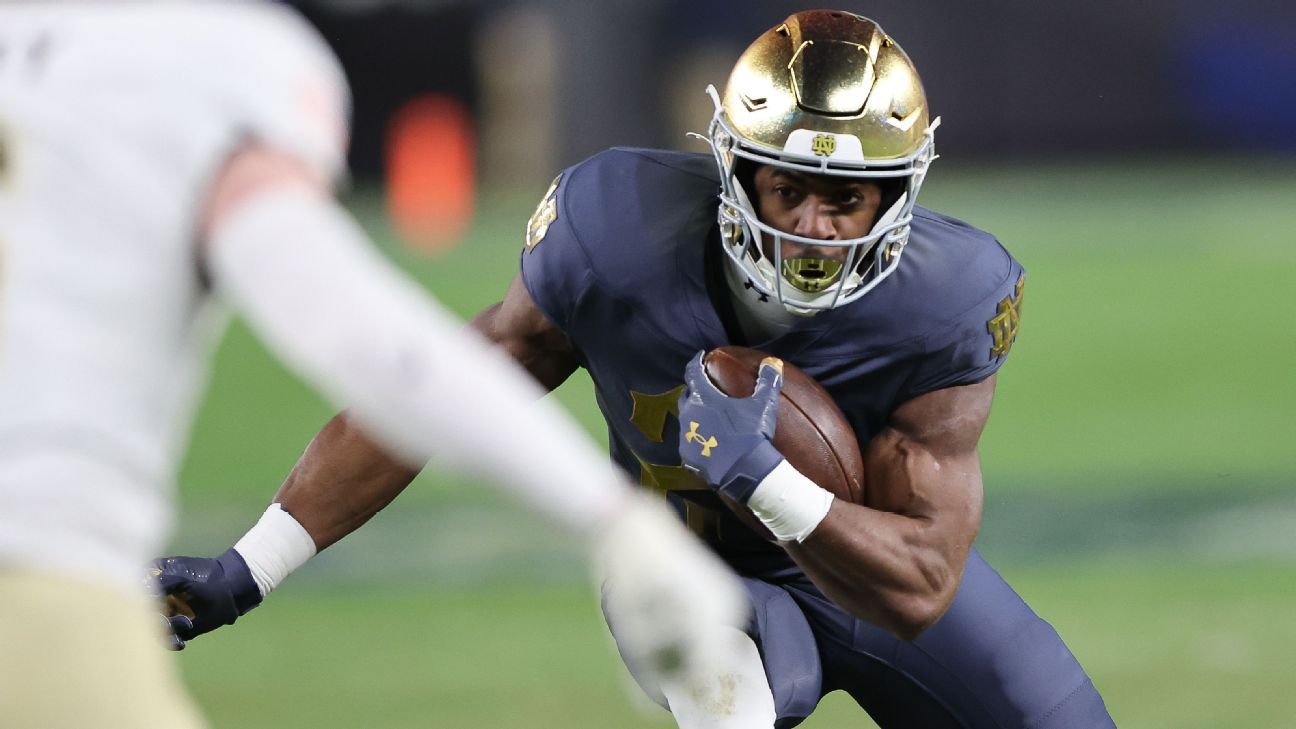
Edit — shortly after writing this piece, the Seahawks signed former Packers running back Emmanuel Wilson. He was a restricted free agent the Packers chose not to tender, so he doesn’t count against the comp pick formula. It’s the biggest piece of evidence so far to show the Seahawks are protecting their 2027 comp picks.
Some Seahawks fans are questioning the plan at running back.
For me, it makes perfect sense.
The free agents were underwhelming. You could make a case for one or two of them but not with any real conviction. There wasn’t going to be any crushing disappointment, or at least there shouldn’t be, when Tyler Allgeier or Kenneth Gainwell signed somewhere else.
Rachaad White? Rico Dowdle? Isiah Pacheco? Really? Meanwhile Travis Etienne, who would’ve cost $12m a year, said his heart was set on returning to Louisiana.
There’s only thing one thing worse than not addressing this need — it’s overspending on someone who isn’t going to be the answer anyway.
Not to mention, there also seems to be a pretty firm plan to protect compensatory picks for 2027. This makes a lot of sense. As I noted yesterday, I had to take 41 players off my board after they chose to return to college this year. Regardless of the quality at the top, that alone will make this a deeper class.
Signing an average running back for a reasonable salary costs you a pick next year. I’m not sure it’d be worth it.
I’m sure we’ll soon see an increasing number of people complaining that they should’ve used the franchise tag on Ken Walker or paid him +$15m a year to stay in Seattle. Again, I completely disagree. With every free agent you have to set a limit and stick to it.
With your own players, you know them better than anyone else. After four years in Seattle they decided he wasn’t worth $14m on the tag or $15m per year on an extension.
You can’t panic, look at the draft and free agency and make a commitment you otherwise wouldn’t make. You’ve got to be disciplined.
Walker is a talented player but he’s not a special player. He didn’t pass-protect, he wasn’t a third down player. He’s yet to show he can carry a running game for more than a short sample. Paying him Jonathan Taylor money to see if he can turn into that type of workhorse is a projection I can’t get behind. You also can’t just pay to keep him because the alternative is inconvenient.
Are the Seahawks going to be worse at running back in 2025 as a consequence? Possibly. But so be it. There are harder issues to solve.
My guess is they will add another veteran after the draft if needs be to fill-out the position. Or, they have their eye on someone in the draft.
It’s worth pointing out that Notre Dame’s Jadarian Price has Lance Zierlein’s 30th highest grade in the 2026 class. Daniel Jeremiah has him at #40 on his big board. Not everyone has him rated that highly but if the Seahawks share that view, they won’t see it as a big reach to take him at #32.
If they see Price as a very viable option with their top pick, he would cost $2.6m in year one. At his most expensive, in year four of his rookie deal, he’d cost $4.6m. Tyler Allgeier’s cap-hits in his two-year arrangement with the Cardinals are worth $4.3m and $7.9m. That’s without the upside someone like Price possesses.
A year ago they didn’t force anything on the offensive line, much to the chagrin of fans, in part because they knew they had options in the draft. They took Grey Zabel and the rest is history.
Whether it’s Price, Mike Washington Jr, Emmett Johnson, Nicholas Singleton or another — they might feel pretty confident they’ll be able to address this position, even within a thin looking class.
You might ask how can they be so confident? Well if they are interested in Price and their intel suggests he won’t go before #32, that’s one possibility.
There hasn’t been a move by another team so far at the running back position I’m envious of. It just feels like a bunch of ‘meh’ that wouldn’t have had anyone feeling that confident about the position. Walker was too expensive and possible trade targets, like De’Von Achane, haven’t been made available.
Would it be good to have a clear solution here that everyone can feel really confident about? Absolutely. By my reckoning though, the Seahawks haven’t missed out on anything exciting so far. Let’s see how they handle the situation over the next couple of months.